Irshad Abbasi
Bio
Ali ibn Abi Talib (RA) said 📚
“Knowledge is better than wealth, because knowledge protects you, while you have to protect wealth.
Stories (236)
Filter by community
The Life and Legacy of a Jihadist Leader
Osama bin Mohammed bin Awad bin Laden was born on March 10, 1957, in Riyadh, Saudi Arabia, into one of the wealthiest non-royal families in the country. His father, Mohammed bin Laden, was a Yemeni immigrant who built a construction empire with close ties to the Saudi royal family. Osama was the 17th of over 50 children, raised in an environment of both religious conservatism and immense wealth.
By Irshad Abbasi 9 months ago in History
The Enigmatic Mystic Who Transformed Rumi
Shams al-Din Muhammad ibn Ali ibn Malikdad Tabrizi, often known simply as **Shams Tabrizi**, remains one of the most mysterious and transformative figures in Sufi history. Best known as the spiritual companion and catalyst for the renowned poet Jalal al-Din Rumi, Shams was a wandering dervish whose influence sparked one of the most profound literary and mystical renaissances in Islamic history. Despite the scarcity of detailed historical records about his life, his legacy lives on, not only in Rumi’s poetry but also in the hearts of seekers and mystics across the world.
By Irshad Abbasi 9 months ago in History
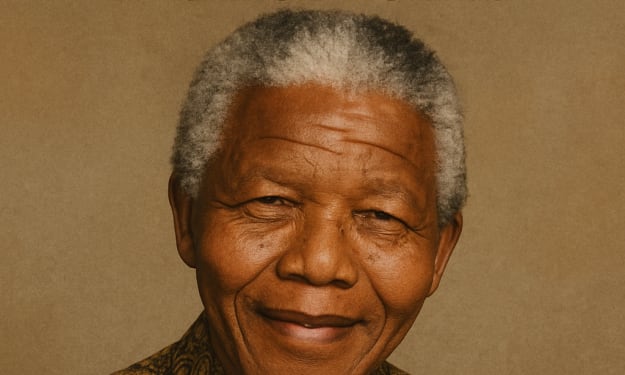
The Journey of a Freedom Fighter
Nelson Rolihlahla Mandela, born on July 18, 1918, in the small village of Mvezo in the Eastern Cape of South Africa, became a towering figure in the global fight for freedom, justice, and human dignity. His journey from a rural herdsboy to the first black president of South Africa is a testament to resilience, sacrifice, and the enduring power of hope. This biography explores Mandela's remarkable life, highlighting the key milestones in his fight against apartheid and his legacy as a unifying force in a divided nation.
By Irshad Abbasi 9 months ago in History
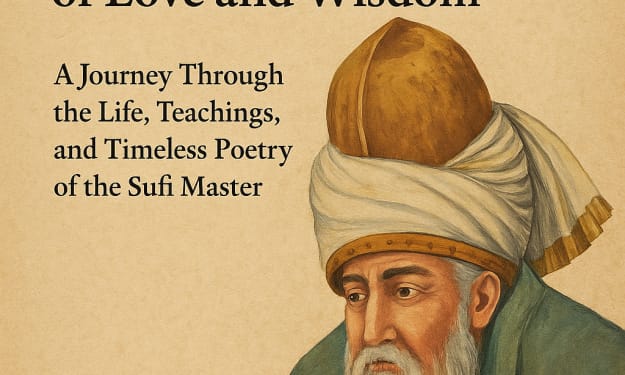
The Life and Legacy of Maulana Rumi
## Introduction Jalaluddin Muhammad Rumi, more commonly known simply as Rumi, remains one of the most profound spiritual voices in human history. A 13th-century Persian poet, theologian, and Sufi mystic, Rumi's words transcend religion, culture, and time. His poetry, infused with divine longing, love, and unity, continues to inspire millions across the globe. This biography seeks to illuminate the path of his life—a journey marked by devotion, loss, transformation, and the eternal flame of wisdom that he left behind.
By Irshad Abbasi 9 months ago in History
The Rise and Fall of Libya's Revolutionary Ruler
Muammar Gaddafi, known to the world through various spellings — including Karnel Kadafi — was a soldier, ideologue, autocrat, and revolutionary whose rule over Libya spanned more than four decades. His life was a collision of idealism and authoritarianism, marked by dramatic transformations and a final, violent downfall. From his rise as a young army officer to his fall during the Arab Spring, Gaddafi’s story is one of contradiction, ambition, and controversy.
By Irshad Abbasi 9 months ago in History
The Life and Times of Iraq’s Strongman
Saddam Hussein, one of the most controversial and enigmatic figures of the 20th century, ruled Iraq with an iron fist for nearly a quarter of a century. His life was marked by a meteoric rise to power, brutal suppression of dissent, ambitious modernization efforts, catastrophic wars, and a dramatic downfall that ended with his execution in 2006. Saddam's story is not just the tale of a dictator, but a reflection of Iraq’s turbulent history and its struggle with identity, power, and colonial legacy.
By Irshad Abbasi 9 months ago in History
The Soldier President – From Battlefield to Burkina Faso's Leadership
Ibrahim Traoré, a young and determined military officer, rose to international attention in 2022 when he led a coup d’état that reshaped the political trajectory of Burkina Faso. At just 34 years old, he became the world’s youngest head of state at the time, assuming leadership of a country gripped by insecurity, economic hardship, and widespread disillusionment with traditional politics.
By Irshad Abbasi 9 months ago in History
Genghis Khan: Rise of the Mongol Empire
In the windswept grasslands of 12th-century Mongolia, where clans clashed and survival was uncertain, a boy named Temujin was born in 1162. He would later become Genghis Khan, a name that would shake continents and alter the course of history. With extraordinary vision, unrelenting ambition, and military genius, he transformed fragmented nomadic tribes into the foundation of the largest contiguous empire the world has ever known—the Mongol Empire.
By Irshad Abbasi 9 months ago in History
Horsemen of Empire: A Mongol Legacy
In the windswept plains of Central Asia, beneath the vast sky the Mongols called the "Eternal Blue Sky," rose one of the most formidable forces in human history. The story of the Mongols is not just one of conquest and bloodshed, but also one of resilience, vision, and profound transformation. Their tale has often been told through the fearful lens of their enemies — as ruthless raiders and destroyers. Yet, behind the myth lies a deeper, more nuanced truth: a people forged by harsh land, bound by honor, and led by a man who would change the world — Genghis Khan.
By Irshad Abbasi 9 months ago in History
The Father of Philosophy and Science
Arastu, more widely recognized by the Western world as Aristotle, stands as one of the most influential figures in the history of human thought. His groundbreaking contributions to philosophy, science, and numerous other disciplines earned him the title **"The Father of Philosophy and Science."** Through his intellectual curiosity, rigorous methods, and expansive body of work, Arastu laid the foundational stones upon which much of Western intellectual tradition is built.
By Irshad Abbasi 9 months ago in History
Conqueror of the Ancient World
Born in 356 BCE in Pella, the ancient capital of Macedonia, Alexander III of Macedon—later known as Alexander the Great—emerged as one of history’s most remarkable military commanders and empire builders. His brief yet dazzling life altered the course of civilizations, blending Greek culture with the diverse traditions of Asia and the Middle East. By the age of thirty, Alexander had created one of the largest empires the world had ever seen, stretching from Greece to India.
By Irshad Abbasi 9 months ago in History
The Conqueror of Empires and Patron of Culture
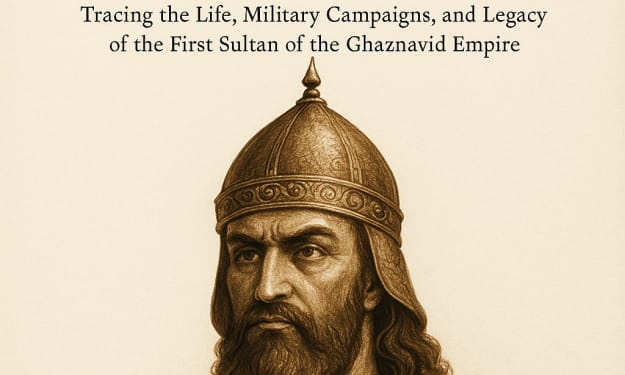
Mahmud of Ghazni (971–1030 CE), born Yamin ad-Dawlah Mahmud ibn Sebüktegin, was a formidable ruler, warrior, and cultural patron whose influence extended far beyond the borders of his empire. As the first ruler to bear the title “Sultan,” Mahmud's reign marked the formal emergence of Islamic rule in the Indian subcontinent and helped shape the religious, political, and cultural landscape of South and Central Asia.
By Irshad Abbasi 9 months ago in History