Marcus Hedare
Bio
Hello, I am Marcus Hedare, host of The Metaphysical Emporium, a YouTube channel that talks about metaphysical, occult and esoteric topics.
https://linktr.ee/metaphysicalemporium
Stories (69)
Filter by community
The Theosophical Society. Content Warning.
A Convergence of Worlds: The Birth of the Theosophical Society Spiritual history during the nineteenth century reveals an era shaped by collision as much as by discovery. Industrial expansion transformed labor, cities, and social structures across Europe and North America. Railways, telegraphs, and mechanized production compressed distance and accelerated communication. Scientific advances challenged inherited cosmologies. Geological research extended the age of the Earth beyond biblical chronologies. Evolutionary theory, popularized by Charles Darwin, reframed humanity’s place in nature. Astronomy expanded the scale of the universe. Chemistry and physics advanced material explanations for phenomena once attributed to divine agency. Established religious institutions confronted growing skepticism among intellectual circles and the rising middle class.
By Marcus Hedare10 days ago in BookClub
Neoplatonism: Ancient Ideas Shaping Modern Minds. Content Warning.
Neoplatonism and the Architecture of Reality Neoplatonism emerged in the third century CE as a sophisticated philosophical tradition dedicated to understanding the deepest foundations of existence. Rooted in the dialogues of Plato and shaped by centuries of interpretation, Neoplatonic thought sought to explain reality not merely as a physical or material phenomenon, but as a structured hierarchy of being, intellect, and transcendence. Central to the tradition lay the conviction that all existence originates from a single, ultimate principle often described as the Good or the One, a source beyond form, division, and limitation.
By Marcus Hedare11 days ago in BookClub
The Martinist Order. Content Warning.
The Hidden Current of Martinism Beneath the visible progression of Western intellectual, religious, and philosophical development exists a disciplined initiatory current dedicated to the restoration of humanity’s original spiritual condition. The Martinist Order represents one of the most enduring expressions of that current. Martinism does not function as a religion, church, or political fraternity. Martinism operates as an initiatory tradition centered upon the doctrine of reintegration, a spiritual philosophy asserting that humanity originated within divine unity and retains the capacity to consciously return to that state through interior transformation, moral purification, and contemplative knowledge.
By Marcus Hedare11 days ago in BookClub
The Hermetic Order of the Golden Dawn. Content Warning.
The Architecture of Esoteric Revival Late Victorian Britain stood at a crossroads of intellectual confidence and spiritual unease. Industrial expansion transformed cities into engines of production. Telegraph networks compressed global communication into moments. Advances in geology, biology, and comparative religion challenged long accepted theological frameworks. Charles Darwin’s evolutionary theory altered public discourse on creation and human origin, while advances in archaeology uncovered material evidence of civilizations long buried beneath desert sands and ruined temples.
By Marcus Hedare12 days ago in BookClub
Charles Godfrey Leland and Modern Witchcraft. Content Warning.
Charles Godfrey Leland in an Age of Cultural Recovery Charles Godfrey Leland stands among the most versatile intellectual figures of the nineteenth century. Work as a literary humorist, investigative journalist, linguist, folklorist, educator, and interpreter of esoteric tradition unfolded across several decades marked by intense cultural transition. Birth in Philadelphia in 1824 placed Leland within a republic still negotiating identity through literature, historical memory, and regional tradition. Education at Princeton University and later study in Europe exposed Leland to philology, continental folklore studies, and Romantic era scholarship emphasizing vernacular culture as a repository of ancestral knowledge.
By Marcus Hedare13 days ago in BookClub
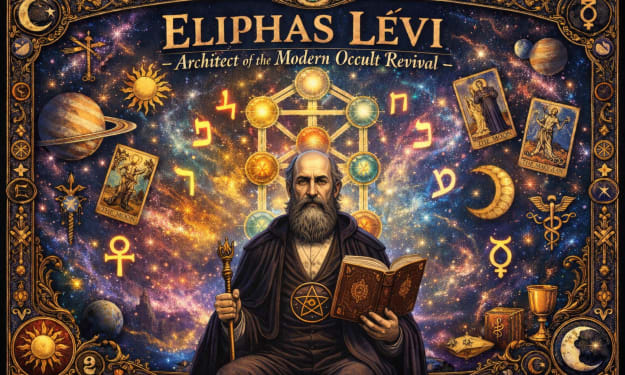
Eliphas Levi. Content Warning.
The Reconstruction of Western Esoteric Thought Nineteenth century France stood at a volatile intersection of political transformation, technological advancement, and intellectual reorientation. The aftermath of the French Revolution continued to reshape social hierarchy, while industrial expansion accelerated urban growth and altered labor structures. Scientific innovation challenged established religious doctrine and traditional metaphysical frameworks. Within this environment of ideological confrontation and spiritual searching, Alphonse Louis Constant, later recognized under the adopted name Eliphas Levi, emerged as a central architect in the revival and reinterpretation of Western esoteric philosophy.
By Marcus Hedare14 days ago in BookClub
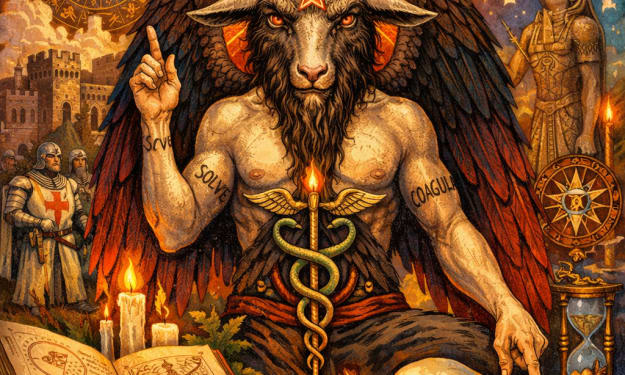
The Baphomet. Content Warning.
Symbol, Accusation, and Esoteric Transformation Few figures within Western esoteric history generate sustained fascination, controversy, reverence, suspicion, and scholarly debate equal to Baphomet. Documentary evidence traces the earliest known appearances of the name to the early fourteenth century during inquisitorial proceedings against members of the Knights Templar. Records from the trials between 1307 and 1312 include testimonies alleging ritual veneration of a mysterious head or idol identified under variations of the name Baphomet. Surviving trial transcripts remain inconsistent and often emerged under coercive interrogation, leaving historians divided regarding literal worship, political fabrication, or linguistic corruption of other religious terminology, including possible distortions of the name Muhammad circulating through Crusader era rhetoric.
By Marcus Hedare15 days ago in BookClub
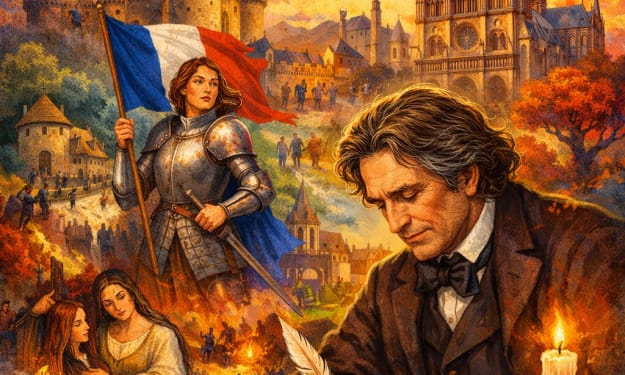
Jules Michelet. Content Warning.
Champion of the People in History Jules Michelet, born August 21, 1798, in Paris, and passing on February 9, 1874, in Hyères, occupies a foundational place in the evolution of modern historiography. Rejecting the rigid focus on kings, political elites, and institutional records that dominated historical writing in the early 19th century, Michelet shifted attention to the lived realities of ordinary people, elevating their struggles, triumphs, and collective spirit into the core of historical narrative. His work presents history as a dynamic interplay of social forces, cultural practices, and human emotion, transforming the study of the past from static chronicles into a vivid, human-centered experience.
By Marcus Hedare15 days ago in BookClub
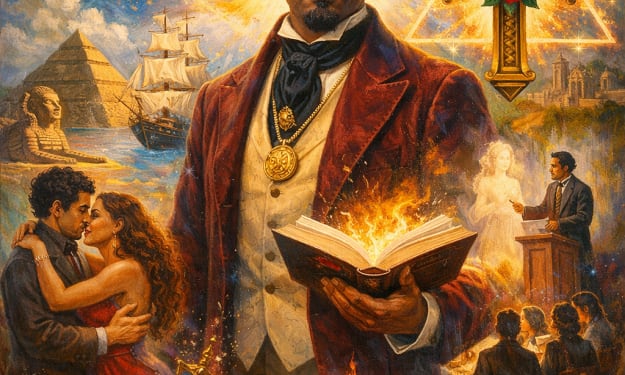
Paschal Beverly Randolph. Content Warning.
The Revolutionary Path of Paschal Beverly Randolph A life forged along the edges of social orthodoxy and spiritual experimentation can illuminate overlooked intersections of culture, metaphysics, and social evolution. Nineteenth century America sustained rigid racial stratification, institutional religious authority, and restrictive moral expectations governing intimacy, gender roles, and personal agency. Within such an environment, Paschal Beverly Randolph rose as an intellectual and esoteric pioneer whose work unsettled dominant assumptions surrounding spirituality, human relationships, and self-determination. Historical records place Randolph among the earliest American occult philosophers to integrate Western esotericism, Spiritualist practice, medical speculation, and radical social commentary into a unified philosophical system.
By Marcus Hedare16 days ago in BookClub
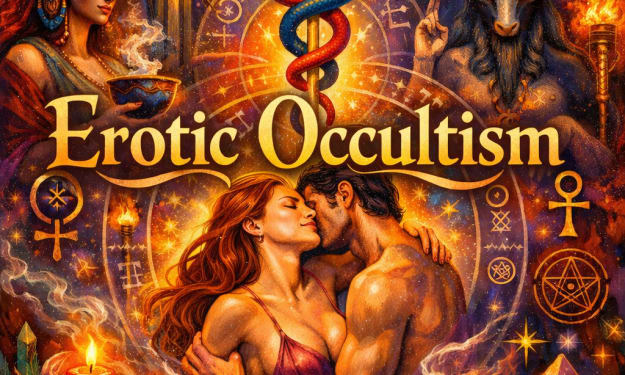
Erotic Occultism. Content Warning.
The Sacred Charge of Desire Erotic occultism occupies a complex space where sexuality, mysticism, ritual practice, and cultural taboo converge. Throughout recorded history, human societies have wrestled with the meaning of desire, often regarding it as far more than physical impulse. Within numerous esoteric and spiritual traditions, erotic energy has been understood as a vital force capable of shaping consciousness, deepening ritual experience, and altering perception. Rather than existing solely within the realm of pleasure, it has frequently been treated as a powerful medium through which individuals attempt to engage with unseen realities.
By Marcus Hedare16 days ago in BookClub
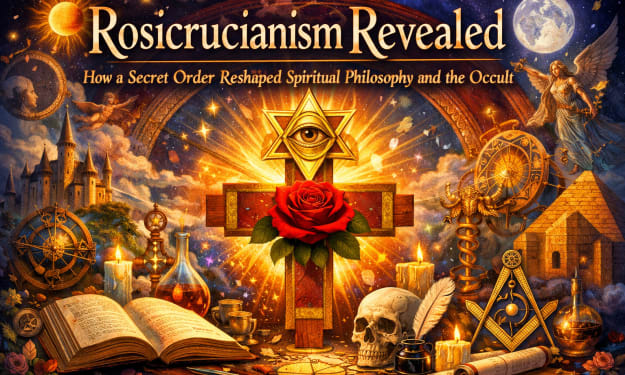
Rosicrucianism Revealed. Content Warning.
The Enigmatic Rise of Rosicrucian Thought Rosicrucianism stands among the most compelling currents in Western esoteric history. The tradition occupies a distinctive position at the intersection of mysticism, philosophical speculation, symbolic language, and spiritual inquiry. Interest in Rosicrucianism has persisted for more than four centuries, fueled by cryptic manifestos, elaborate allegories, and a reputation for concealed wisdom transmitted through select circles of initiates. References to hidden brotherhoods, alchemical transformation, and spiritual illumination continue to attract scholars, historians of religion, and students of Western occult traditions.
By Marcus Hedare17 days ago in BookClub
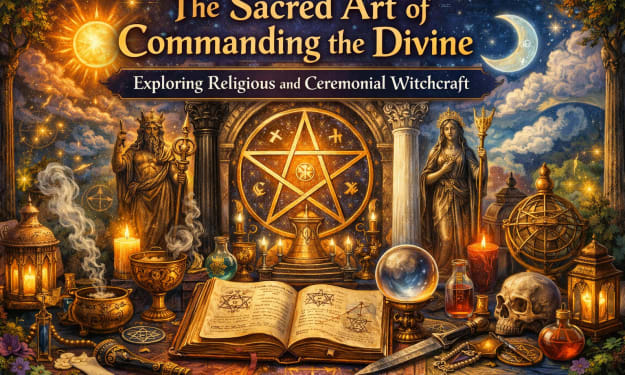
The Sacred Art of Commanding the Divine. Content Warning.
Thrones, Temples, and the Architecture of Sacred Power Religious witches, frequently identified within historical records as ceremonial witches, occupy a layered and often misrepresented position within the spiritual development of Western and Near Eastern traditions. Ceremonial witchcraft arose from environments shaped by literacy, theology, philosophy, and institutional religion rather than exclusively from village survival practices or oral folk medicine. Temples, monastic scriptoria, royal courts, scholarly academies, and esoteric fraternities served as incubators for ritual systems that required formal education, linguistic precision, and theological fluency. Sacred alphabets, mathematical symbolism, planetary correspondences, angelic hierarchies, consecrated tools, and carefully calculated ritual timing formed a structured framework through which ceremonial practitioners attempted contact with divine or intermediary intelligences.
By Marcus Hedare18 days ago in BookClub