Ruth Elizabeth Stiff
Bio
History and knowledge, especially about the Earth, are my passions. I enjoy putting my thoughts to paper and I always try to encourage self-motivation and love for life. LIVE AND LOVE LIFE!
Stories (953)
Filter by community
Grace Kelly
Fourteen Hours. High Noon. Dial M For Murder. The Bridge of Toko-Ri. High Society. Five of the fourteen films this brilliant actress starred in. Her leading men included Gary Cooper, Clarke Gable, James Stewart, Bing Crosby and Cary Grant. Her talent and persona influenced one of the greatest directors of all time — Alfred Hitchcock. Her greatest performance was as the Princess of Monaco. This is another article on Grace Kelly.
By Ruth Elizabeth Stiff4 years ago in Viva
Something Positive To Read
How many of us get up in the early morning and listen to or watch the news over breakfast? We might have 20 minutes before we have to go through that door and go to work or school or — whatever we have set up for today. I think of those who are caring for their mothers or fathers or loved ones and they still have to care for their own family or work full time. It is tiring! I have done it myself, more than once, and I often thought: “I wish I had something Positive to read or hear”, especially over breakfast to start the day on a Positive note. So, here goes =>
By Ruth Elizabeth Stiff4 years ago in Motivation
Man's Faithful Friend
Every dog breed today is descended from wolves, even the chihuahua! It is estimated that “the dog” was domesticated between 20,000 and 40,000 years ago (that’s how close we’ve been to dogs). It’s hard to believe that the little pooch we love so much actually “comes” from wild wolves. However, it is true!
By Ruth Elizabeth Stiff4 years ago in Petlife
From Actress to Princess
“I prefer pearls on screen and in my private life”. She was beautiful, both to look at and in her personality and played one of the most compelling roles in history. She starred with such actors as Gary Cooper, Clark Gable, Bing Cosby and Frank Sinatra but married a real life Prince. To act in films, she had to change her accent and, coming from a deep religious Catholic family, her parents disapproved of her acting career. Growing up, she was not considered beautiful. We know and love her as the woman who lived a real life fairytale. She was, of course, Grace Kelly.
By Ruth Elizabeth Stiff4 years ago in Humans
ESCORT OR COURTESAN?
Today we know them as “Escorts”. In the 18th Century they were called “Courtesans”. They held fashion in the palms of their hands, as well as the men, and women copied these leading ladies of fashion. They came from all walks of life, some rising to great wealth, some dying in poverty. Whichever Era we live in, they are ‘classed’ as the same thing — “Prostitutes”.
By Ruth Elizabeth Stiff4 years ago in Humans
Female Victorian Murderesses
Today we see so much on the news that, unfortunately, we are rarely shocked when we hear of a murder, unless it is particularly ‘graphic’. Communication in this Century surpasses any other Century and we can see or read the news of (almost) any country with the click of a button or the tap on a phone.
By Ruth Elizabeth Stiff4 years ago in Criminal
Madame Clapham
Emily was born in Cheltenham in 1856. As was the norm then, she left school at an early age for an apprenticeship in dressmaking, at Scarborough, at the company at Marshall and Snelgrove (you may have heard of the names). From an early age, Emily learnt her trade in dressmaking, starting with picking up pins off the floor.
By Ruth Elizabeth Stiff4 years ago in FYI
Thank You
Dear Mum, How are you? Is the weather warm where you are? Have you and dad been happy? I do miss you. We’ve always been more like sisters than mother and daughter. Do you remember the time we wore the same dresses? Blue for you, purple for me, at that conference. We were like twins, only you were prettier and taller (without the heels!). We did turn heads ha ha ha. You had the red bike and I had the blue one, and you were always a more confident rider than me. We spent so much time together when dad ‘left’. We were always there for each other.
By Ruth Elizabeth Stiff4 years ago in Families
"At long last I am able to say a few words of my own"
He put his love for a woman before his duty to the throne, being the only King of England to abdicate willingly. He was much loved by the people, a real ‘playboy’, yet he had a serious side that few saw. His father was demanding and short tempered and harshly criticized his eldest son. This eldest son was also a style icon. He was Edward VIII.
By Ruth Elizabeth Stiff4 years ago in FYI
The Theory of Everything
He had an IQ of 160 and was one of the most brilliant theoretical physicists in history. Although he became physically disabled with a disease that could not be cured, his brain, his mind, was left ‘untouched’. His lifes’ work revolutionized ‘the field’ and his books have been bought by people who know nothing about his area of expertise. His knowledge, research and work has made an imprint over several generations. He was Stephen Hawking.
By Ruth Elizabeth Stiff4 years ago in FYI
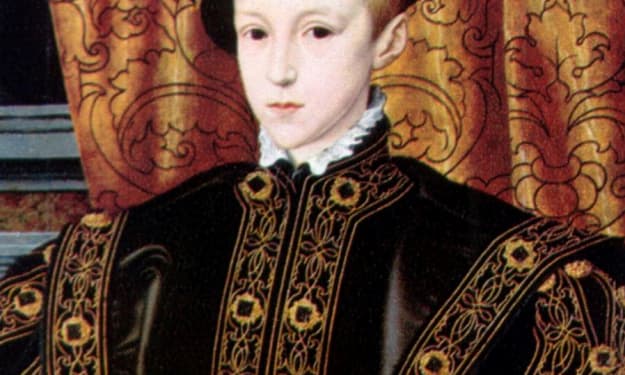
EDWARD VI
King Henry VIII waited for more than twenty years for this healthy son and heir. Jane Seymour, Henry’s third wife, was his mother. Sadly, he reigned for only six years and died at the young age of sixteen and he was a ‘pawn’ in the hands of unscrupulous men. He had the real makings of a good Kingof England. He was Edward VI.
By Ruth Elizabeth Stiff4 years ago in FYI
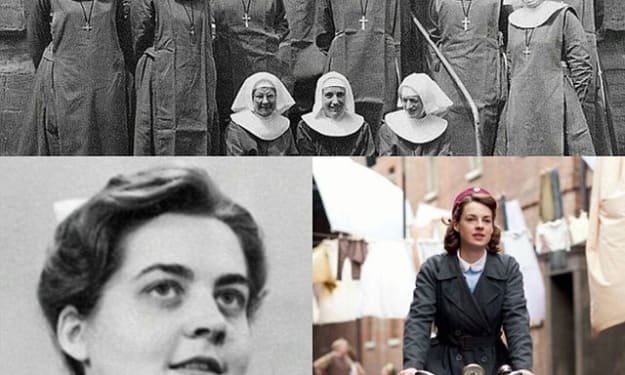
"Where's The Midwife?"
Many of us have watched, and are still watching, the television series “Call The Midwife”, which was originally based on the memoirs of Jennifer Worth. She worked with the community of St. John the Divine at their convent in the East End of London. The order was founded as a nursing order in 1849. The series extended beyond the memoirs to include new, historically sourced material and information. The series has also tackled subjects such as adoption, miscarriage, abortion as well as prostitution, incest and birth defects. It is so interesting to see how these things were looked at and dealt with in the 1950’s and 1960’s, compared to how we view them (and deal with them) today.
By Ruth Elizabeth Stiff4 years ago in Viva