
Adolf Hitler: A Historical Biography and the Rise of a Destructive Regime
Examining the Life, Ideology, and Consequences of One of History’s Most Dangerous Leaders

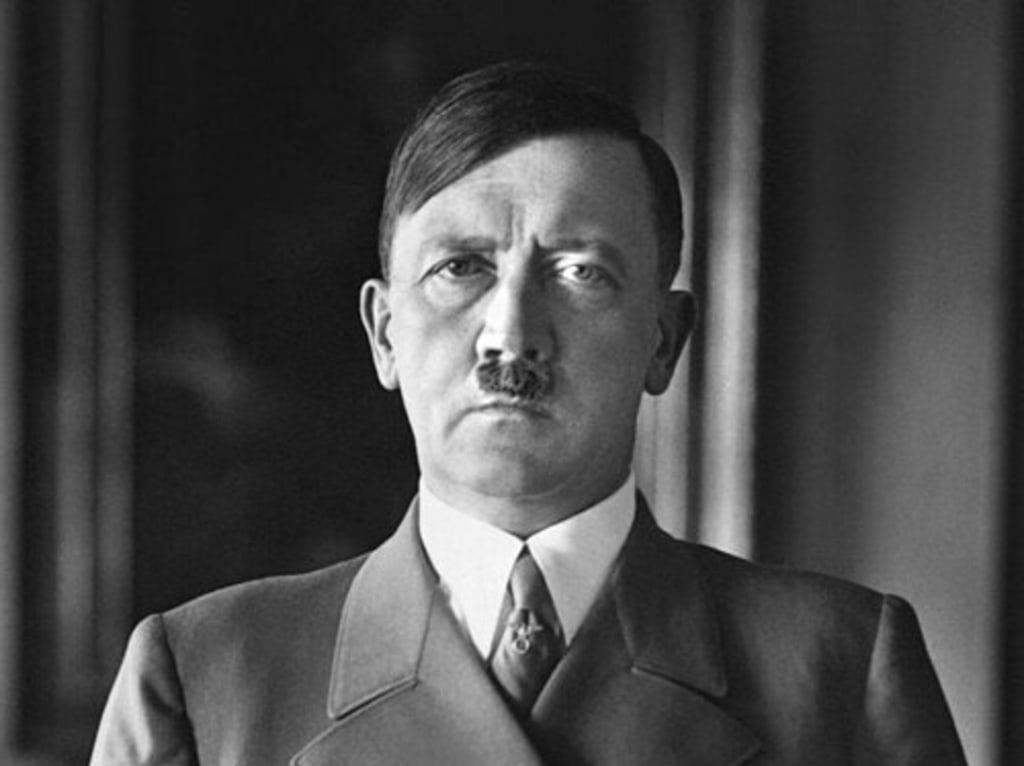
Few individuals in modern history have left a mark as catastrophic and far-reaching as Adolf Hitler. His actions reshaped the political landscape of Europe, ignited a global conflict, and resulted in unprecedented crimes against humanity. Studying Hitler is not an exercise in fascination, but rather an effort to understand how fragile democratic systems can collapse and how extremist ideologies gain influence.
Hitler’s life story serves as a stark warning. It illustrates how economic hardship, political instability, and mass manipulation can combine to produce authoritarian rule. This article traces his life chronologically while placing his rise within the broader historical environment of early twentieth-century Europe.
🧒 Early Life: Family Background and Formative Years (1889–1907)
Adolf Hitler was born on April 20, 1889, in Braunau am Inn, a small town in Austria-Hungary near the German border. His father, Alois Hitler, worked as a customs official and enforced strict discipline at home. His mother, Klara Hitler, was gentle and deeply devoted to her children. Their household was often tense, and Hitler later described his father as domineering while idealizing his mother’s affection.
As a student, Hitler displayed little enthusiasm for most subjects except art and history. He aspired to become a painter and showed early interest in German nationalism. Following his father’s death in 1903, his academic performance declined, and he eventually abandoned formal schooling.
In 1907, he moved to Vienna hoping to enroll in the Academy of Fine Arts. His rejection proved deeply discouraging and marked a critical turning point. Struggling financially, he developed resentment toward society and became increasingly receptive to radical political theories circulating in the city.
🏙️ Vienna Years: Poverty, Frustration, and Ideological Formation (1908–1913)
Vienna at the time was a diverse and politically active metropolis. For Hitler, however, it became a place of growing bitterness. He lived in shelters, earned money by selling paintings, and blamed others for his failures rather than acknowledging personal limitations.
During these years, he absorbed nationalist and antisemitic literature that promoted ideas of racial superiority and cultural decline. Although historians continue to debate the depth of his prejudice during this period, it is evident that Vienna played a crucial role in shaping his extremist worldview.
By 1913, dissatisfied and directionless, Hitler relocated to Munich in Germany, hoping to find a society that reflected his nationalist ideals more closely.
🎖️ World War I: Military Experience and Psychological Impact (1914–1918)
The outbreak of World War I provided Hitler with a sense of purpose he had lacked. He volunteered for the German army and served as a messenger on the Western Front. Though he never rose to a leadership position, he was exposed to the brutality of warfare and sustained multiple injuries.
Germany’s defeat in 1918 deeply traumatized him. Like many nationalists, he embraced the belief that Germany had been betrayed internally rather than defeated militarily. This narrative intensified his hostility toward democratic institutions and minority groups.
The war did not merely influence Hitler’s identity; it radicalized an entire generation. Economic devastation, political uncertainty, and wounded national pride created ideal conditions for extremist movements to flourish.
🗳️ Political Entry and the Nazi Party (1919–1923)
After the war, Hitler remained in military service and was assigned to monitor political groups. In 1919, he encountered what later became the Nazi Party. His talent for public speaking quickly elevated him within its ranks.
By 1921, he assumed leadership of the party and transformed it into a mass political movement. His speeches portrayed Germany as a victim of internal enemies and promised national revival through unity and strength.
In 1923, he attempted to seize power through a failed coup in Munich. Imprisoned for his role, he used this period to write Mein Kampf, outlining his vision of racial hierarchy, territorial expansion, and authoritarian governance.
🧠 From Imprisonment to Political Authority (1924–1933)
During his incarceration, Hitler concluded that power must be obtained through legal means rather than armed rebellion. Upon release, he rebuilt the Nazi Party into a nationwide organization with disciplined leadership and coordinated propaganda.
The economic collapse triggered by the Great Depression intensified public disillusionment with democracy. Hitler exploited widespread fear and hardship, presenting himself as a leader capable of restoring stability and dignity.
Through electoral success and political maneuvering, he was appointed Chancellor in January 1933. This appointment marked the beginning of Germany’s transformation from a republic into a dictatorship.
🏛️ Consolidation of Dictatorial Rule (1933–1939)
Once in office, Hitler acted swiftly to dismantle democratic institutions. Civil liberties were suspended, rival political parties were outlawed, and independent organizations were absorbed into the Nazi state.
Propaganda became a powerful instrument of control. Schools, newspapers, and cultural institutions promoted loyalty to Hitler while portraying minorities and political opponents as enemies of the nation.
Discriminatory laws deprived Jewish citizens of legal rights and social standing. Opposition figures were imprisoned or executed, while society was conditioned to accept repression as patriotism.
🔥 War and Systematic Crimes (1939–1945)
Hitler’s expansionist policies led to invasions across Europe and ultimately triggered World War II. Military conquest and racial ideology advanced simultaneously.
The Holocaust represented the most horrifying outcome of Nazi rule: the deliberate and organized murder of millions of Jews, along with Roma communities, disabled individuals, political dissidents, and civilians. These crimes were not accidental consequences of war but were central objectives of Nazi ideology.
As Germany’s defeat became inevitable, Hitler refused to negotiate. His decisions prolonged the conflict and intensified civilian suffering.
☠️ Final Days and Death (1945)
By 1945, Germany was in ruins. Allied forces advanced from multiple directions, and Berlin became the final battleground. Hitler withdrew to an underground bunker, isolated from reality and surrounded by collapse.
On April 30, 1945, he ended his life by suicide. Germany surrendered shortly thereafter, concluding a regime that had caused immense destruction and loss of life.
🧩 Historical Impact and Lessons
Hitler’s legacy is defined by devastation and warning. His rise illustrates how political extremism can thrive when fear, propaganda, and unchecked authority replace democratic safeguards.
Studying his life underscores the importance of protecting civil institutions, resisting dehumanizing ideologies, and challenging hatred before it becomes policy.
📖 Conclusion: Remembering History to Prevent Its Repetition
Adolf Hitler was not an isolated anomaly but the product of social conditions, political failures, and deliberate choices. His story demonstrates how easily democracy can be dismantled when citizens lose faith in truth and justice.
Understanding his life is essential not for sensationalism, but for education. History must be remembered carefully and responsibly—not to glorify evil, but to ensure that such destruction is never repeated.
About the Creator
Haroon Pasha
✍️ Passionate writer sharing stories, ideas, and insights on trending topics, life, and personal growth.
📚 I write to inform, inspire, and spark meaningful conversations.
🌍 Exploring the world one article at a time.
Keep reading
More stories from Haroon Pasha and writers in Chapters and other communities.
The Life and Legacy of Jeff Bezos
Jeff Bezos is one of the most influential entrepreneurs of the modern era. Best known as the founder of Amazon, he transformed a small online bookstore into one of the most powerful technology and commerce companies in history. His journey reflects a mix of bold vision, scientific thinking, and long-term ambition—not only on Earth, but beyond it.
By Haroon Pashaabout 14 hours ago in Chapters
Can the Taliban win a war against Pakistan? Retaliation for Pakistani airstrikes in Paktika, US weapons left in Afghanistan 2026
On February 22, separate airstrikes in Afghanistan’s Paktika and Nangarhar provinces killed and injured multiple people. Military sources in Pakistan claimed that seven hideouts of the TTP (Tehreek-e-Taliban Pakistan) or Pakistani Taliban and other militant groups were targeted across three provinces—Nangarhar, Paktika, and Khost. However, after visiting the affected areas, Al Jazeera’s team confirmed civilian casualties. It is worth noting that Al Jazeera is an impartial news organization.
By Real contentabout 16 hours ago in Chapters
At My Wits’ End
Life is about taking out the trash and calling it trash because you have every reason to. It wasn't meant to be linear, they say. But the times you tried to make it straight led to problems, and you didn’t have the tools to put any of it to use. You don't put your right shoes on the right feet; you put the left shoes on the left feet. The grey hardened slab will trip you up anyway.
By Caitlin Charlton6 days ago in Humans



Comments
There are no comments for this story
Be the first to respond and start the conversation.