
Albert Einstein: The Genius Who Changed the Universe
From Relativity to Quantum Breakthroughs – Exploring the Life, Science, and Legacy of the Father of Modern Physics

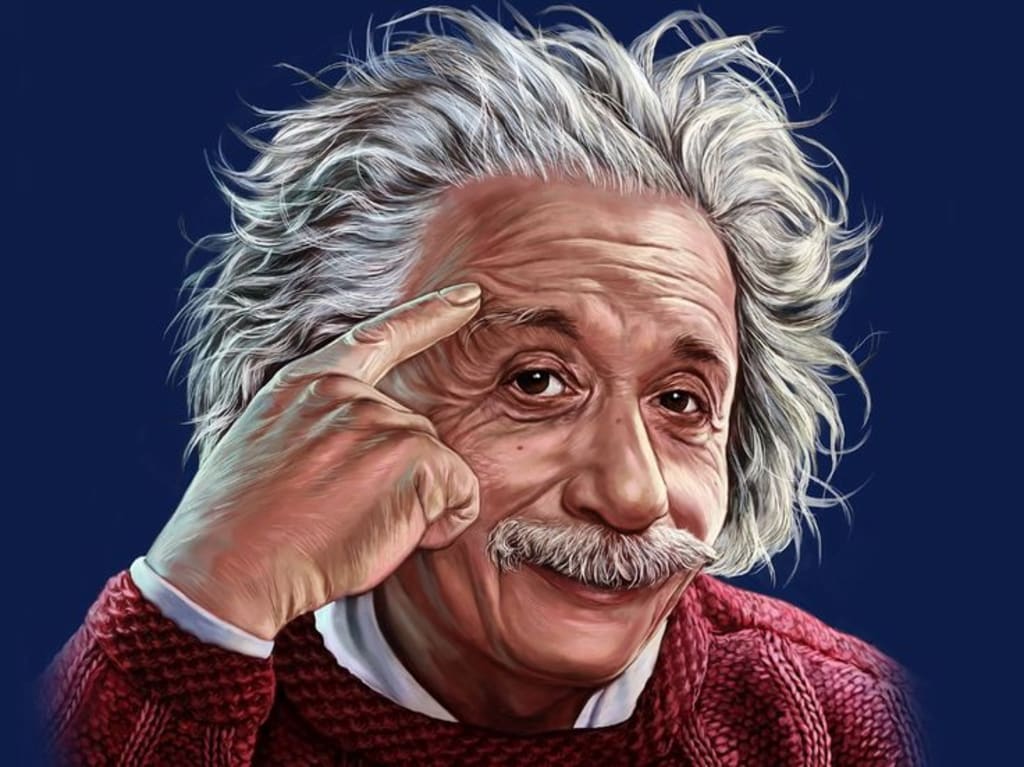
Albert Einstein (14 March 1879 – 18 April 1955) was a German-born theoretical physicist whose ideas transformed our understanding of the universe. Best known for the theory of relativity and his mass–energy equivalence formula E = mc², Einstein’s work laid the foundation for modern physics. He also made groundbreaking contributions to quantum theory, statistical mechanics, and cosmology. In 1921, he received the Nobel Prize in Physics for his explanation of the photoelectric effect, a discovery that would pave the way for quantum mechanics.
🏠 Early Life & Education
Born in Ulm, Germany, Einstein moved to Switzerland in 1895, giving up his German citizenship. By 1897, he enrolled at the Swiss Federal Polytechnic School in Zurich to study mathematics and physics, earning his teaching diploma in 1900. A year later, he became a Swiss citizen permanently. Before his rise to fame, he worked at the Swiss Patent Office in Bern, a period where his genius quietly developed in between examining patent applications.
📜 First Scientific Papers (1900–1905)
Einstein’s early work included his first paper, Folgerungen aus den Capillaritätserscheinungen (1901), which proposed a model for intermolecular forces. Though he later dismissed it, it marked the start of his scientific career. In 1905—his annus mirabilis or “miracle year”—Einstein completed his PhD dissertation on molecular dimensions and published four revolutionary papers:
Photoelectric effect → showed light behaves as particles (photons).
Brownian motion → confirmed the existence of atoms.
Special relativity → introduced the idea that time and space are relative.
Mass–energy equivalence → E = mc², linking mass and energy.
These papers reshaped physics and demonstrated his remarkable insight into nature’s laws.
🧬 Contributions to Quantum Theory
Einstein played a key role in quantum theory, despite later questioning its randomness. He proposed that light consists of photons, particles with energy E = hf, which explained the photoelectric effect. He also contributed to Bose–Einstein statistics with Indian physicist Satyendra Nath Bose, predicting phenomena like Bose–Einstein condensates, which were experimentally realized in 1995. His work on wave–particle duality and matter waves influenced generations of quantum physicists.
🌌 The Theory of Relativity
In 1905, Einstein proposed special relativity, showing that time and space are interconnected and relative to the observer. In 1915, he extended this to general relativity, introducing the concept that gravity is the curvature of spacetime. His Einstein field equations described how matter and energy shape the universe. These ideas revolutionized cosmology, leading to models of the expanding universe and introducing concepts such as cosmological constants and black holes.
🔬 Quantum Mechanics & the EPR Paradox
Einstein debated the interpretation of quantum mechanics with Niels Bohr in the famous Bohr–Einstein debates. He argued that quantum mechanics is incomplete, as it could not explain "hidden variables" governing reality. His 1935 paper with Podolsky and Rosen introduced the EPR paradox, which explored quantum entanglement—now a cornerstone of quantum information theory. Despite his skepticism, Einstein’s critiques helped shape modern quantum science.
🌀 Advanced Theoretical Work
Einstein explored wormholes with Nathan Rosen, now called Einstein–Rosen bridges, attempting to model particles via spacetime structures. He also worked on the Einstein–Cartan theory, which incorporated spin in general relativity, and tried developing a unified field theory to combine gravity and electromagnetism. Though not entirely successful, these endeavors inspired future theoretical physics.
🏛️ Academic Career & Collaboration
Einstein held academic positions across Europe, including the University of Bern, Humboldt University of Berlin, and finally the Institute for Advanced Study in Princeton, New Jersey. He collaborated with scientists like Leopold Infeld, Nathan Rosen, and Peter Bergmann, and conducted experiments like the Einstein–de Haas effect, exploring the link between magnetism and angular momentum.
🔧 Einstein as an Inventor
Beyond theoretical physics, Einstein was an inventor. In 1926, he and Leó Szilárd created the Einstein refrigerator, an absorption fridge with no moving parts. He also developed devices for electromagnetic pumps and sound reproduction. While these inventions were less famous than his scientific work, they demonstrate his inventive creativity applied to practical problems.
🌍 Political Views & Humanitarian Work
Einstein’s political stance was socialist and humanitarian. He criticized capitalism, supported democratic global governance, and advocated for world peace. He helped Jewish scientists escape Nazi Germany, contacting Winston Churchill and leaders in Turkey, saving over 1,000 lives. He corresponded with Mahatma Gandhi and supported the Zionist movement, while advocating for justice and equality for all.
🏅 Awards & Honors
Einstein received numerous accolades:
1921 Nobel Prize in Physics for the photoelectric effect.
Namesakes include Einsteinium (element 99) and numerous streets, schools, and awards worldwide.
Named Time’s Person of the Century (1999) for his unparalleled influence.
His intellectual and moral legacy continues to inspire scientists, educators, and thinkers globally.
🕊️ Later Life & Legacy
Einstein lived his final years in Princeton, New Jersey, where he continued research until his death in 1955. His ashes were scattered at an undisclosed location, symbolizing his universal impact. He bequeathed his personal archives to the Hebrew University of Jerusalem, ensuring future generations could study his genius. Colleagues described him as childlike yet profoundly stubborn, with an enduring curiosity about the universe.
Albert Einstein’s life shows the power of curiosity, creativity, and courage. From relativity to quantum theory, his contributions shaped modern science and continue to inspire.
✨ What fascinates you most about Einstein? Drop a comment below sharing your thoughts or your favorite Einstein discovery!
🙏 Support this blog by leaving a tip if you found it useful. Your contribution helps us explore and share more stories of brilliant minds like Einstein.
About the Creator
Haroon Pasha
📚 Learn history, literature & knowledge daily
👍 Like | 💬 Comment | 🔔 Subscribe
🔄 Share to support free education
💖 Tip us to help grow this page
Keep reading
More stories from Haroon Pasha and writers in Chapters and other communities.
🏢💥 Unraveling 9/11 Conspiracy Theories: Understanding Claims, Evidence, and Public Debate
The September 11, 2001 attacks on the United States remain among the most significant and tragic events in modern history. Nearly 3,000 lives were lost, the global economy was shaken, and the world witnessed the rise of a new era of geopolitical tension and security concerns. Alongside these events, a complex web of conspiracy theories has emerged, challenging the official narrative and sparking debate that spans governments, media, academia, and the public.
By Haroon Pashaa day ago in Chapters



Comments
There are no comments for this story
Be the first to respond and start the conversation.