
🏢💥 Unraveling 9/11 Conspiracy Theories: Understanding Claims, Evidence, and Public Debate
The September 11, 2001 attacks on the United States remain among the most significant and tragic events in modern history.....

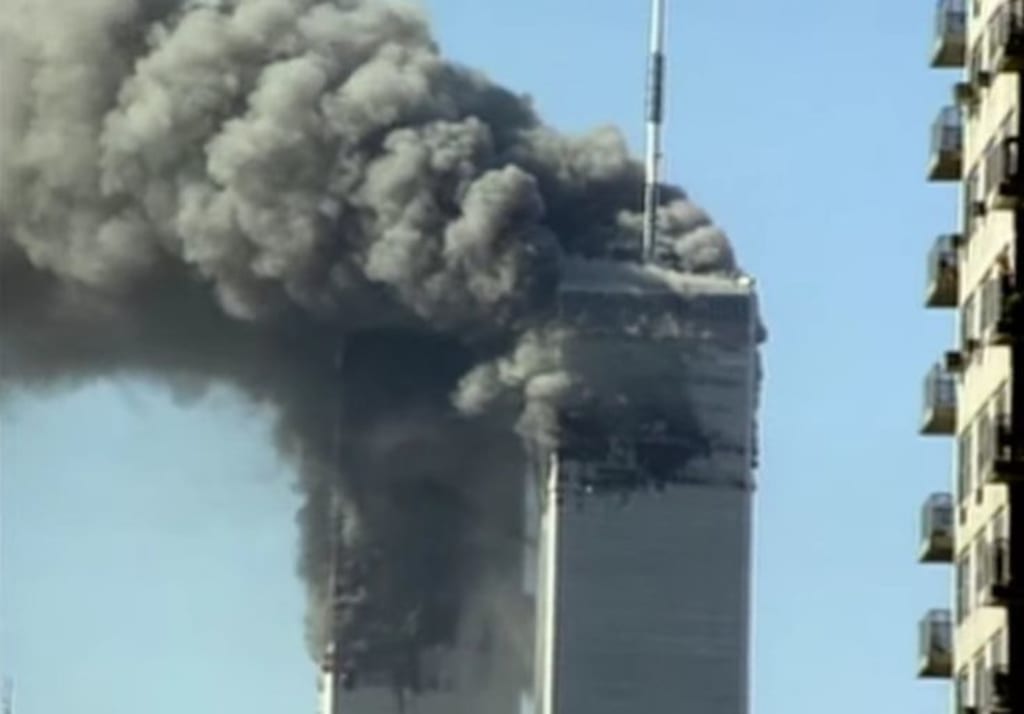
The September 11, 2001 attacks on the United States remain among the most significant and tragic events in modern history. Nearly 3,000 lives were lost, the global economy was shaken, and the world witnessed the rise of a new era of geopolitical tension and security concerns. Alongside these events, a complex web of conspiracy theories has emerged, challenging the official narrative and sparking debate that spans governments, media, academia, and the public.
In this article, we explore the origins, claims, and implications of 9/11 conspiracy theories, presenting a comprehensive overview of the arguments, evidence, and controversies that continue to surround the attacks.
📜 The Official Account of 9/11
The official narrative, established by multiple government investigations and widely accepted by the international community, is as follows:
✈️ Hijackings and Impact: Nineteen Al-Qaeda operatives hijacked four commercial flights. United Airlines Flight 175 and American Airlines Flight 11 struck the Twin Towers of the World Trade Center in New York City. American Airlines Flight 77 was flown into the Pentagon, and United Airlines Flight 93 crashed in a field near Shanksville, Pennsylvania after passengers attempted to regain control.
🏢 Structural Collapses: The impacts and resulting fires caused the Twin Towers to collapse, as well as the destruction of surrounding buildings, including 7 World Trade Center. The Pentagon was severely damaged by Flight 77.
⚠️ Forewarnings Ignored: While intelligence agencies had received pre-attack warnings about potential Al-Qaeda operations, bureaucratic obstacles, interagency miscommunication, and the legal framework in place limited the effectiveness of preventive measures. Both the Clinton and Bush administrations were criticized for a “failure of imagination,” as noted in the 9/11 Commission Report.
These findings are backed by extensive government documentation, including:
📘 The 9/11 Commission Report
🏗️ Structural studies by NIST and FEMA
🎓 Independent analyses from universities like Purdue
📰 Articles in Popular Mechanics, Scientific American, Time, and international news outlets
🕵️♂️ The Origins of Conspiracy Theories
Despite overwhelming evidence, conspiracy theories surrounding 9/11 began emerging almost immediately after the attacks. Proponents argue that the official story is inconsistent or incomplete and assert that evidence was ignored, concealed, or misrepresented. Many of these theories focus on perceived anomalies in the collapse of the Twin Towers and 7 World Trade Center, the Pentagon impact, and intelligence failures prior to the attacks.
Conspiracy theorists often reject one or both of the following:
❌ That Al-Qaeda operatives carried out the attacks.
❌ That pre-attack intelligence failures were the main reason the attacks were successful.
Some theorists claim deliberate government involvement, while others suggest negligence or complicity, creating a spectrum of interpretations rather than a strict “good vs. evil” framework.
🏗️ Major 9/11 Conspiracy Theories
💣 Controlled Demolition of the Towers
One of the most widely discussed theories is that the Twin Towers and 7 World Trade Center were brought down by controlled demolition rather than structural failure caused by fire and plane impacts. Advocates point to the speed and symmetry of the collapses and the appearance of “squibs” — bursts of debris from the buildings. Organizations like Architects & Engineers for 9/11 Truth promote this theory, arguing that conventional explanations fail to account for all observed phenomena.
✈️ The Pentagon Missile Theory
Some theorists argue that American Airlines Flight 77 did not strike the Pentagon. Instead, they claim a missile or military aircraft, launched from inside the U.S. government, caused the damage. Critics highlight the dimensions of the impact hole, suggesting it could not accommodate a Boeing 757. Mainstream media and investigators have repeatedly refuted these claims, citing eyewitness accounts, debris, and photographic evidence.
🇮🇱 Israeli Involvement
Another controversial theory alleges that Israel or its intelligence agency, Mossad, orchestrated the attacks to manipulate U.S. foreign policy. Proponents suggest foreknowledge by Israeli nationals and the avoidance of casualties at the WTC. The Anti-Defamation League (ADL) strongly denounces these claims as antisemitic, noting that they echo older conspiracy narratives and can fuel global antisemitism.
💰 Saudi Funding Allegations
Some investigations and journalistic accounts, including Anthony Summers and Robbyn Swan's The Eleventh Day, suggest that members of the Saudi royal family or state-affiliated institutions provided financial and logistical support to the hijackers. These claims were fueled by discussions surrounding the "28 pages" of the 2002 U.S. Congressional Joint Inquiry report, which were withheld for years due to national security concerns.
🧐 LIHOP vs. MIHOP
Conspiracy theorists often distinguish between:
LIHOP (“Let it happen on purpose”) – the government had foreknowledge and deliberately failed to act.
MIHOP (“Make/Made it happen on purpose”) – the government actively planned the attacks, framing Al-Qaeda.
While both theories suggest deliberate negligence or orchestration, they differ in the level of active involvement attributed to U.S. officials.
🛑 “No-Planes” Theory
A fringe theory claims that no commercial aircraft were used in the attacks and that videos showing planes hitting the towers were digitally manipulated. Proponents argue that holograms, CGI, or missile overlays were used to simulate impacts. This theory is widely rejected, even by members of the 9/11 Truth Movement, for lack of credible evidence.
⚔️ Operation Northwoods Analogy
Some theorists cite Operation Northwoods, a declassified 1962 plan by U.S. military leaders to stage false-flag attacks, as a precedent. They argue it demonstrates that the government might engage in covert attacks for political or military objectives.
👥 Profiles of Conspiracy Advocates
The 9/11 Truth Movement comprises several types of participants:
Critically Turned Activists – Students and young professionals disillusioned with the political establishment. They often produce countercultural media content and leverage social networks for outreach.
Illiterati – Casual supporters who engage primarily online, often emotionally, without deep investigation. They provide social proof and amplify the movement’s perceived influence.
Media Personalities – Figures like Alex Jones popularized theories through syndicated radio and video content, attracting both large audiences and professional criticism.
🌎 International Reactions
Internationally, conspiracy theories have influenced public opinion and politics. For example:
🇮🇷 Iranian President Mahmoud Ahmadinejad repeatedly described the attacks as suspicious, suggesting U.S. involvement.
🇪🇬 Egyptian President Mohamed Morsi called for scientific investigations into the events of 9/11.
📊 Pew Research in 2011 indicated that a significant portion of Egyptian citizens denied that Arabs carried out the attacks.
🇵🇰 In Pakistan, beliefs that George W. Bush orchestrated the attacks complicated counterterrorism efforts.
⚖️ Legal and Political Responses
Some individuals have attempted to challenge the official account legally. Army specialist April Gallop filed a lawsuit against Vice President Dick Cheney and Secretary of Defense Donald Rumsfeld, claiming government orchestration of the Pentagon attack. The lawsuit was dismissed, and her lawyers were sanctioned for pursuing a frivolous case.
Politically, lawmakers have condemned conspiracy theories as trivializing the tragedy. Representative Peter T. King called them disgraceful, while professional bodies like the American Institute of Architects (AIA) criticized public misrepresentation of engineering expertise.
📰 Media and Scholarly Analysis
Mainstream media and scholarly sources have consistently refuted conspiracy theories. Programs like BBC’s The Conspiracy Files: 9/11 – Ten Years On and articles in The Guardian and Time emphasize physical evidence, eyewitness testimony, and engineering analyses.
Psychologists and sociologists, including Harvard’s Cass Sunstein and journalist Jonathan Kay, explore why conspiracy theories flourish:
🧠 Crippled Epistemologies: Individuals selectively interpret evidence to confirm pre-existing beliefs.
🌐 Internet Amplification: High search rankings and viral content lend false authority to fringe theories.
🤝 Identity and Belonging: Participation often serves social and cultural purposes as much as fact-finding.
🌟 Impact and Legacy
9/11 conspiracy theories have influenced public trust, international relations, and media discourse. While most claims have been debunked, they continue to shape political debate, cultural narratives, and social media discussions. Belief in conspiracies can erode confidence in institutions and foster polarized perceptions of reality.
✅ Conclusion
The attacks on September 11, 2001, were a complex, multifaceted tragedy. Conspiracy theories, whether based on skepticism, political motives, or misinformation, highlight the challenges of navigating truth in a media-saturated, globalized world. While evidence overwhelmingly supports the official account, the persistence of alternative narratives underscores the importance of critical thinking, rigorous investigation, and public discourse.
Understanding these theories is not merely an academic exercise—it is crucial for engaging with modern media, politics, and society in a way that distinguishes between evidence-based reasoning and speculation.
About the Creator
Haroon Pasha
✍️ Passionate writer sharing stories, ideas, and insights on trending topics, life, and personal growth.
📚 I write to inform, inspire, and spark meaningful conversations.
🌍 Exploring the world one article at a time.
Keep reading
More stories from Haroon Pasha and writers in Chapters and other communities.
Adolf Hitler: A Historical Biography and the Rise of a Destructive Regime
Few individuals in modern history have left a mark as catastrophic and far-reaching as Adolf Hitler. His actions reshaped the political landscape of Europe, ignited a global conflict, and resulted in unprecedented crimes against humanity. Studying Hitler is not an exercise in fascination, but rather an effort to understand how fragile democratic systems can collapse and how extremist ideologies gain influence.
By Haroon Pashaabout 12 hours ago in Chapters
Mojahedin-e Khalq (MEK) Claims 250 Operatives Attacked Iran Supreme Leader’s Residence — Tehran Calls It Fake News
The organization Mojahedin-e Khalq (MEK) has claimed that around “250 of its operatives” carried out an attack in central Tehran targeting the office and residence of Iran’s Supreme Leader, Ayatollah Ali Khamenei. However, Iranian officials and state media have denied that any such incident occurred.
By Real contentabout 16 hours ago in Chapters



Comments
There are no comments for this story
Be the first to respond and start the conversation.