
JOHN KING(1925–2000)
The Engineer Who Helped Protect the Skies
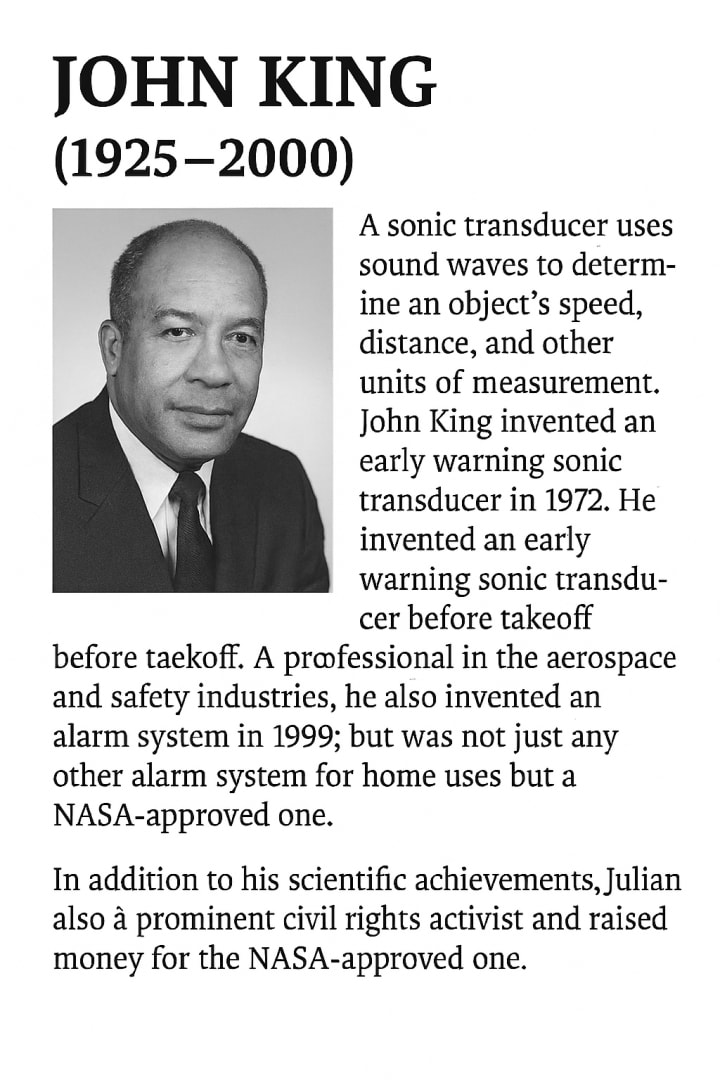
JOHN KING (1925–2000): The Engineer Who Helped Protect the Skies
John King was born in 1925, entering a world on the brink of transformative technological change. Decades before commercial jets filled the skies and space travel became possible, he grew up captivated by machinery, sound, and the invisible forces that make flight possible. As an adult, he would become one of the key figures in safety engineering—an innovator whose work quietly protected millions of passengers by helping prevent disaster before it struck.
King spent his professional life in the aerospace and safety industries, carving out a place for himself in fields where precision and reliability were not just ideals, but life‑or‑death requirements. His mind was tuned to the invisible rhythms of machines, especially the subtle vibrations, tones, and patterns that most people never noticed. Where others heard just noise, John King heard warnings, possibilities, and solutions.
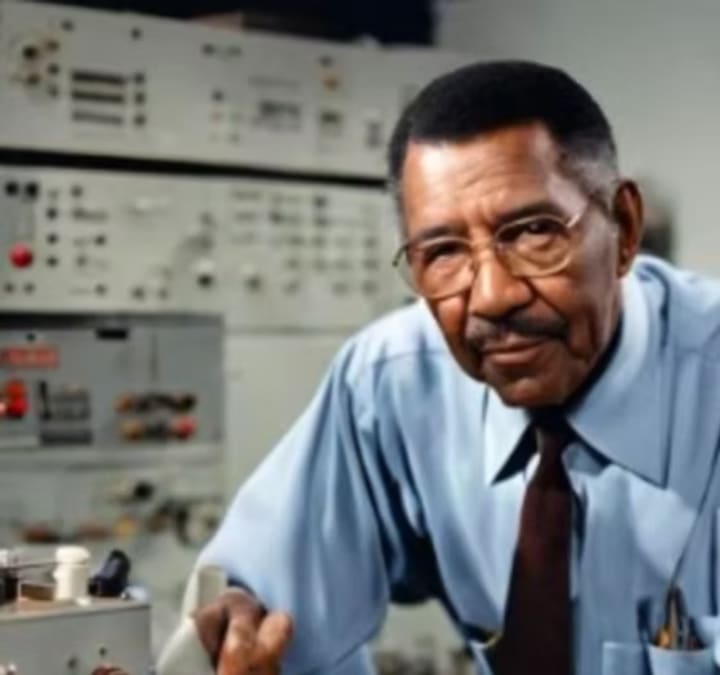
One of his most important contributions came in 1972, when he invented an early‑warning sonic transducer designed to detect potential problems in aircraft engines before takeoff. Sonic transducers operate by sending out sound waves and measuring how those waves bounce back. The reflected signal carries information about an object’s speed, distance, density, and structural condition. King understood that sound held secrets—clues that could reveal internal engine issues long before they became catastrophic failures in the air.
His design translated those sonic signatures into actionable warnings. By listening to subtle shifts in pitch and response, the device could detect engine abnormalities on the ground, allowing maintenance crews to intervene before a dangerous flight ever left the runway. At a time when aviation was rapidly expanding and passenger flights were becoming the norm, King's innovation contributed to safer travel and helped airlines adopt more proactive maintenance strategies.
But King wasn’t finished.
Nearly three decades later, in 1999, he revealed another invention—this time an advanced alarm system for home and industrial use. But unlike ordinary detectors on the market, King’s system met the rigorous standards of NASA, earning approval that set it apart from typical consumer devices. This was not a simple noise‑maker or convenience gadget; it was a safety instrument engineered with aerospace‑level precision. The system was designed to respond reliably under extreme conditions, making it suitable for environments where human life could depend on fast, accurate alerts.
Throughout his career, King developed a reputation as a problem‑solver who worked quietly but relentlessly. He was not a household name, yet his innovations lived inside machines and safety systems around the country. His work made flying safer, made homes and facilities better protected, and demonstrated how much impact one person can have by focusing on the unseen details that keep complex systems working smoothly.
John King’s legacy is the kind most people never realize they’ve benefited from. Every time an aircraft engine is checked using sound waves, every time a high‑precision alarm system prevents a tragedy, his influence echoes through those systems. His inventions helped protect the skies and safeguard the spaces where people live and work.
He was an engineer.
A visionary in safety technology.
A quietly transformative figure whose work continues to make the world safer long after his passing in 2000.
About the Creator
TREYTON SCOTT
Top 101 Black Inventors & African American’s Best Invention Ideas that Changed The World. This post lists the top 101 black inventors and African Americans’ best invention ideas that changed the world. Despite racial prejudice.
Keep reading
More stories from TREYTON SCOTT and writers in Chapters and other communities.
Valentine's Dates Over the Years
Colin grinned as Brooklyn slipped into the living room. “Is it all set?” he asked. The twenty-one year old grinned. She was in her last year of college and Colin knew that Lincoln was proud of her. Although she had been away at college, she’d eagerly helped Colin plan his surprise for Lincoln. “I’m so glad you’re finally doing this,” she said.
By Reb Kreyling16 days ago in Chapters
India vs Vietnam: Will 2026 Free Trade Agreements Transform India’s Export Economy?
From a commercial perspective, the year 2026 is likely to be considered historic for India. March has not even begun yet, and New Delhi has already concluded what is being called the “mother of all trade deals” with the European Union. At the same time, it has signed an agreement with the United States that is now being described as the “father of all trade deals.”
By Real content7 days ago in Chapters


Comments
There are no comments for this story
Be the first to respond and start the conversation.