
Percy Lavon Julian
The Chemist Who Changed Modern Science
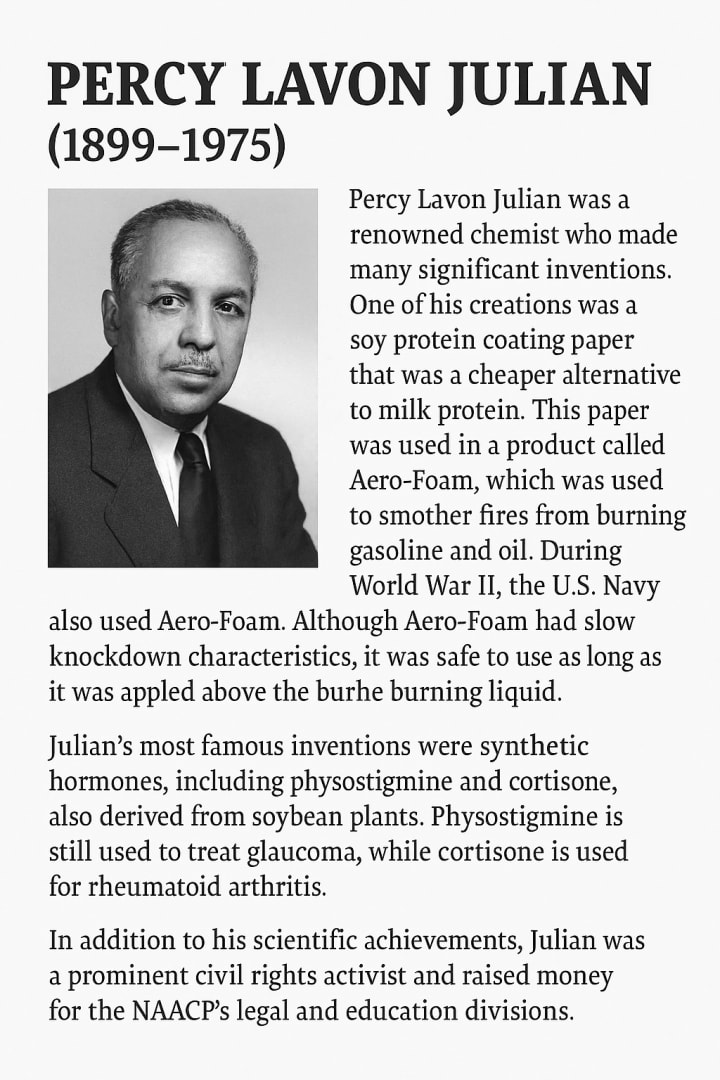
Percy Lavon Julian: The Chemist Who Changed Modern Science
Percy Lavon Julian was born in 1899 into a world that never expected greatness from a Black child raised under segregation. But from an early age, he was driven by a hunger for knowledge that no barrier, no law, no prejudice could contain. He rose from the classrooms of Alabama to become one of the greatest chemists in American history—an innovator whose work transformed industry, medicine, and even the battlefield.
Julian’s genius revealed itself through something as humble as the soybean. During the 1930s and 1940s, he focused intensely on finding new industrial and medical uses for soy proteins—an area many scientists overlooked. But Julian saw possibilities where others saw only cheap agricultural byproducts. One of these breakthroughs was a special soy‑based protein coating paper he designed as a low‑cost alternative to milk protein. This coated paper became the backbone of a revolutionary firefighting product known as Aero‑Foam.
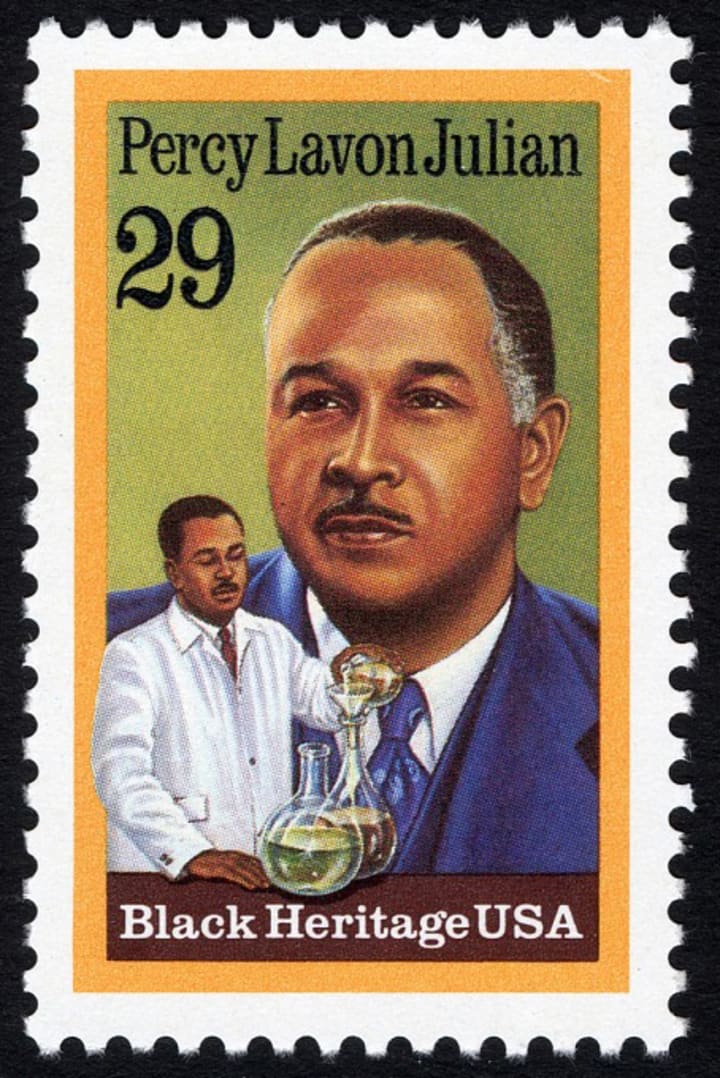
Aero‑Foam was simple yet brilliant. When applied correctly, especially from above the flame, it spread a thick, smothering blanket of foam over burning gasoline and oil. These were the kinds of fires that water could not tame. Aero‑Foam could. It deprived flames of oxygen and allowed firefighters to control fuel fires that once raged uncontrollably. During World War II, the U.S. Navy adopted Aero‑Foam, adding it to their arsenal of lifesaving tools aboard ships vulnerable to oil‑based infernos. Although the foam worked more slowly than later formulations, it was reliable, safe, and transformative. It saved lives because Percy Julian saw potential in a plant most people didn’t think twice about.
But Aero‑Foam was only the beginning.
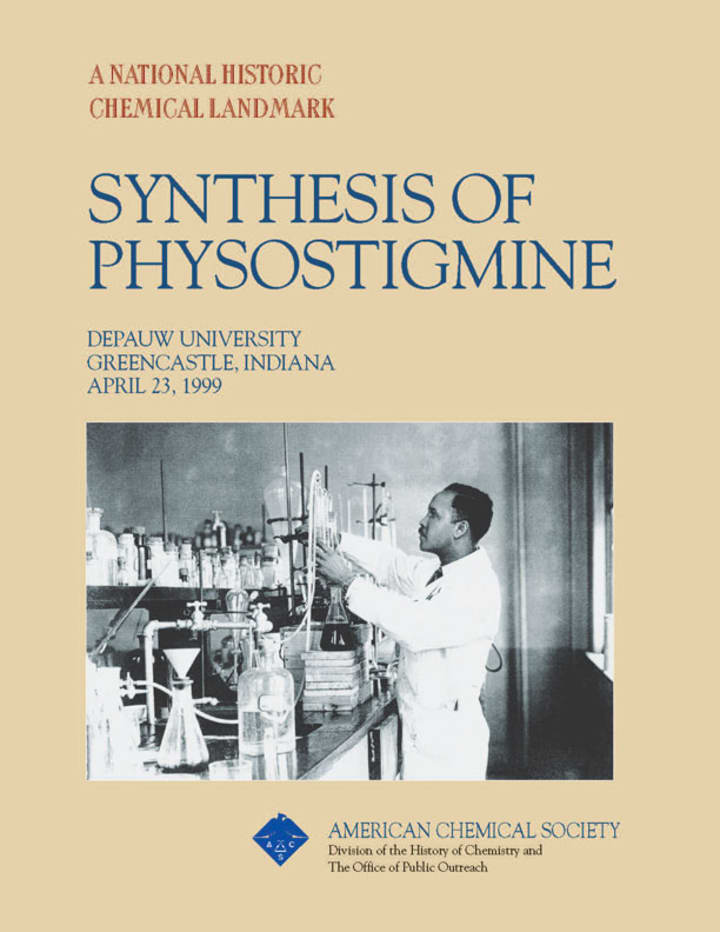
Julian’s most celebrated scientific triumphs came from synthesizing hormones—complex organic compounds once thought nearly impossible to produce artificially. Among them were physostigmine and cortisone, both derived from soybeans through Julian’s groundbreaking methods.
Physostigmine quickly became a vital treatment for glaucoma, helping patients preserve their vision by reducing eye pressure. Before Julian, obtaining physostigmine was slow, extremely expensive, and limited to small quantities extracted from rare plants. His work made it accessible, affordable, and consistent, improving countless lives.
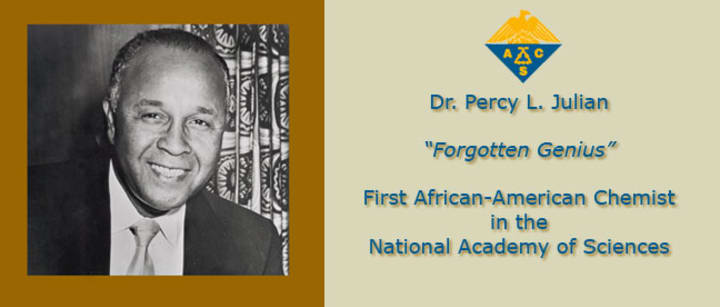
Cortisone, another of Julian’s major achievements, revolutionized treatment for rheumatoid arthritis and other inflammatory conditions. At the time, cortisone was considered nearly miraculous—but prohibitively expensive. Julian cracked the code to synthesize it on a large scale, turning a once‑rare medicine into an everyday therapeutic tool. His scientific contributions formed the backbone of modern steroid chemistry and opened the door to an entirely new class of lifesaving drugs.
Yet Julian’s impact reached far beyond the laboratory.
Despite his towering intellect and world‑changing discoveries, he faced constant racism—burning crosses on his lawn, job rejections, housing discrimination, and threats that would have pushed many people into silence. Percy Julian did the opposite. He became a vocal, unwavering advocate for civil rights.
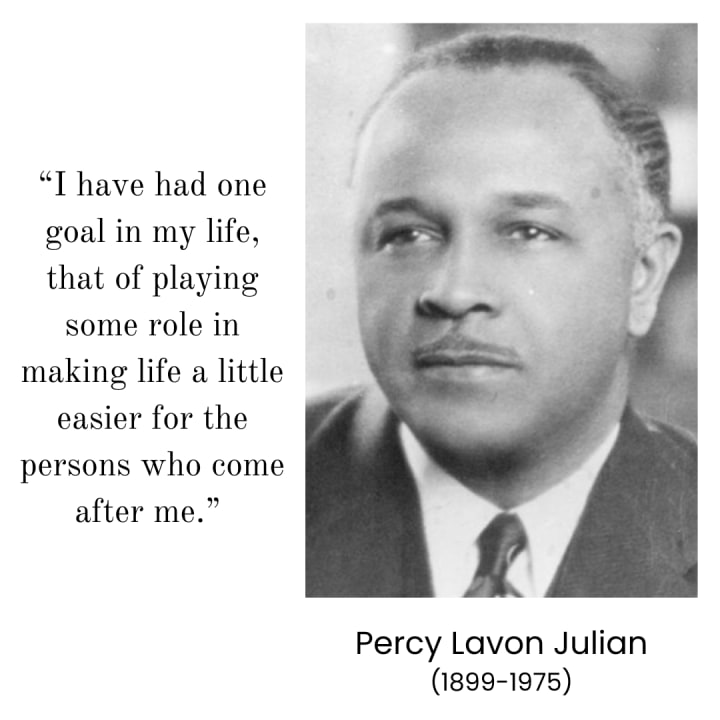
He raised critical funds for the NAACP’s legal defense and education divisions, supporting the very lawsuits that dismantled segregation across schools, transportation, and public life. He used his prominence not for personal comfort, but for collective liberation. His life became a direct example of excellence challenging oppression.
Julian stood at the crossroads of science and justice. He proved that brilliance could flourish even under the harshest conditions. He proved that a Black scientist could not only stand alongside the greatest minds of the era, but surpass them. And he proved that the fight for equality was not limited to marches and speeches—it also lived in laboratories, inventions, and intellectual courage.
When Percy Julian passed away in 1975, America lost a pioneer whose discoveries still shape medicine, industry, and civil rights today. From firefighting technology to life‑saving pharmaceuticals, from the Navy’s wartime safety to modern biomedical research, his legacy is embedded in the fabric of the nation.
He was a chemist. A visionary. A builder of the future.
And his story remains a powerful testament to what happens when genius meets determination.

About the Creator
TREYTON SCOTT
Top 101 Black Inventors & African American’s Best Invention Ideas that Changed The World. This post lists the top 101 black inventors and African Americans’ best invention ideas that changed the world. Despite racial prejudice.
Keep reading
More stories from TREYTON SCOTT and writers in Chapters and other communities.
John Parker
TAMPA, FL — John Parker remains one of the most remarkable yet often overlooked figures of the 19th century. Known nationally as a fearless conductor on the Underground Railroad and a dedicated American abolitionist, Parker helped liberate more than a thousand enslaved individuals—an extraordinary achievement requiring immense courage, secrecy, and resolve.
By TREYTON SCOTT15 days ago in Chapters
The Cave Part 6
If you have ever heard a tale about yourself that you cannot remember and doubtless think is made up, you will know how I felt when Tharkin related all that the eagle had seen of me before my memories were scattered. Of far distances and traveling companions that I did not recall, camping out under the stars and making our way to the mountains with deliberate purpose. The great bird had lost contact with my party once we entered the forests, and the seven other members were not seen again by him or his brethren since.
By Jamye Sharp13 days ago in Chapters
A Knight of the Seven Kingdoms Series Review (Season 1)
As one of the biggest properties in fantasy, A Song of Ice and Fire remains immensely popular with audiences. After reaching far into the past with House of the Dragon, a second spin-off was on the cards. A Knight of the Seven Kingdoms serves up a bite-sized slice of action and drama, but it still claims a spot among the best small-screen titles.
By Robert Caina day ago in Geeks


Comments
There are no comments for this story
Be the first to respond and start the conversation.