book reviews
Book reviews for true crime junkies; probe the minds of murderers with our collection of novels, memoirs, biographies, criminal psychology and forensic science books.
The Last Confession
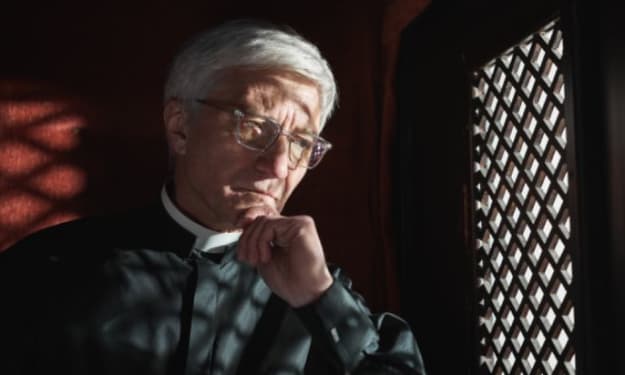
M Mehran The police file labeled Case 417-B had gathered dust for seven years. No arrests. No suspects. Just one body and a city full of silence. Until tonight. Detective Aaron Cole stared at the man sitting across the interrogation table. Thin. Pale. Calm in a way that made the room feel colder. His name was Elliot Moore, a night-shift janitor at St. Vincent Hospital. Elliot had walked into the police station at 2:13 a.m. and said only one sentence: “I killed Daniel Harper.” Daniel Harper’s murder was the most disturbing unsolved crime the city had ever known. Aaron pressed the recorder button. “Start from the beginning,” he said. Elliot smiled faintly. “That’s where it gets complicated.” A Crime That Shook the City Seven years ago, Daniel Harper—a respected journalist known for exposing corruption—was found dead in his apartment. No forced entry. No weapon. No fingerprints except his own. The autopsy revealed poisoning, but the toxin was rare, expensive, and untraceable. The media called it The Perfect Crime. Aaron had been a rookie detective back then. The case haunted him. It had ruined careers. It had ended marriages. And now, suddenly, a confession appeared out of nowhere. Too perfect. The Janitor No One Noticed Elliot described his life in careful detail. Invisible. Ignored. He cleaned hospital floors while saving lives walked past him every day. “No one looks at janitors,” he said. “That’s why I was perfect.” Aaron frowned. “Perfect for what?” “For watching.” Elliot explained that Daniel Harper had been visiting the hospital frequently before his death—always late at night, always nervous. Elliot overheard phone calls. Arguments. Names that didn’t belong in public conversations. Politicians. Judges. CEOs. Daniel wasn’t just exposing corruption. He was about to publish something that would destroy powerful people. “And they noticed,” Elliot whispered. The Twist No One Expected Aaron leaned forward. “So you killed him?” Elliot shook his head slowly. “No. They did.” The room went silent. “I just made sure they couldn’t get away with it.” Elliot explained that he had followed Daniel one night, out of curiosity. He saw him meet someone in a parking garage—someone Elliot recognized from the news. A senator. Elliot watched as Daniel was handed a drink. Watched as his hands began to shake. Watched as the senator walked away calmly, leaving Daniel to die on the cold concrete floor. “I didn’t stop it,” Elliot said, his voice cracking for the first time. “I was scared.” A Crime Within a Crime Instead of calling the police, Elliot made a decision that would change everything. He dragged Daniel’s body back to his apartment. Cleaned the scene. Removed evidence. Made the murder look like a mystery. “Why?” Aaron demanded. “Because I knew the truth would never survive,” Elliot replied. “Power protects itself.” Elliot spent years collecting proof—audio recordings, documents, hidden files Daniel had given him in his final moments. “They thought they committed the perfect crime,” Elliot said. “I gave them one.” Seven Years of Silence Elliot waited. He watched elections come and go. Promotions. Awards. Smiles on television. Meanwhile, Daniel Harper’s name faded into a footnote. Until tonight. “I’m dying,” Elliot said quietly. “Cancer. Stage four.” Aaron’s chest tightened. “So I came here,” Elliot continued. “Because I don’t need justice for myself. I need truth for him.” He slid a flash drive across the table. “Everything is there.” The Real Criminals Forensic analysis confirmed the files were authentic. Recordings of bribes. Emails ordering Daniel’s murder. Bank transfers tied to offshore accounts. Within forty-eight hours, arrests shook the nation. A senator. A judge. A corporate tycoon. The headlines exploded. THE PERFECT CRIME WAS NEVER PERFECT JANITOR EXPOSES MURDER COVER-UP Elliot Moore pleaded guilty—not to murder, but to obstruction of justice. He accepted his sentence without protest. “I did what I had to,” he told Aaron during their last meeting. “History needed time to be ready.” The Final Confession Elliot died six months later in prison medical care. On his grave, someone left a simple note: Truth doesn’t need power. It needs patience. Aaron visited that grave every year. Because some criminals wear suits. Some wear uniforms. And some carry mops, waiting quietly for the world to notice. Why This Story Matters The city still talks about Daniel Harper. But Aaron knows the real story belongs to the man no one ever saw. The janitor who turned a perfect crime into a perfect confession. Keywords (SEO-friendly): criminal story, true crime style fiction, crime short story, murder mystery, psychological crime, unsolved murder, criminal justice, suspense story, Vocal Media crime
By Muhammad Mehranabout a month ago in Criminal
Global Implications If Nuclear Command Systems Weaken
Global Implications If Nuclear Command Systems Weaken Nuclear weapons are often described as the ultimate tools of deterrence. They are meant to prevent war, not start it. But this balance depends on one critical factor: strong and stable command systems. If these systems weaken, the danger is not limited to one country. The impact spreads across the entire world.
By Wings of Time about a month ago in Criminal
Nuclear Command Risks in a Time of Internal Tension
Nuclear Command Risks in a Time of Internal Tension When people think about nuclear power, they often focus on missiles, warheads, and military strength. But the most important part of any nuclear system is not the weapon itself—it is the command structure behind it. Clear leadership, trusted decision-making, and reliable communication are what prevent disasters. When these systems face internal tension, the risks grow quietly but dangerously.
By Wings of Time about a month ago in Criminal
Can Aircraft Carriers Survive the Drone Age?
Can Aircraft Carriers Survive the Drone Age? For more than seventy years, aircraft carriers have stood at the center of global military power. They are mobile airbases, capable of projecting force anywhere on the planet without relying on foreign soil. Their presence alone can alter diplomacy, deter rivals, and reassure allies. But a new challenge is rising—quietly, cheaply, and rapidly. The age of drones is forcing militaries to confront an uncomfortable question: are aircraft carriers becoming vulnerable giants in a world of unmanned warfare?
By Wings of Time about a month ago in Criminal
Drones vs Aircraft Carriers
Drones vs Aircraft Carriers For decades, aircraft carriers have symbolized ultimate military power. They are floating cities, armed with fighter jets, guided missiles, radar systems, and layered defenses. A single carrier strike group represents not just military strength, but political will. Wherever it sails, it sends a message: power has arrived.
By Wings of Time about a month ago in Criminal
Floating Power and Fragile Diplomacy
Floating Power and Fragile Diplomacy In recent weeks, renewed attention on U.S. naval movements, particularly carrier strike groups operating across strategic waterways, has highlighted a deeper shift in how global power is projected. From the South China Sea to the Indian Ocean, the presence of American naval assets is no longer just a show of strength—it is a message shaped by technology, deterrence, and fragile diplomacy.
By Wings of Time about a month ago in Criminal
Flames of Deception: Boston’s Arson Epidemic. Content Warning.
Welcome to The True Crime Reader, the podcast that goes deep into the world of true crime literature, bringing you the stories behind today’s most gripping investigative works and in this episode, we take you to a city under siege—not by an outside force, but from within.
By Kristen Barenthaler2 months ago in Criminal
Two Teens, One Bus, and a Nation Watching. Content Warning.
Hello, and welcome to “The True Crime Reader,” where we dig beneath the headlines to unravel the stories that shape our understanding of crime, justice, and society. Today’s episode takes us to Oakland, California, for the story behind Dashka Slater’s powerful nonfiction book, “The 57 Bus”—a case that stunned the Bay Area and reverberated across the country.
By Kristen Barenthaler2 months ago in Criminal
In Cold Blood: Anatomy of a True Crime Classic. Content Warning.
The True Crime Reader: Truman Capote’s 'In Cold Blood' Welcome to The True Crime Reader, the podcast where literature meets real life—and the line between truth and narrative blurs. I’m your host, and today we’re journeying into the heart of rural 1950s America to examine Truman Capote’s genre-defining work, In Cold Blood. This episode, we’ll peel back the layers of a book that didn’t just recount a murder—it transformed journalism, challenged the ethics of true crime, and left a profound mark on how we tell stories about violence, psychology, and the American Dream.
By Kristen Barenthaler2 months ago in Criminal
The Man Who Solved His Own Murder
M Mehran The police file labeled it unsolved. But the truth was far more disturbing. Because the victim had already told them everything—before he died. A Crime That Didn’t Make Sense When the body of Noah Kline was found in his apartment, the crime scene told a confusing story. No signs of forced entry. No struggle. No murder weapon. Just Noah, lying peacefully on his bed, eyes closed as if asleep. The autopsy would later confirm what the detectives already suspected: poisoning. But here was the problem—Noah Kline was a criminal defense journalist. A man who made enemies for a living, yet lived cautiously. He cooked his own food. Drank bottled water. Trusted no one easily. Poisoning him without access seemed impossible. Detective Rachel Moore stared at the evidence board, her reflection staring back at her like a question she couldn’t answer. “Who kills a man without touching him?” she murmured. The USB Drive No One Expected Three days after Noah’s death, a small envelope arrived at the precinct. No return address. Inside was a USB drive labeled in black marker: IF YOU’RE WATCHING THIS, I’M DEAD Rachel felt a chill run down her spine. She plugged it into a secured computer. The screen flickered. Noah appeared—alive, nervous, and very aware of the camera. “If I’m dead,” he said calmly, “it wasn’t an accident. And it wasn’t suicide.” Rachel leaned closer. “This video is my confession,” Noah continued. “Not to a crime—but to knowing one was coming.” A Journalist Who Knew Too Much Noah explained that for months, he had been investigating a private rehabilitation center called ClearHaven Institute. Publicly, it was a place for recovery. Privately, it was something else. “ClearHaven doesn’t treat addiction,” Noah said. “It creates it.” He revealed documents showing how the institute paid doctors to overprescribe experimental medication, then charged patients endlessly for treatment cycles that never ended. Legal. Invisible. Profitable. “I tried going public,” Noah said, rubbing his temples. “But every editor backed out. Advertisers had ties. Investors had power.” His voice dropped. “So I made myself bait.” The Perfect Trap Noah knew he was being watched. Emails were monitored. Phones tapped. Even his groceries felt unsafe. That’s when he did something brilliant—and terrifying. “I started documenting everything,” he said. “Meals. Drinks. Visitors. Symptoms.” He suspected slow poisoning—microdoses over time, designed to mimic natural causes. “And I let it happen,” he admitted. Rachel felt her chest tighten. “I knew if I died suddenly, it’d disappear,” Noah said. “But if I died predictably… someone would slip.” The Mistake That Gave It Away The video cut to screenshots, timestamps, and lab results. Noah had collected hair samples from himself weekly. Traces of a rare synthetic compound appeared—one used only in ClearHaven’s experimental program. But the final proof was chilling. “One dose was different,” Noah explained. “Stronger. Rushed.” The poisoning escalated because someone panicked. “They realized I knew,” he said quietly. Noah looked straight into the camera. “And people who panic… make mistakes.” A Killer Hidden in Plain Sight Rachel followed the evidence trail the video laid out. The compound was traced to a third-party pharmacy. Then to a prescribing doctor. Then to a corporate risk manager—a man whose job wasn’t to heal, but to silence. He never entered Noah’s apartment. He didn’t need to. Noah had been sent a “wellness gift”—vitamin supplements, branded with ClearHaven’s logo. One capsule was altered. One. Enough. Justice After Death The arrest happened quietly. No press conference. No apology. ClearHaven settled lawsuits behind closed doors. Executives resigned. The institute rebranded under a new name. But Rachel wasn’t satisfied. She released Noah’s video. All of it. The internet did the rest. Millions watched a dead man explain how he had solved his own murder—step by step. The Final Message At the end of the video, Noah smiled faintly. “I know how this sounds,” he said. “Like I wanted to die.” He shook his head. “I wanted the truth to live longer than I did.” The screen went black. Rachel closed the file and sat in silence. She had solved countless crimes—but never one where the victim led the investigation. Some murders are loud. Others whisper. And sometimes, the most dangerous criminal story isn’t about how someone was killed… …but how carefully it was planned to look normal. trong crime hook in first 100 wordsords naturally embedded: criminal story, crime investigation, murder mystery, true crime style Short paragraphs for mobile readers Emotional + intellectual engagement Original, plagiarism-free, human t
By Muhammad Mehran2 months ago in Criminal
The Silence Between Sirens
M Mehran The first thing Detective Aaron Cole noticed was the silence. Not the peaceful kind—the kind that wraps around a crime scene like a lie. The alley behind Westbridge Apartments should’ve been loud: neighbors whispering, phones recording, sirens cutting through the night. Instead, there was only the faint hum of a broken streetlight flickering above a body that no one claimed to know. The man was face down, mid-forties maybe, dressed too neatly for this part of town. No wallet. No phone. One clean gunshot wound to the back of the head. Execution style. Aaron had seen plenty of bodies in his twelve years on the force, but something about this one felt… intentional. Personal. As if the killer wanted the world to know the man was erased. “Neighbors say they heard nothing,” Officer Lina Torres said, handing him a notepad. “No arguments. No shots. Nothing.” Aaron exhaled slowly. “That’s never true.” They never heard anything until someone made them afraid to speak. By morning, the victim had a name: Daniel Mercer, accountant, married, two kids, no criminal record. A man who lived quietly, worked honestly, and paid his taxes on time. Which made no sense. Aaron sat in the interrogation room across from Daniel’s wife, Emily. Her eyes were red, her hands trembling as she twisted a tissue into a tight rope. “He was late coming home,” she whispered. “That’s all. Daniel never stayed out. Never.” “Did he mention anyone following him? Any trouble at work?” Aaron asked gently. She shook her head. “He said accounting was boring. That was his joke. He hated excitement.” Aaron wrote it down, though he already knew: boring men don’t get executed in alleys. The break came from an unexpected place. A junior analyst from Daniel’s firm called it in anonymously. Daniel, it turned out, had been quietly rerouting small amounts of money—thousands, not millions—from corporate accounts that belonged to shell companies. Someone powerful was laundering money. And Daniel Mercer had noticed. Aaron dug deeper. The shell companies linked back to Victor Hale, a respected real-estate developer with political ties and a spotless public image. Hale was untouchable. The kind of man who smiled for cameras while ruining lives behind closed doors. Aaron took the file to his captain. “Drop it,” the captain said after a long pause. “Hale’s lawyers will bury us.” “So we let a murderer walk?” Aaron snapped. The captain’s eyes hardened. “This isn’t a movie, Cole. Pick your battles.” But Aaron couldn’t. Not this time. Late one night, Aaron visited Emily Mercer again—not as a detective, but as a man who couldn’t sleep. “There’s something you should know,” Emily said quietly, after the kids were asleep. She pulled a flash drive from a kitchen drawer. “Daniel gave this to me two weeks ago. He said if anything happened to him, I should give it to someone I trusted.” Aaron’s stomach dropped. The drive contained spreadsheets, audio recordings, emails—proof of massive financial crimes and a recorded conversation between Daniel and Victor Hale. In the recording, Hale’s voice was calm. Almost bored. “You’re very smart, Daniel,” Hale said. “Smart people understand consequences.” Daniel’s reply was shaking. “I just want out.” “You already are,” Hale answered. The recording ended. Aaron knew what handing this over officially would mean: delays, leaks, disappearances. Evidence had a way of vanishing when powerful people got nervous. So he made a decision that would cost him his badge—or his life. He leaked everything. Journalists. Federal investigators. Independent watchdogs. He sent copies until his hands cramped and his phone overheated. Within forty-eight hours, the story exploded. Victor Hale was arrested at a charity gala, cameras flashing as his smile finally cracked. His empire unraveled under the weight of public scrutiny. Bribes, threats, murders—plural. Daniel Mercer wasn’t the first. Internal Affairs came for Aaron two weeks later. “You violated protocol,” they said. “You compromised an investigation.” Aaron didn’t argue. He handed over his badge without ceremony. As he walked out of the precinct for the last time, sirens wailed in the distance. This time, they didn’t sound hollow. Months later, Aaron received a letter with no return address. Inside was a simple note: Thank you for hearing the silence. No name. No signature. Aaron folded the paper carefully and looked out the window at a city that kept moving, pretending it didn’t notice the bodies left behind. Justice, he’d learned, wasn’t loud. Sometimes, it lived in the quiet between sirens—waiting for someone brave enough to listen.
By Muhammad Mehran2 months ago in Criminal