book reviews
Book reviews for true crime junkies; probe the minds of murderers with our collection of novels, memoirs, biographies, criminal psychology and forensic science books.
The Problem With True Crime
True crime is a fascinating subject that draws in people from all over the world. There’s a dark curiosity about what murders or robberies happened in an area close by. What famous criminals walked the streets you shop on? Is old Mrs Patterson really the sweet lady she seems, or is she an uncaught mastermind of a thief? What makes a person kill?
By Blake Smith4 years ago in Criminal
10 Great Crime Books I've Read in 2021 (so far!)
The Golden Age of Crime Novels is said to be between the 1930s and the 1960s, but actual dates tend to differ with Britain gaining its Golden Age by the time people like Graham Green and Agatha Christie walked on to the scene. Then, across the water in the USA - there were more films being made than literature in terms of fame with the noir culture peaking with Carol Reed's "The Third Man" (1949) - and its snazzy soundtrack.
By Annie Kapur4 years ago in Criminal
Charlene
Charlene The next night… I always knew the past was going to come back and haunt my girls and me one day. I’d only hoped it wouldn’t get them hurt or worse, killed. Mike and I had a well-kept oiled machine in place during our run the streets. Like I told the girls, their father ran his set just like that of a fortune five hundred firm. He treated everyone from his right-hand man, Louis, to his corner boys, with the utmost respect. That’s why he was untouchable for a long time. The men and women who worked for him were loyal. Some have even had their lives taken because they refused to turn on him. They all loved and respected him because of his love and respect for them.
By Yolanda Williams5 years ago in Criminal
The Devil’s Marble Grave Marker
Devil in a Blue Dress by Walter Mosley is an intense and thrilling detective novel following the main character Easy Rawlins on his mission to find a girl named Daphne Monet in late 1940’s Los Angeles. Throughout the novel Easy has his home, his one beloved possession, broken into several times, is beaten by the police, has friends brutally murdered, and in the end still manages to find the girl in the blue dress he was set forth to locate from the beginning of the novel. However, through all of the emotional ups and downs Walter Mosely exposes his readers to, one might be inclined to overlook the most important part of the story: the title. It is of common assumption that the noted devil in the blue dress from the novels title is the character introduced wearing a blue dress and the one whom Easy says, “That girl is the devil man” (Mosley 148), however, when considering her actions throughout the story and her reason behind those actions, one might need to consider that Daphne is not the true “devil” in the story at all. A true evil character is one who lies and deceives friends for selfish gain and to only further themselves in life and also is one who will kill to cover up what they do not wish others to discover about them. There is only one character who embodies all of these elements true to the nature of a devil and this character is the one who is described as having “a knot over his right eye that always looked red and raw” (Mosley 8), much like the horn of the devil barely hidden beneath his tattered skin. His lies, manipulation, and merciless killings validate that Walter Mosley’s “devil in a blue dress” is none other than the gracious friend and seemingly innocent bar owner, Joppy Shag.
By Alyssa Anderson 5 years ago in Criminal
Bleak House, by Charles Dickens
The story of Bleak House by Charles Dickens is told by two narrators, one of them being Esther Summerson, the central character of the book. There are therefore two distinct voices. Esther’s is compassionate and thoughtful, whereas the unnamed other narrator is rhetorical and witty, always speaking in the present tense. There has been a debate ever since the book was first published (1852-3) as to whether the double narrative works as a literary device.
By John Welford5 years ago in Criminal
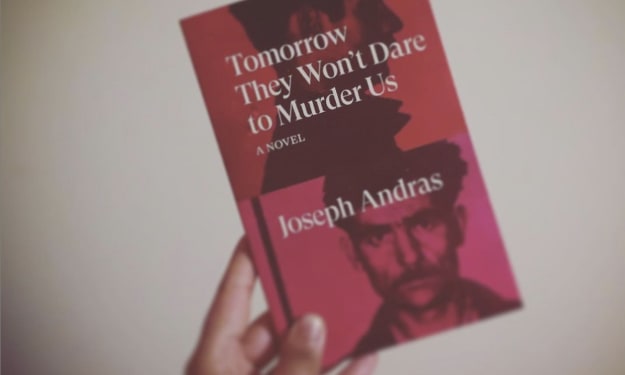
Book Review: "Tomorrow They Won't Dare to Murder Us" by Joseph Andras
“Tomorrow They Won’t Dare to Murder Us” is a book about morality and how we begin to question it in situations of extreme danger. When a terrorist attack is being planned by Algerians upon France, there is a certain expectation that we must detest them and we must condone the safety of the public. When the Algerians state that nobody must die then not only do we begin to question our morality but we also begin to question their motives. In this book, we see exactly what horrors these people have endured their more violent neighbours of the French. We see exactly how the Algerians are constantly treated as the outsiders despite being able to speak French and live as the French do. We see exactly the price that is paid for being different in even the slightest of ways. Within the book there are these moments of brutality in which we see people come together against adversity and yet, be punished differently based on who they are and where they are from. It is an absolutely gut-wrenching book for the most part because of the way in which we see certain characters go through intense amounts of pain.
By Annie Kapur5 years ago in Criminal
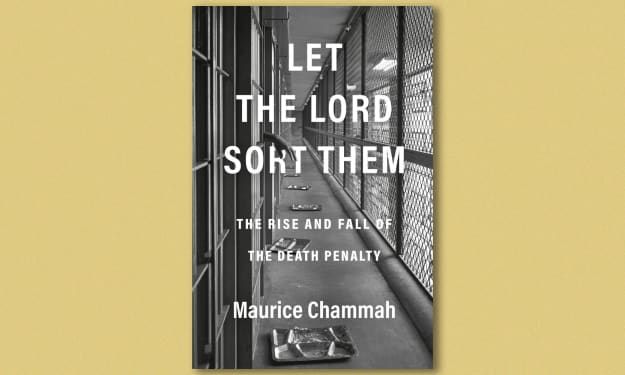
Book Review: "Let the Lord Sort Them" by Maurice Chammah
We can shout "abolish the death penalty" all we like here in England, we do not actually have it. In my opinion, it is completely inhumane for the government and the judicial system to take someone's life into their own hands - especially when there are still violent prejudices which run rampant through the system itself. This book by Maurice Chammah makes the perfect case against the death penalty, going from the falsely accused to the racial implications all the way down to every statistic you can think of. All of them show us that death row either is not right, or is being used in the entirely wrong way.
By Annie Kapur5 years ago in Criminal