capital punishment
Weigh the pros, cons and controversies surrounding the grave issue of capital punishment; should the death penalty be allowed?
The Epstein Files : Never Missed It
Introduction: The Shadow Over the Elite For decades, Jeffrey Epstein was a symbol of extreme wealth and high-society connections. He moved in elite circles, but beneath the surface lay a dark network of exploitation. The "Epstein Files" are more than just legal documents; they are a window into a world where power was used to silence the innocent. This is the story of how that world finally began to crumble.
By Abu Obaida22 days ago in Criminal
The Death of Kendrick Simpson. Content Warning.
The scream for blood grew louder as the date approached for one, Kendrick Simpson. An insult to his hat starts the end of his life. The clock ticked down on a man who has had time to sit and think about the figurative sword that has dangled above his head for all these years. Since his convictions in 2007, a murderer has reflected on his actions. A sword that fell in the mid-morning hours of February 12, 2026.
By Cassie Moore22 days ago in Criminal
Epstein | Leaked Emails EXPOSED Part 3
In February 2022, Andrew had settled a lawsuit with Virginia as per which, Virginia was paid £12 million. Andrew's name appears multiple times in the latest released files. Emails from 2010, where Epstein offered to introduce Andrew to a 26-year-old beautiful, Russian woman. Andrew replied that he'd be delighted. In an email, Andrew talks of having dinner with Epstein in the Buckingham Palace. The most shocking thing here is that the woman who accused Andrew, Virginia, committed suicide in April 2025.
By Imran Ali Shah23 days ago in Criminal
Epstein | Leaked Emails EXPOSED Part 4
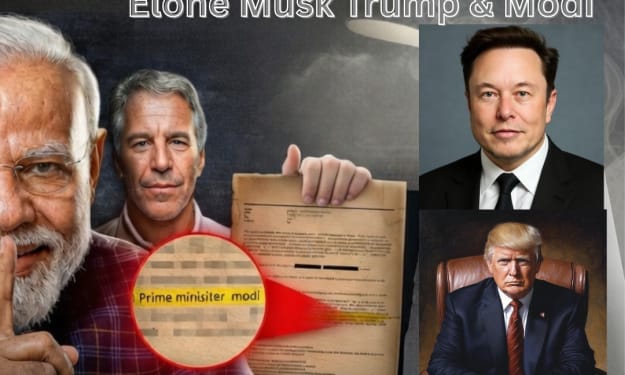
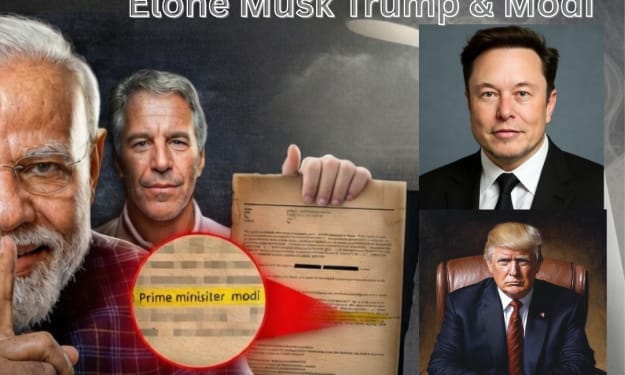
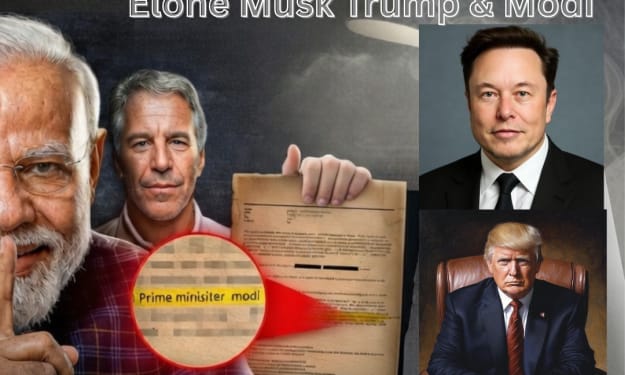
Totally buys into your vision." Pay attention to two things in these messages. First, he also mentions G20. India was going to host the G20 in 2022. And second, look at the first two words. "His guy" They referred to Anil Ambani as Narendra Modi's guy. The same night, at 1:05 AM, Epstein sent a message to Ambani. "Today was a treat. Nice seeing you." And between 4 - 4:30 in the morning, Epstein wrote to Bannon. "His focus wants to be stopping China. I can set. You should meet with Modi."
By Imran Ali Shah24 days ago in Criminal
Epstein | Leaked Emails EXPOSED Part 1
Hello, friends. A seven-storey house in New York City. The entrance of this house, is decorated with dozens of fake eyes. A sculpture hangs in the middle of the hall. A sculpture of a bride, hanging on a rope. And there's a taxidermied tiger sitting in the office. At the corner of the office, there's a shelf. And on this shelf is the first edition of Lolita. An infamous novel, in which an adult man abuses a minor girl. This isn't from a movie set. The most powerful people of the world used to visit this house.
By Imran Ali Shah24 days ago in Criminal
What Happened in the Tumbler Ridge Shooting
**What Happened in the Tumbler Ridge Shooting** On February 10, 2026, a devastating mass shooting occurred in the small town of Tumbler Ridge, British Columbia, Canada. The attack took place at Tumbler Ridge Secondary School, serving students from grades seven through twelve. Around 1:20 p.m., authorities received reports of an active shooter inside the school. Residents were instructed to stay indoors while police responded. The shooting resulted in ten fatalities, including the alleged shooter, and over twenty-five people were injured, marking it as one of the deadliest school shootings in recent Canadian history.
By America today 24 days ago in Criminal
Michael Dewayne Smith. Content Warning.
Michael Dewayne Smith was only 19 years old when he was called an “urban terrorist” by the district attorney. Smith was a kid from Del City, Oklahoma, Folks, he was barely out of his family home. He had been a kid who grew up in a gang culture that was hard to escape, even in a city in Oklahoma.
By Cassie Moore25 days ago in Criminal
REMOVAL OF TRUMP
I. Introduction Over the last several years, former President Donald J. Trump has been at the center of an unprecedented series of legal battles spanning criminal indictments, civil fraud actions, and high‑profile attempts by prosecutors at both the state and federal levels to hold him accountable for alleged misconduct. While many cases were dismissed or withdrawn following his 2024 reelection, one criminal conviction and one major civil verdict remain central to the legal record. This investigative report documents these proceedings factually, using verified details and citations from court reporting, reputable journalism, and public case histories.
By Organic Products 25 days ago in Criminal
The Man Who Confessed to a Murder He Didn’t Commit
M Mehran The police station was quiet when the man walked in at 4:46 a.m. No blood on his clothes. No weapon in his hands. Just a calm face and a single sentence that would haunt the city for years. “I killed my wife,” he said. Officer Lena Morales looked up from her desk, expecting panic or madness. Instead, she saw relief—like the man had been holding his breath for months and finally let it out. His name was Aaron Keller. A schoolteacher. No criminal record. No history of violence. And yet, an hour later, his wife Emily Keller was found dead in their suburban home. A Perfect Confession Aaron’s confession was detailed—too detailed. He described the argument, the kitchen knife, the exact moment Emily fell. He even told police where to find the weapon. Everything matched the crime scene perfectly. The media devoured the story. “Husband Confesses to Brutal Murder” “A Monster Behind a Gentle Smile” Aaron didn’t hire a lawyer. He waived his right to silence. He pleaded guilty in court with a steady voice. Case closed in three weeks. But something was wrong. The Detective Who Didn’t Believe It Detective Marcus Hale had seen hundreds of confessions. Real ones were messy—filled with excuses, anger, or fear. Aaron’s was clean. Almost rehearsed. More troubling was Emily Keller’s background. She worked as an accountant for a private investment firm currently under investigation for financial fraud. Millions were missing. Names were being erased. Files were vanishing. Emily had been scheduled to meet federal auditors the morning after her death. Then she never woke up. Hale dug deeper—and found a gap. No neighbors heard a fight. No defensive wounds on Aaron. And the knife? Wiped clean of all prints except Aaron’s. Too perfect. A Prison Visit That Changed Everything Six months into Aaron’s life sentence, Hale visited him in prison. “Why did you really confess?” Hale asked. Aaron stared through the glass. “Because if I didn’t, someone else would die.” Hale leaned in. “Who?” “My daughter.” That was when the truth began to bleed out. The Threat No One Saw Two weeks before Emily’s death, Aaron received an unmarked envelope. Inside were photos—his daughter walking home from school, playing in the park, sleeping in her room. Along with a note: Confess, or we finish what we started. Emily had discovered illegal transfers linked to organized crime. When she tried to leave the firm, she was marked. Killing her was easy. Framing Aaron was easier. “They told me exactly what to say,” Aaron whispered. “What to remember. What to forget.” The confession wasn’t guilt. It was a deal. When the Truth Is Too Dangerous Hale took the information to his superiors. The case was shut down within 24 hours. He was told to stop digging. The investment firm vanished overnight. Executives relocated. Records burned. Witnesses recanted. And Aaron Keller stayed in prison. A Second Murder Three years later, another accountant from the same firm was found dead—same method, same silence, same precision. This time, there was no confession. Hale reopened the Keller file quietly. He leaked evidence to a journalist. The pattern was undeniable. The killer wasn’t Aaron. It was a professional cleanup crew protecting a criminal empire. The Cost of a Lie Aaron Keller was released after four years behind bars. Emily Keller’s murder remains officially “solved.” But the truth never made headlines. Aaron lives alone now, raising his daughter in a town where everyone still remembers his face—but not the facts. Detective Hale resigned from the force. In his resignation letter, he wrote: “Our justice system doesn’t always punish the guilty. Sometimes it selects a sacrifice.” Why This Crime Still Haunts Us Criminal stories like Aaron Keller’s reveal a terrifying reality: confessions don’t always mean guilt. Sometimes, they’re weapons—used by powerful people to bury the truth. And sometimes, the most dangerous criminals are never arrested—because they never leave fingerprints. They leave fear.
By Muhammad Mehran26 days ago in Criminal
The Last Confession in Cell No. 14
M Mehran The confession came at 2:17 a.m., scratched onto a torn piece of prison stationery, written with a pen that barely worked. By morning, the man who wrote it would be dead. Cell No. 14 had a reputation inside Blackmoor Central Prison. Guards avoided it. Inmates whispered about it. It was where cases went to die—unsolved murders, buried truths, and men society had already forgotten. Daniel Hargreeve had lived in that cell for twelve years. Convicted of the brutal murder of journalist Clara Whitmore, Daniel was labeled a monster by the media. Headlines called him “The Silent Butcher.” He never defended himself in court. Never cried. Never begged. He simply accepted the life sentence and disappeared behind iron bars. But Daniel wasn’t silent anymore. A Crime That Shocked the City Clara Whitmore was fearless. As an investigative journalist, she exposed corruption, drug trafficking, and political scandals that others were too afraid to touch. Her final article, published just hours before her death, hinted at a powerful criminal network operating inside the city’s justice system. The next morning, she was found dead in her apartment—stabbed seventeen times. There were no signs of forced entry. Daniel Hargreeve, her former neighbor, was arrested within 48 hours. The evidence looked airtight: fingerprints on a glass, CCTV footage placing him near the apartment, and a past argument between the two. The public demanded justice, and the court delivered it swiftly. Case closed. Or so everyone thought. Twelve Years of Silence Inside Blackmoor, Daniel became a ghost. He spoke to no one. He refused visitors. Even when beaten by other inmates, he never fought back. Guards said he slept sitting up, staring at the wall like he was waiting for something. Only one person tried to understand him—Detective Elias Monroe. Monroe was a young officer during the original investigation. Something about Daniel’s blank acceptance never sat right with him. Over the years, Monroe revisited the case files obsessively, finding small inconsistencies that others ignored. Missing phone records. A corrupted hard drive. Witnesses who changed their statements. Still, nothing strong enough to reopen the case. Until the night Daniel asked to see him. The Confession When Monroe entered Cell No. 14, Daniel looked older than his 39 years. His hands trembled, not from fear—but urgency. “I didn’t kill Clara,” Daniel said quietly. “But I know who did.” Monroe leaned forward. “Why now?” “Because they’re cleaning up,” Daniel replied. “And I’m next.” Daniel revealed that Clara had discovered a secret alliance between a powerful businessman, a senior judge, and a prison contractor laundering money through private correctional facilities. She hid encrypted files on a flash drive—and trusted Daniel to keep it safe. The night she was murdered, Daniel found her already dead. Before he could call the police, men arrived. Professionals. They framed him with surgical precision. “They told me if I spoke,” Daniel said, “my family would disappear.” So he stayed silent. For twelve years. The Price of Truth That same night, Daniel was found dead in his cell—official cause: suicide. But Monroe knew better. Hidden inside the prison Bible was the flash drive Daniel mentioned. Inside were documents, recordings, and video evidence—enough to bring down an empire. The story exploded. The judge resigned. The businessman fled the country. The prison contractor was arrested trying to destroy records. And for the first time in twelve years, the media used Daniel’s name without the word “killer.” Justice Came Too Late Daniel Hargreeve was exonerated posthumously. His family received an apology. A weak one. Cell No. 14 was sealed permanently. Detective Monroe often stands outside it, reading the copy of the confession Daniel left behind. The last line still haunts him: “The system didn’t fail me. It worked exactly as it was designed.” Why This Crime Still Matters The case of Clara Whitmore reminds us that some crimes are buried not because they’re unsolvable—but because the truth is dangerous. Criminal justice stories like this expose how power, fear, and silence can destroy innocent lives. And sometimes, the most important confession comes when it’s already too late.
By Muhammad Mehran26 days ago in Criminal