Latest Stories
Most recently published stories in Critique.
Do we really need AI videos?
By now, you’ve likely seen what the latest AI video model, Seedance 2.0, can do. If you haven’t, just look around. The videos flooding your feed—the ones with perfect lighting, cinematic depth, and hyper-realistic motion—they’re not real. They were all generated by AI.
By John Zhangabout an hour ago in Critique
‘We have enough’: Godfrey renews call for Black entertainers to stop seeking white validation after BAFTAs, praises Image Awards
DEI must die. It’s been far too long for Foundational Black Americans (FBA) and tethers to come up and say things like #OscarsSoWhite. So what? NAACP Image awards are about RAH, Representation, Agency, and Honor. Black people have to stop crying about their snubs at award shows that often overlook them.
By Skyler Saundersabout 7 hours ago in Critique
Cardi B Cans Feud With Trump Advisor Over Nicki Minaj Bot Claims Out Of Paranoia
If you had the might of the United States government breathing down your neck, you’d retreat, too. Cardi B has taken to social media to proclaim that she wants no problems with President Trump advisor Alex Bruesewitz. She claims that she is protecting herself and family from possible attacks waged by the White House.
By Skyler Saundersabout 19 hours ago in Critique
"The Shell in the Ghost, I Am Major"
In 2017, Hollywood did something predictable and scandalous at the same time: it remade the Japanese cyberpunk classic Ghost in the Shell and placed a blonde American star at its centre. The actress was Scarlett Johansson. Critics argued about cultural appropriation, about empire, about whether the United States had once again absorbed a foreign myth and refashioned it in its own image. Yet beyond the controversy, the American Ghost in the Shell remains a philosophically provocative film. It forces a simple but radical question: what is a human being made of?
By Peter Ayolova day ago in Critique
The Theory of the New Leisure Class
The Theory of the New Leisure Class: Homo Essentialis Thorstein Veblen wrote The Theory of the Leisure Class in 1899 to describe a social order in which status was displayed through visible idleness and conspicuous consumption. More than a century later, idleness has disappeared as a badge of honour, yet Veblen’s central insight has only intensified. The ruling class of the twenty-first century does not sit idle; it performs busyness. It does not withdraw from work; it transforms work into theatre. What we are witnessing is not the disappearance of the leisure class but its mutation. This is Leisure Class 2.1. This is Homo Essentialis.
By Peter Ayolov2 days ago in Critique
Matter in Revolt
Matter in Revolt: How Diamat Becomes History (The Architecture of Chaos in the 21st Century) The twenty-first century does not suffer from chaos; it suffers from misunderstood structure. Climate breakdown, algorithmic governance, financial volatility, pandemics, digital feudalism—these are not isolated crises. They are converging contradictions. What appears fragmented is in fact systemic. What appears accidental is material. To read this moment properly, one requires a method that does not panic before complexity. That method is Diamat.
By Peter Ayolov2 days ago in Critique
Teyana Taylor Joins Elite List as Time Magazine Woman of the Year 2026
At the outset of Women’s History Month, Teyana Taylor is already in the winner’s circle. Fresh from a Golden Globe win for Best Supporting Actress in the film One Battle After Another, a GRAMMY® nomination, and an Academy Award nomination, she has been named one of TIME Magazine’s Women of the Year.
By Skyler Saunders3 days ago in Critique
Just Thinkering
Just Thinkering: Talking about Thinking Philosophy begins with a strange upgrade to ordinary speech. Instead of talking about things, people start talking about the talking itself, then about the thinking behind the talking, then about the words used to name the thinking. This second level of language feels noble, even heroic: reflection, critique, self-awareness, ‘the examined life’. But it also carries a quieter risk. Once speech turns back on itself, it can become a room full of mirrors. The sound continues, yet nothing moves forward. There is talk about words, talk about thinking, talk about talk, and soon the whole performance becomes a kind of verbal tinkling: elegant, repetitive, self-pleasing noise.
By Peter Ayolov5 days ago in Critique
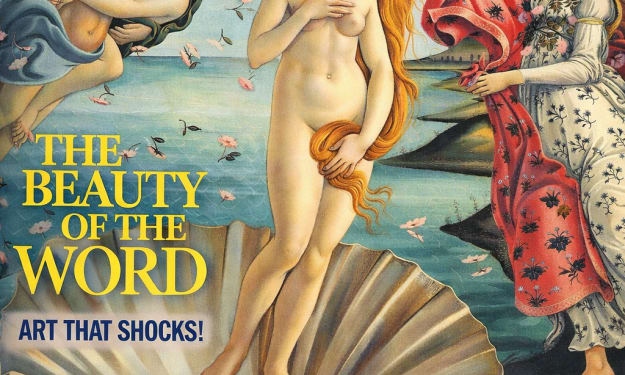
The Beauty of the Word
The Beauty of the Word: When “Beautiful” Becomes Power We rarely say “ugly truth.” We prefer to say “beautiful.” The choice is not innocent. “Truth” sounds like information: a fact, a report, a statement to be verified or dismissed. “Beauty,” by contrast, is an experience. It is not merely known; it is felt. When we call something beautiful, we lift it from the level of data to the level of meaning. We grant it weight, dignity, even sacredness. The word itself performs an elevation.
By Peter Ayolov5 days ago in Critique