bullying
Journey Beyond the Classroom
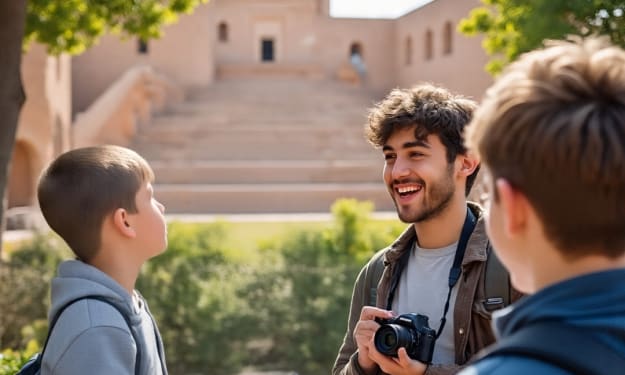
It was a bright morning filled with excitement and anticipation. The air buzzed with chatter as students gathered near the school gate, ready to begin their long-awaited study tour. Bags were packed, cameras were charged, and hearts were full of curiosity. For many, it was their first journey away from the familiar walls of the classroom — a chance to learn through experience rather than from books. Our destination was the ancient city of Lahore, a place rich with history, architecture, and culture. The bus ride began with laughter and songs echoing through the air. Teachers smiled as students shared snacks, took pictures, and admired the passing scenery. Slowly, the concrete city faded away, replaced by green fields and distant mountains. It felt as if we were traveling not just through space, but through time itself — leaving behind the routine of school to explore the world beyond. Our first stop was the Lahore Museum, often called the “treasure house of history.” As we stepped inside, we were greeted by rows of artifacts, each telling its own story. The ancient coins, sculptures, and paintings revealed the artistic beauty and cultural depth of our ancestors. Our history teacher guided us through each section, explaining how these relics connected to what we had studied in our textbooks. But this time, the learning was different — it was alive. We could see, touch, and feel the things that once existed only in our imagination. Next, we visited the Badshahi Mosque, one of the grandest architectural wonders of Mughal times. Standing beneath its massive domes, we felt both small and inspired. The fine carvings on the red sandstone walls glowed warmly under the sun, reflecting centuries of craftsmanship. Our teacher spoke softly about the Mughal emperors, their vision, and their love for art and architecture. As the call to prayer echoed through the courtyard, a deep sense of peace and respect filled our hearts. After lunch, we went to the Shalimar Gardens, a masterpiece of symmetry and beauty. The sound of flowing water, the fragrance of blooming flowers, and the sight of ancient fountains created an atmosphere of calm and wonder. Students sketched, took photos, and noted down their observations for later reports. Some of us even sat under the shade of old trees, discussing how nature and history blend together to form such timeless beauty. The next day, our study tour continued with a visit to a science museum. The experience was completely different but equally fascinating. We interacted with models of planets, human anatomy, and machines. There were hands-on exhibits that allowed us to experiment and understand how things worked. For the first time, many of us realized that science is not just about formulas — it’s about discovery. Learning through experience made even the most complex ideas seem simple and exciting. Throughout the trip, our teachers encouraged us to observe, ask questions, and connect what we saw to what we had learned. Every evening, we gathered together for short reflection sessions. Students shared what inspired them most during the day — some spoke about the history, others about the science, and a few about the bonds of friendship that had grown stronger during the journey. On the final day, before returning home, we visited the Wagah Border. The flag-lowering ceremony filled us with pride and emotion. The discipline, energy, and unity of the soldiers reminded us of the strength and spirit of our nation. It was a powerful lesson in patriotism that no classroom could ever teach. As the bus drove back toward our school, silence filled the air. Everyone seemed lost in thought, replaying memories of the trip. We had seen, learned, and felt so much in just a few days. The study tour had not only enriched our knowledge but also transformed the way we looked at learning. We realized that education is not confined to four walls or limited to exams. It’s a lifelong journey — one that involves seeing, questioning, and understanding the world around us. The laughter we shared, the lessons we learned, and the experiences we gained became treasures we would carry forever. When we finally reached our school, the same gates that once symbolized our starting point now felt like a return from a meaningful adventure. The study tour had ended, but its impact would continue for years to come — inspiring us to keep exploring, keep learning, and keep growing beyond the classroom.
By Muhammad Saad 4 months ago in Education
How Hustle Culture Is Killing Us Slowly . AI-Generated.
It’s a gospel preached from Silicon Valley to your Instagram feed: “Rise and Grind.” “Sleep is for the weak.” “If you’re not working 24/7, someone else is.” Hustle culture has morphed from a drive for success into a dangerous cult of productivity that glorifies exhaustion as a status symbol. We wear our burnout like a badge of honor, boasting about 80-hour workweeks and equating busyness with worth. But beneath the veneer of ambition lies a silent, systemic erosion of our health, happiness, and humanity. We aren’t thriving; we are slowly burning ourselves out as fuel for an insatiable machine.
By The 9x Fawdi4 months ago in Education
Understanding Narcotics: Knowledge for a Safer Future
In a small community nestled between rolling hills, something powerful was happening—quietly, steadily, and with purpose. What once was a town struggling with rising drug misuse was becoming a place of understanding, support, and second chances. The change began not with a crackdown, but with a conversation. It started with a simple idea from a local teacher, Ms. Ana Lopez, who saw that many of her students were asking questions—some out of curiosity, others out of personal experience. She realized they needed more than warnings; they needed honest education. “I kept hearing the word ‘narcotics’ thrown around, but most of them didn’t really know what it meant,” Ana said. “Some thought it was just a street drug. Others didn’t realize certain pain medications at home were also narcotics. I knew we had to start with knowledge.” With the help of the school, local health professionals, and community leaders, Ana helped launch a program called Clear Choices—a school and community initiative focused on narcotics education, prevention, and recovery support. The program was built around three core principles: education, empathy, and empowerment. First came education. In classrooms and community halls, people learned the truth about narcotics—what they are, how they work, and the difference between medical use and misuse. They learned that narcotics include powerful drugs like morphine, oxycodone, and fentanyl, which are used in hospitals for pain relief, but can be dangerous if misused. Students discussed how addiction can begin, even unintentionally, and how it affects the brain and body. One of the guest speakers, Dr. Raj Patel, a local physician, made a lasting impression. “Narcotics are not evil,” he told the group. “They are tools. But like all tools, if used the wrong way or without proper care, they can cause harm. That’s why understanding is the first step toward safety.” The second principle was empathy. Many in the town had friends or family affected by addiction. Rather than shame or blame, Clear Choices promoted compassion. They invited people in recovery to share their stories—not to scare, but to humanize the issue. One such speaker was Marcus, a 28-year-old who had once struggled with opioid addiction but was now three years sober and working as a peer counselor. “I used to think addiction was a weakness,” Marcus said to a packed school gym. “But now I know it’s a health issue. What saved me wasn’t judgment. It was someone who believed I could change.” His words struck a chord. The town started seeing those struggling not as problems, but as people needing help. Finally, the program focused on empowerment. Teens were trained to become peer educators. Parents attended workshops on how to talk openly with their kids. Doctors reviewed their prescribing practices. Even law enforcement officers received training in harm reduction and crisis response. The results were encouraging. Within two years, opioid-related incidents in the town dropped. More people sought treatment earlier. A recovery center opened nearby. But perhaps the biggest change was in how people talked—with less fear, and more hope. One evening, during a Clear Choices community event, a young student named Emily stood up to speak. “I used to think drugs were something that happened to other people,” she said. “But now I know that awareness can protect us. I learned how to help a friend, how to ask questions, and how to say no without shame.” Her voice, though young, carried wisdom beyond her years. The journey toward a drug-aware and safe community wasn’t easy, but it showed that positive change doesn’t come from silence or fear—it comes from knowledge, empathy, and unity. As Ana Lopez watched her students grow into leaders, she smiled. “We’re not just teaching them about narcotics. We’re teaching them how to care for themselves and each other. And that’s the kind of lesson that changes lives.” --- End Note: Understanding narcotics is not just about knowing the risks, but also recognizing the importance of medical science, responsible use, and recovery support. Education and compassion can transform not just individuals, but entire communities.
By Muhammad Saad 4 months ago in Education
The Day the Results Came In
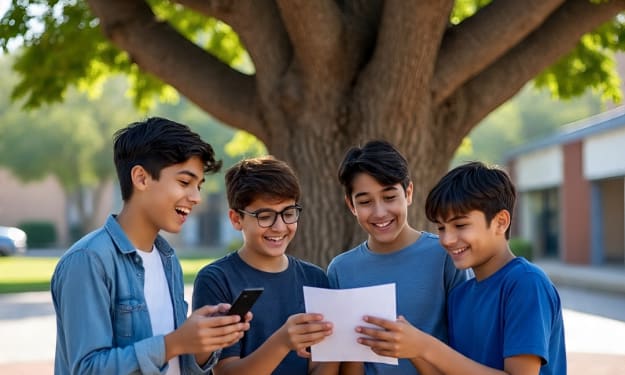
The Day the Results Came In How One Group of Students Discovered More Than Just Their Grades The morning sun poured over the red-brick walls of St. Alder High School, turning the courtyard into a warm, golden glow. It was results day — the one date circled, highlighted, and whispered about for months. The gates had barely opened when clusters of students began to gather, envelopes clutched in nervous hands, their laughter and chatter hiding the shared thrum of anxiety beneath. Mia stood at the centre of it all, her stomach twisting in knots. She’d been dreaming about this day since the exams ended, running through every possible scenario in her head. She had studied harder than she ever had before — late-night flashcards, group calls, endless practice papers — but the uncertainty still gnawed at her. Around her, her friends—Eli, Zara, and Noah—were trying to look casual, leaning against the wall and joking about who would faint first. “Can’t believe this is it,” Noah said, spinning his envelope between his fingers. “Months of suffering in that library, and it all comes down to this piece of paper.” Zara laughed, though her voice trembled slightly. “If I open this and it says I passed maths, I’m framing it.” Mia smiled faintly, grateful for the light-heartedness. The sound of envelopes tearing open began to ripple through the courtyard. Gasps, squeals, sighs — all blending into a strange symphony of relief and emotion. She took a deep breath, felt her heartbeat in her fingertips, and opened hers. For a moment, all she saw were the numbers, neatly typed in black ink. Then they began to make sense. Her grades were better than she dared hope — not perfect, but enough. Enough to get into the university she wanted. Enough to feel that the long nights and self-doubt had been worth it. She looked up, a wide grin spreading across her face before she could stop it. “I did it!” she said, almost breathless. Zara let out a cheer. “You did? Let me see!” Within seconds, they were all comparing results — some shouting in triumph, some hugging in quiet relief. Eli, who had always been the calm one, smiled as he looked at his paper. “Looks like we’re all going to make it,” he said softly. But not everyone was smiling. A few steps away, another student sat on a bench, staring at her paper, tears welling up. Mia hesitated for a moment, then walked over. It was Sophie — someone she’d worked with on a group project but didn’t know well. “Hey,” Mia said gently. “You okay?” Sophie shook her head, trying to smile through her tears. “I didn’t get the grade I needed. I thought I would. I really thought I would.” Mia sat beside her. “I get it. It feels awful right now. But this isn’t the end. You’re still one of the hardest workers I know. You’ll find another way — you always do.” Sophie gave a small laugh at that. “You sound like a teacher.” “Guess I’ve heard enough pep talks to start giving them,” Mia said with a grin. As they sat together, the rest of the courtyard buzzed with life — laughter, chatter, hugs, and selfies. It was a celebration of more than just numbers on paper. It was a celebration of effort, friendship, resilience. When the group finally left the school grounds, the late-morning sun was shining even brighter. They walked down the familiar street, their envelopes now folded and tucked safely away, but their spirits light. There was something freeing about it — not just knowing their results, but realizing that they were moving forward, together. Later that day, when Mia’s mum asked how it went, she smiled and said, “It was a good day. We all learned something — and not just about grades.” Because in the end, the day the results came in wasn’t just about who scored what. It was about discovering what really mattered: courage, kindness, and the belief that every ending is just the beginning of something new.
By Muhammad Saad 4 months ago in Education
Porn's Effect on Mental Health and Intimacy. Content Warning. AI-Generated.
In the privacy of a screen, a vast and endless world of sexual content is available instantly and for free. For many, pornography is a source of entertainment, education, or a way to explore fantasies. However, a growing body of psychological and neurological research suggests that consistent consumption, particularly of modern internet pornography, can have a profound and often unintended impact on both mental health and the capacity for real-world intimacy. It functions as a double-edged sword, offering a temporary escape while potentially dulling the very tools we need for genuine connection.
By The 9x Fawdi4 months ago in Education
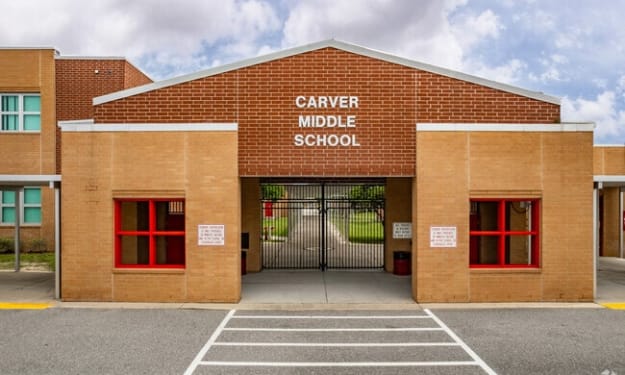
When “Handled Internally” Leaves Students at Risk: The Threat at Carver Middle School
By Kyle Fields October 14, 2025 — Lake County, Florida Last Wednesday, October 8, 2025, students at Carver Middle School in Lake County, Florida, were exposed to a serious and alarming threat of violence. Multiple students reported that another student had threatened to “bomb and shoot up the school,” provided names of intended targets, and even indicated their position on a purported list. According to student accounts, the student in question described in detail how they planned to obtain a firearm and made threatening gestures while speaking.
By Kyle Fields5 months ago in Education
Shaping a Better Tomorrow: Stories of Progress Around the World
Shaping a Better Tomorrow: Stories of Progress Around the World From climate wins to tech breakthroughs, how global communities are creating real, positive change in 2025 In a world often overshadowed by headlines of crisis and conflict, 2025 is quietly proving that hope, innovation, and collaboration are alive and thriving. Across continents, people are not only envisioning a better future — they’re building it. Turning the Tide on Climate Change In Kenya’s semi-arid regions, what was once dusty, barren land is now turning green. Through a grassroots movement known as “The Green Wall of Hope,” communities are reforesting thousands of hectares of degraded land. Supported by local NGOs and global climate funds, these efforts have helped increase food security, restore biodiversity, and even bring rainfall patterns back to normal in some areas. Meanwhile, Costa Rica recently celebrated its 350th consecutive day powered entirely by renewable energy. The country’s ambitious push into hydropower, wind, and solar has become a model for the world, showing that clean energy isn’t just a dream — it’s a real, achievable goal. In northern Europe, countries like Denmark and the Netherlands have launched massive “climate-positive” building projects. These eco-homes generate more energy than they use and are made from recycled or carbon-neutral materials. Cities are becoming greener, not just in foliage but in policy. Tech for Good: Innovation with Heart In 2025, artificial intelligence (AI) is no longer just a buzzword — it’s saving lives. In India, AI-powered diagnostic tools are being used in rural clinics to detect diseases like tuberculosis and cervical cancer early, reducing mortality rates dramatically. Trained on thousands of global health datasets, these tools help doctors in under-resourced areas make faster, more accurate decisions. Meanwhile, in Brazil, a startup has developed a portable, solar-powered water purifier that can turn polluted river water into clean drinking water in minutes. It’s already being used in over 500 remote villages, improving health outcomes and reducing plastic waste from bottled water. Even space technology is being redirected for Earth’s benefit. In partnership with international space agencies, African nations are using satellite imagery to better manage crops, track water sources, and respond to natural disasters. Farming is becoming smarter, safer, and more sustainable. Education Without Borders Access to quality education is one of the most powerful tools for change, and 2025 has seen huge steps forward. Thanks to global internet initiatives and low-cost devices, children in some of the most remote areas of the world are now learning alongside their peers in urban centers. In rural Mongolia, solar-powered digital classrooms have opened new doors for nomadic communities. With interactive curriculums and real-time access to teachers across the globe, students are excelling in science, languages, and mathematics like never before. In refugee camps in Turkey and Jordan, young learners are engaging with customized education platforms that help them catch up on lost years of schooling, giving them the confidence and skills to rebuild their futures. The Power of People and Partnerships Perhaps the most inspiring progress is coming not from governments or corporations, but from everyday people. In Seoul, South Korea, neighborhoods have launched "Shared City" initiatives — where people swap goods, share rides, and build community gardens together. These programs reduce waste, strengthen social ties, and bring meaning back to urban living. In Canada, a national mental health campaign called “Thrive Together” is breaking the stigma surrounding mental illness. Free therapy, peer support networks, and school-based wellness programs have led to a noticeable drop in youth suicide rates and improved well-being across all age groups. And in Ukraine, where communities continue to rebuild after years of conflict, volunteer efforts are driving restoration. Libraries, schools, and parks are being rebuilt with the help of local residents and international support — a powerful symbol of resilience and unity. A Global Vision of Progress While no country is without its challenges, the stories of 2025 remind us that progress is possible — not just in labs and legislatures, but in fields, classrooms, and neighborhoods. Around the world, people are choosing cooperation over conflict, sustainability over short-term gain, and empathy over division. These choices may not always make headlines, but they are reshaping our future one solution at a time. As we look ahead, the message is clear: A better world isn't just possible — it's already happening.
By Muhammad Saad 5 months ago in Education
The Danger of Cats Eating Chicken Bones: A Serious Health Risk
Cats are beloved pets, admired for their playful behavior, independence, and companionship. While many pet owners enjoy sharing food with their feline friends, certain human foods can pose serious risks to cats, with chicken bones being a particularly dangerous example. Despite their small size, chicken bones can be extremely hazardous to cats, potentially causing life-threatening injuries if ingested. Understanding the dangers of feeding cats chicken bones is crucial for responsible pet ownership and the health of these cherished animals.
By Shiran Pallewatta5 months ago in Education