student
From balancing your course load to forging relationships with classmates to extracurricular involvement, these are the tried and true methods to nail your career as a student.
Do Physical Laws Require a Creator? Science, Philosophy, and the Origin of Natural Law
What Are Physical Laws? Before asking whether physical laws require a creator, we must understand what they are. Physical laws are mathematical descriptions of patterns observed in nature. They summarize how matter and energy behave under specific conditions.
By shahkar jalal27 days ago in Education
Is the Universe Deterministic or Free? Exploring Fate, Free Will, and the Laws of Physics
What Is Determinism? Determinism is the idea that every event is the inevitable result of preceding causes. If you knew the exact state of the universe at one moment — including the position and momentum of every particle — you could, in principle, predict the entire future.
By shahkar jalal27 days ago in Education
The Grey to Green Shift: Inside France’s USD 20,912.99 Million Cement Revolution (2025–2034)
In the industrial corridors of France in 2026, a massive transformation is underway. Cement the literal foundation of modern civilization is no longer just a grey powder. It has become a strategic frontier for carbon technology and a barometer for France’s "Green Sovereignty."
By Neeraj kumar27 days ago in Education
The Digital Vault: Inside Switzerland’s USD 901.39 Million Data Revolution (2026–2034)
In early 2026, Switzerland is successfully rebranding itself. Long known as the world’s safest vault for physical gold and private wealth, the Alpine nation has spent the last decade laying the groundwork to become the premier "Digital Vault" of the 21st century. The Switzerland data center market, valued at USD 435.12 Million in 2025, is projected to soar to USD 901.39 Million by 2034. With a robust CAGR of 8.43%, this sector is outperforming many of its European neighbors, driven by a unique trifecta of political neutrality, renewable energy, and the insatiable demand for Generative AI.
By Neeraj kumar27 days ago in Education
The Alpine Appetite: Inside Switzerland’s $8 Billion Food Service Shift (2026–2034)
The "Hyper-Local" Revolution In 2026, the Swiss "farm-to-fork" movement has matured from a niche trend into a baseline consumer expectation. Driven by high environmental awareness, Swiss diners are increasingly prioritizing the origin of their food over global luxury brands. The "Bio Suisse" logo and regional labels have become the most powerful marketing tools in the industry. Restaurants in urban hubs like Zurich and Geneva are now integrating "In-House Micro-Farms" automated hydroponic units that allow chefs to harvest greens and herbs directly in the dining room, slashing the carbon footprint and emphasizing the freshness that Swiss consumers demand.
By Neeraj kumar27 days ago in Education
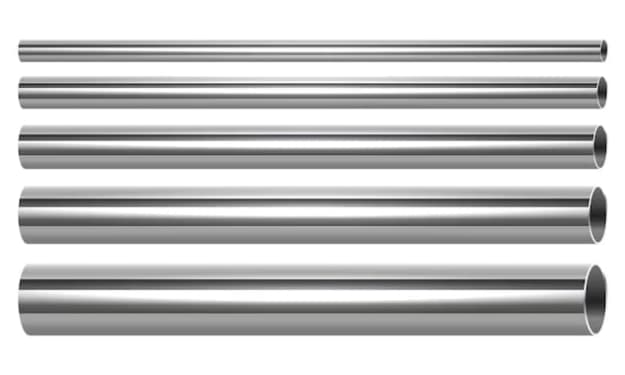
The Backbone of Infrastructure: Inside France’s USD 3.12 Billion Steel Tube Transformation (2025–2033)
In the industrial landscape of 2026, the humble steel tube has become a high-tech symbol of France’s commitment to "Green Sovereignty." No longer just a commodity for construction, steel tubes are now the vital arteries of the hydrogen economy, the skeletal frame of the electric vehicle (EV) revolution, and the foundation of a modernized nuclear fleet.
By Neeraj kumar27 days ago in Education
“Why ‘Just Try Harder’ Isn’t Real Advice”
Start wri“Just try harder.” Those three words followed me longer than any lesson I ever learned. They were said with good intentions. Teachers said them when I struggled. Family members said them when I looked tired. Friends said them when I felt stuck. It sounded simple, almost comforting—as if effort alone could untangle every problem. As if all failure was just laziness wearing a disguise. But no one ever explained how to try harder when you were already giving everything you had. I remember sitting at my desk long after midnight, eyes burning, mind numb, rereading the same page again and again. I wasn’t distracted. I wasn’t careless. I was exhausted. Still, when results didn’t match expectations, the conclusion was always the same: you didn’t try hard enough. That sentence slowly carved something into me. It taught me that struggle was a personal flaw. That if I couldn’t keep up, the problem wasn’t the system, the pressure, or the circumstances—it was me. “Just try harder” ignores context. It doesn’t ask about mental health, financial stress, learning differences, or burnout. It doesn’t ask if you’re carrying responsibilities no one sees. It assumes everyone starts from the same line, with the same resources, the same energy, the same safety net. They don’t. Some people are running uphill while others are on flat ground. Some are sprinting with invisible weights tied to their ankles. Telling them to “try harder” doesn’t make the path easier—it just makes the failure feel more personal. I believed that advice for years. I doubled down. I pushed through headaches, anxiety, and constant self-doubt. I learned to ignore my limits because limits were treated like excuses. Rest felt like weakness. Asking for help felt like admitting defeat. When I couldn’t meet expectations, shame filled the gaps. I started measuring my worth by how much pain I could tolerate. If I was exhausted, it meant I was working. If I was breaking down, it meant I wasn’t strong enough yet. The problem with “just try harder” is that it only works when effort is the missing piece. But often, effort isn’t the issue—direction is. Or support. Or time. Or healing. Sometimes people don’t need more pressure. They need understanding. They need tools, not commands. They need space to fail without being labeled a disappointment. I’ve seen people burn out not because they didn’t care, but because they cared too much. They tried harder every day until trying became all they were doing. Until their lives shrank to a cycle of effort and disappointment. And when they finally collapsed, the advice didn’t change. “Push through.” “Don’t give up.” “Everyone else can do it.” But everyone else isn’t living their life. This kind of advice also teaches us to silence ourselves. To ignore our own signals. Hunger, fatigue, anxiety—those become inconveniences instead of warnings. We stop listening to what our bodies and minds are telling us because we’re afraid of being seen as weak. I wish someone had told me that struggling doesn’t mean you’re failing. That needing rest doesn’t mean you’re lazy. That trying harder is not always the answer—sometimes trying differently is. Sometimes the bravest thing you can do is stop forcing yourself into a shape you were never meant to fit. Real advice asks questions. Real advice listens. Real advice adapts. It sounds like: What’s making this hard? It sounds like: What support do you need? It sounds like: Maybe the problem isn’t you. We live in a world obsessed with grit and hustle, but allergic to nuance. It’s easier to tell someone to push than to understand why they’re struggling. It’s easier to blame individuals than to fix broken systems. So we keep repeating the same phrase, hoping it works eventually. But words matter. And “just try harder” often does more harm than help. It turns pain into silence. It turns confusion into self-blame. It turns complex human experiences into simple moral failures. I’m learning to unlearn that voice in my head. The one that says rest is weakness. The one that says my best is never enough. The one that repeats advice that was never meant to heal. Trying matters. Effort matters. But so does compassion—for others and for yourself. Because sometimes, you’re not failing. You’re just human.ting...
By Faizan Malik28 days ago in Education