student
From balancing your course load to forging relationships with classmates to extracurricular involvement, these are the tried and true methods to nail your career as a student.
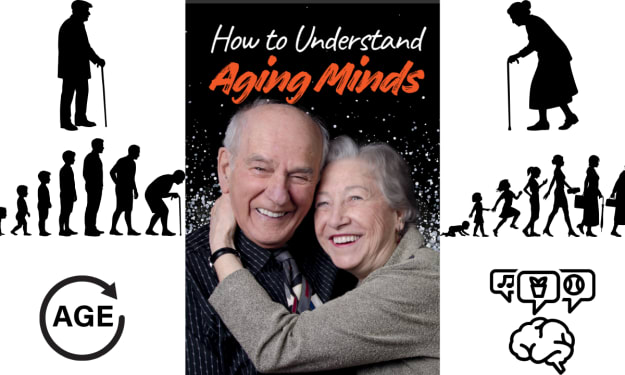
How to Understand Aging Minds: A Practical Guide to Cognitive Changes, Emotional Well-Being and Personality . AI-Generated.
Aging is one of the most natural and universal experiences of human life—yet it remains one of the least understood. As bodies change with time, so do minds. Memory may shift. Emotions may deepen or become more sensitive. Personality traits may soften, strengthen, or reveal new layers. These changes are not signs of decline alone; they are part of a complex psychological evolution that deserves understanding, respect, and compassion.
By Akash Mano12 days ago in Education
Does Handwriting Improve Memory and Learning?
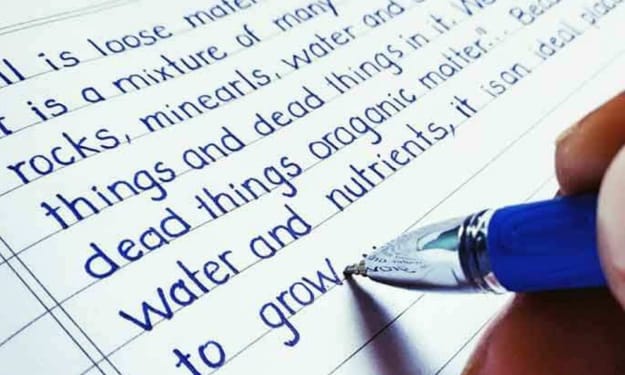
The development, affordability, and easy availability of electronic and digital devices have changed many things. They have brought convenience, comfort, and ease into life. However, experts say that they are also creating certain problems that are negatively affecting our mental abilities. One example is the growing trend of typing instead of writing by hand. Today, most people around the world have a smartphone in their hands. Many of them can be seen rapidly typing on a small screen using their two thumbs. Those who need to write more use a tablet, laptop, or computer keyboard, typing either with two fingers or, if skilled, with eight fingers of both hands. In developed countries, it is now rare to see someone writing on paper with a pen. In modern schools of both developed and developing countries, children are introduced to computers in the early grades. In higher classes, pens, paper, notebooks, and even books are no longer commonly seen; instead, students work on tablets or laptops. Although the heavy burden of schoolbags has been lifted from children’s shoulders, experts say this has also led to a decline in certain abilities related to memory and learning. Professor of Psychology, Brigadier (Retd.) Dr. Shoaib Ahmed (Sitara-e-Imtiaz) at Dow University of Medical Sciences in Karachi, said that our brain has two parts that perform different functions. The left hemisphere controls bodily functions largely related to movement, while the right hemisphere is associated with creative abilities. He explained that when we type, it is more of a mechanical process. The brain does not pay attention to the structure or formation of letters and words because it knows that pressing a key will produce them; there is no need to shape them manually. However, when we write with a pen, the right side of the brain also becomes active, and the act of handwriting engages both hemispheres together. He added that the left hemisphere controls the right side of the body, and the right side of the body is governed by the left hemisphere of the brain. This is why most people perform tasks with their right hand. Dr. Shoaib further explained that when we write on paper by hand, the writing is not only being inscribed on paper but also being imprinted in our memory. This is why students who prepare notes by hand tend to remember them better than those who type them. How do handwriting and typing affect the brain? At the Norwegian University of Science and Technology in Trondheim, researchers included three dozen students in an experiment where they were asked to write by hand and to type. During this process, electronic scans of their brains were taken. The researchers found that brain waves were more active and pronounced during handwriting, while more limited activity was observed during typing. Professor Audrey van der Meer, from the Department of Psychology and co-author of the study, said that during typing, they did not observe the same organized oscillations in brain waves that were seen during handwriting. She stated that the act of handwriting is rich in neural activity. Many students also report similar experiences. Maryam Idris, who recently completed her MPhil, said that she remembers things better when she writes them by hand. To prepare for exams, she writes things down to memorize them. She mainly uses typing for assignments because it saves time. Kathleen Arnold, a psychologist at Radford University in the U.S. state of Virginia, said that although there is an increase in brain wave oscillations during handwriting compared to typing, it is not yet clear whether this is directly related to memory. Further research is needed. Dr. Shoaib Ahmed views it from another perspective. He says that when you write by hand, the part of the brain associated with creativity is also involved. That part pays attention to the structure of words. When you focus on something, it is transferred into our memory.
By Real content13 days ago in Education
The Bio-Logic Era Inside China’s $9 Billion Premium Skincare Ascent
The era of the "one-size-fits-all" luxury cream is officially over. Walking through the beauty halls of the Tianshan District or scrolling through a live-stream on Douyin in 2026, it becomes clear that the Chinese beauty consumer is now the most demanding on the planet. I call them "Skin-Intellectuals" shoppers who can break down a chemical formula with the precision of a lab technician and who value clinical proof over celebrity endorsements.
By Neeraj kumar13 days ago in Education
Rising Demand for Premium Pet Food Drives Market Growth in China
In 2026, the quiet hum of a Shanghai apartment is often punctuated not by the cries of a child, but by the satisfied crunch of a "freeze-dried" meal. This shift isn't just a lifestyle quirk; it’s a economic powerhouse. The China pet food market, valued at USD 22.51 Billion in 2025, is charging toward a projected USD 32.87 Billion by 2034. With a CAGR of 4.30%, the industry is witnessing a profound transformation where pets have officially moved from the backyard to the center of the family portrait.
By Neeraj kumar13 days ago in Education
The New Face of China: Why My Recent Trip to Shanghai Revealed a $9 Billion Aesthetic Shift
Walking through the Jing'an District in Shanghai today feels different than it did even three years ago. It isn’t just the neon lights or the futuristic architecture; it’s the faces. There is a subtle, polished "glow" that seems to have become the unofficial uniform of the city’s young professionals. We aren't talking about the dramatic, "done" looks of the early 2000s. We are talking about the era of the "tweak-ment."
By Neeraj kumar13 days ago in Education
GK: Why Is India Called A Sub-Continent?. AI-Generated.
The term sub-continent is often used to describe India, but have you ever wondered what it truly means and why India alone carries this distinction? Unlike most countries that are simply part of a continent, India is recognized as a sub-continent because of its vast size, distinct geography, rich history, and cultural diversity that sets it apart from the rest of Asia.
By Sajida Sikandar13 days ago in Education
Archana Shivcharan:Building Presence in a Noisy Digital Age. AI-Generated.
The rise of social media has quietly reshaped how individuals and organizations present themselves to the world. Over the past decade, digital platforms have evolved from informal networking spaces into structured environments where communication, branding, and reputation intersect. Within this landscape, professionals like Archana Shivcharan represent a growing workforce that operates behind the scenes, shaping how voices are seen and heard online.
By Archana Shivcharan13 days ago in Education
Transforming Math Classrooms for Tomorrow with Casie Hynes. AI-Generated.
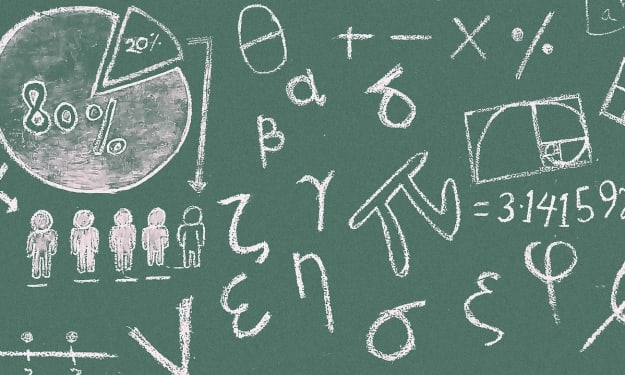
Mathematics stands at the core of modern civilization. It shapes how we design infrastructure, manage economies, build digital systems, and interpret scientific discoveries. Despite its undeniable importance, math continues to intimidate and discourage many students. As societies become increasingly driven by data, automation, and innovation, the urgency to modernize mathematics instruction has never been greater. The perspective championed by Casie Hynes offers a thoughtful framework for reshaping math education so it better serves today’s learners and tomorrow’s leaders.
By Casie Hynes14 days ago in Education
Is Physics Complete or Forever Unfinished? Exploring the Future of Fundamental Science
The Illusion of Completion in the Past This is not the first time scientists have believed physics was nearly complete. At the end of the 19th century, many physicists thought the major discoveries had already been made. Classical mechanics, electromagnetism, and thermodynamics appeared to explain nearly everything.
By shahkar jalal15 days ago in Education