children
Children: Our most valuable natural resource.
The Silent Rooms: Life Without Children
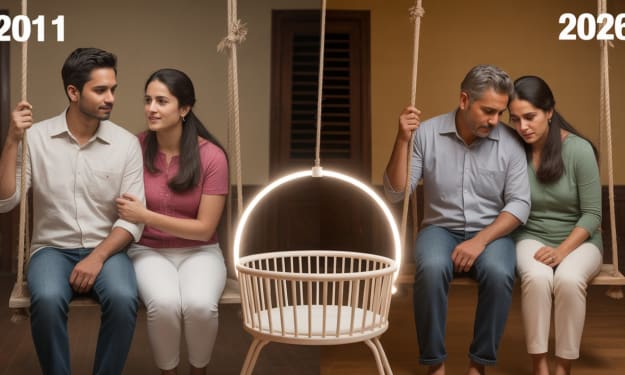
By Hazrat Umer A True Story of Marriage, Hope, and the Empty Cradle I got married in 2011. It was a year filled with the kind of joy that is hard to put into words. Like every young man, I had dreams. I remember sitting with my wife in our new home, talking about the future. We didn't just talk about our careers or our travels; we talked about the children we would one day hold in our arms. We imagined the sound of tiny feet running down the hallway. We even thought about names. In 2011, the world felt like it was at our feet, and the promise of a big, happy family felt like a certainty.
By Hazrat Umer29 days ago in Families
Why Emotional Intelligence Matters More Than Obedience in Modern Parenting. AI-Generated.
For many parents, obedience has long been considered the ultimate goal of good parenting. A “well-behaved” child was seen as a successful outcome. I used to believe the same thing. If my child listened, followed rules, and stayed quiet in public, I felt I was doing my job correctly. Over time, however, I began to notice something troubling. While my child was obedient, they struggled to express emotions, handle frustration, and communicate needs in healthy ways. This realization led me to question an important assumption: Is obedience really more important than emotional intelligence? Understanding Emotional Intelligence in Children Emotional intelligence is the ability to recognize, understand, and manage emotions—both one’s own and those of others. For children, this skill is foundational. It influences how they handle conflict, build relationships, and cope with stress throughout life. Children with strong emotional intelligence are more likely to: express feelings clearly instead of acting out, regulate emotions during stressful situations, show empathy toward others, develop resilience and confidence. Unlike obedience, emotional intelligence does not come from control or fear. It grows through guidance, modeling, and emotional safety. The Limits of Obedience-Based Parenting Obedience-focused parenting often relies on authority and consequences. While this approach may produce short-term compliance, it can unintentionally suppress emotional development. When children are taught to obey without understanding, they may: follow rules out of fear rather than awareness, struggle to make decisions independently, feel disconnected from their emotions, hide feelings instead of processing them. I realized that my child was learning what to do, but not why they were doing it—or how to manage the emotions behind their behavior. Shifting the Focus: From Control to Guidance The turning point came when I began prioritizing emotional understanding over immediate compliance. Instead of asking, “Why won’t you listen?” I started asking, “What are you feeling right now?” This shift changed everything. When conflicts arose, I slowed down the interaction. I acknowledged emotions before addressing behavior. I made space for conversations instead of commands. The goal was no longer obedience—it was connection and learning. Teaching Skills That Last a Lifetime When parents focus on emotional intelligence, discipline becomes a teaching tool rather than a punishment. Here are some practical changes that helped: Naming emotions aloud to build emotional vocabulary Validating feelings without excusing harmful behavior Setting clear boundaries with calm consistency Encouraging problem-solving instead of blame Over time, my child began responding differently. Emotional outbursts decreased. Communication improved. Most importantly, my child started developing confidence in handling emotions independently. The Mental Health Connection Emotional intelligence plays a critical role in mental health. Children who are supported emotionally are better equipped to manage anxiety, stress, and social challenges. By fostering emotional awareness early, parents help reduce: chronic stress, emotional suppression, feelings of shame or inadequacy. I noticed that as emotional intelligence increased, our home environment became calmer. Conflicts no longer felt like battles. They became opportunities for growth. Respect Builds Cooperation One of the biggest surprises was that cooperation increased—not decreased—when obedience stopped being the primary focus. When children feel respected and understood, they are more willing to cooperate naturally. Respect does not eliminate boundaries. It strengthens them. Children learn that rules exist for safety and well-being, not control. This understanding builds internal motivation rather than external pressure. Rethinking Success in Parenting Parenting success should not be measured by silence or compliance. It should be measured by a child’s ability to: understand emotions, communicate needs, recover from mistakes, build healthy relationships. Emotional intelligence equips children for real life—long after childhood rules no longer apply. Final Thoughts Obedience may create order, but emotional intelligence creates strength. When parents invest in emotional development, they raise children who are not only well-behaved—but emotionally capable, resilient, and compassionate. In a world filled with challenges, emotional intelligence is not optional. It is essential.
By Zia Djamel29 days ago in Families
What Fathers Uniquely Provide
The Error of Treating Parenting Roles as Functionally Identical Modern parenting theory often begins with the assumption that mothers and fathers are largely interchangeable, differing only in style or temperament. From this view, any deficits in one parent can be compensated for by the other through increased emotional effort, sensitivity, or presence. Parenting becomes a question of intention and quantity rather than function and role. This assumption is appealing because it aligns with cultural preferences for symmetry and fairness, but it collapses under closer examination of developmental outcomes.
By Peter Thwing - Host of the FST Podcastabout a month ago in Families
"These Children Come Here to Grow Us Up"
I wrote the beginning of this in 2023. When I put my youngest son on the special education preschool bus last school year, I smiled and waved at a tiny girl usually wearing pink. She sometimes returned that smile and said "hi". Later, I helped in my autistic son's classroom and discovered other funny things about the little girl: she always lost her shoes (or took them off), she loved dumping everything out, and she could be stubborn and yell "no!" when you asked her to put it away.
By Eileen Davisabout a month ago in Families
5 Concepts of Consent To Teach Your Toddlers
My name is Mom - and I am a sexual assault survivor. My first experience with sexual assault happened when I was young enough to have trouble remembering exactly what happened. I remember being under the blankets. I remember the hand. I remember trying to wriggle free, only for that hand to squeeze my leg so hard that it felt like it would break.
By Hope Martinabout a month ago in Families
My Journey to an Amicable Divorce: It Wasn’t Easy, But It Was Worth It. AI-Generated.
I didn’t wake up one morning and decide to end my marriage. It happened slowly. Quietly. And with a lot of doubt. By the time we admitted our relationship was over, we had already spent months trying to hold things together for the sake of our family. We weren’t arguing all the time. There was no dramatic breaking point. But we had grown apart, and pretending otherwise was starting to do more harm than good.
By Jess Knaufabout a month ago in Families
Designing Child-Centered Spaces That Encourage Calm and Engagement
Child-centered environments often function as quiet partners in emotional regulation. Without directing behavior or outcomes, thoughtfully designed spaces can reduce unnecessary sensory demands and make engagement feel more accessible. Calm and participation tend to emerge when environments are readable, balanced, and adaptable — allowing children to orient themselves easily and choose how they interact with the space.
By Tim Clarkeabout a month ago in Families
Essential Home Improvement Tips Every Homeowner Should Know
Home improvement is not just about making a house look attractive—it is about enhancing comfort, improving functionality, ensuring safety, and increasing long-term value. Whether you have recently purchased a home or have lived in one for years, understanding essential home improvement principles can help you protect your investment and create a better living space. Smart improvements, when planned correctly, can save money, reduce stress, and improve everyday life.
By Qadir Khichiabout a month ago in Families
Guiding Families Toward Emotional Strength with Professor Carlton Jama Adams. AI-Generated.
Parenting in the modern era can feel overwhelming. Families are raising children amid constant digital engagement, heightened academic pressure, and growing conversations around emotional health and identity. These influences shape daily life and often leave parents questioning whether they are doing enough or doing it right. In the midst of this uncertainty, the family centered perspective shared by Professor Carlton Jama Adams offers clarity. His approach emphasizes emotional awareness, steady structure, and respectful guidance as the foundation for raising confident and resilient children.
By Carlton Adamsabout a month ago in Families
The Motherhood Trap: Why We Need to Stop Romanticizing Female Sacrifice
The video starts at 11:30 PM. A large family dinner has just ended. The scene is chaotic: plates piled high with leftovers, remnants of food scattered across the table, and children’s toys covering every inch of the floor. In the kitchen, pots and pans are a tangled mess. On the sofa, a husband is fast asleep, oblivious to the world.
By Elena Vance about a month ago in Families