Latest Stories
Most recently published stories in Futurism.
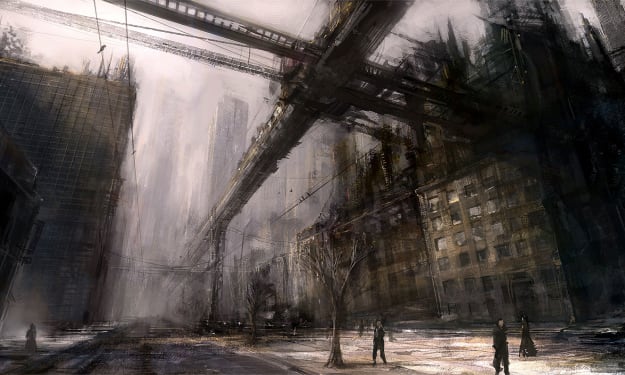
Reviewing Neil Stephenson’s 'Snow Crash'
Re-reading Snow Crash by Neal Stephenson a little over a year after reading it for the first time was not only fun, but necessary. Snippets of the book from my first reading had been coming back to me for the last year or so, but so much happens in the space of 469 pages that I was remembering separate plots of the book as belonging to entirely different novels. That isn’t to say, however, that the book is especially confusing, or even complicated. It is, however, dealing with a lot of big, esoteric ideas, and Stephenson’s genius shows itself in his ability to expound on all these ideas in detail without slowing the story down. The exposition and explanation is as entrancing as the fast-paced plot.
By Michael Gold10 years ago in Futurism
Thought Leader Malcolm Gladwell
Thought leader Malcolm Gladwell's books and articles often deal with the unexpected implications of research in the social sciences and make frequent and extended use of academic work, particularly in the areas of sociology, psychology, and social psychology. Gladwell was appointed to the Order of Canada on June 30, 2011. When Gladwell started at The New Yorker in 1996 he wanted to "mine current academic research for insights, theories, direction, or inspiration." His first assignment was to write a piece about fashion. Instead of writing about high-class fashion, thought leader Malcolm Gladwell opted to write a piece about a man who manufactured T-shirts, saying "it was much more interesting to write a piece about someone who made a T-shirt for $8 than it was to write about a dress that costs $100,000.
By Futurism Staff10 years ago in Futurism
Los Angeles Science Fantasy Society
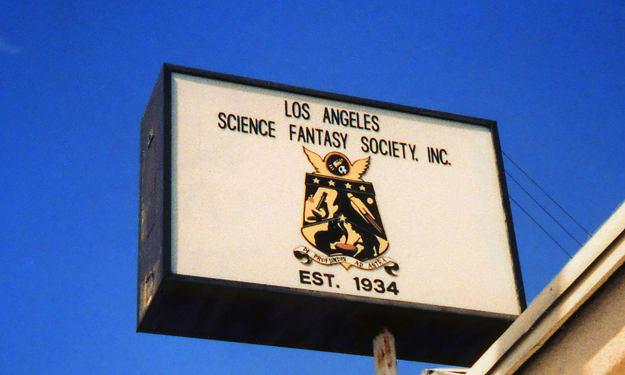
“Pioneering is never done in front of cheerleaders urging on a roaring grandstand of popular approval.” Star Trek legend George Takei speaks to a generation science fiction pioneers all over the world. Since it's creation, sci-fi fans have bound together as a tight-knit collective, sharing ideas and theories. Organizations like The Los Angeles Science Fantasy Society bring together science fiction's biggest fans to review past and present genre favorites. LASFS is the longest continually running science fiction club in the world. Founded in 1934 as a charter group of the Science Fiction League, it has endured World War II, the LA riots, the shifting tides of fan culture, and the death of its most active member and cheerleader, fandom legend Forest J Ackerman. Forest J Ackerman is an American magazine editor, science fiction writer and literary agent. From its current home base in Van Nuys, California, the LASFS hosts weekly meetings, and keeps an impressive lending library of science fiction materials. One of my favorite Internet spelunking journeys is to go deep, deep into the LASFS' rigorously complete photo archives, which document conventions, readings, and meetings of science fiction fans and legends alike from over a 75-year history. With the blessing of the LASFS, here are some of our favorites.
By Claire Evans10 years ago in Futurism
Black Mirror Series Consistently Challenges
“The black mirror is one you’ll find on every wall, on every desk, in the palm of every hand: the cold, shiny screen of a TV, a monitor, a smartphone,” says series creator Brooker, but unlike Jason Reitman’s what-the-Internet-is-doing-to-us flop movie “Men, Women, and Children,” the Black Mirror series challenges the intellect and eschews stark portrayals of teenagers texting and not making eye contact (oh, the poignancy!) and concocts futuristic-scenarios that are only slightly far-fetched, poised on the outer rim of the technology we already have.
By Glenn Kenny10 years ago in Futurism
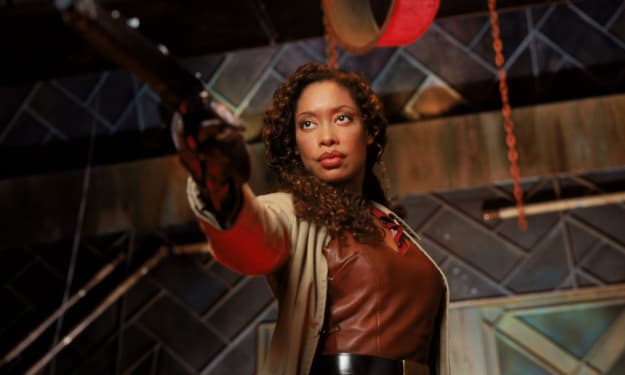
Sci-Fi Movie Women of the 2000s
Too often when we think “women in sci-fi” we think of what used to be called “scream queens,” that is, the actresses who appeared in scores of latter day B pictures running from extraterrestrials on earth or grappling with tentacled creatures on spaceships or what have you. For this survey we want to pay homage not necessarily to the genre regulars (although you’ll find one or two along the way) but to the performers who made the most unusual and in many cases iconic impressions. The following list is not compiled in any particular order. Each woman has contributed enormously to the universe of sci-fi through their respective roles. Here are our favorites from the 2000s.
By Dixon Steele10 years ago in Futurism
Most Underrated Sci-Fi Authors
Science fiction is a massively popular genre these days, and while some authors have achieved mainstream recognition, there are gems to be discovered amongst the most underrated sci-fi authors. Casual readers of sci-fi will have heard of writers such as Isaac Asimov, Arthur C. Clarke, Harlan Ellison, and Kurt Vonnegut. And film directors have snapped up the rights to works by authors such as Philip K. Dick and Robert Heinlein to ensure their enduring fame. But other writers have created masterpieces of imagination and storytelling in sci-fi, and yet not become household names like their contemporaries. Beyond the established sci-fi bestsellers, who are the most underrated sci-fi authors awaiting your discovery?
By Emily McCay10 years ago in Futurism
Ghosts Amongst the Stars
The old man sat on the rock near the top of the small hill as he had for many years now and watched the first stars begin to peek out of the deepening purple sky. The boy at his side, watched solemnly, as he had for most of his young life. They sit in silence.
By Futurism Staff10 years ago in Futurism
Freeman Dyson's Vision of the Future
Professor Freeman J. Dyson has been discussing mind-boggling concepts in a calm, matter-of-fact, one-should-expect way since 1956. 'One should expect that within a few thousand years of its entering the stage of industrial development, any intelligent species should be found occupying an artificial biosphere which completely surrounds its parent star.' It is his hobby he says disarmingly, something that grew up alongside his career as one of the finest mathematical physicists of the last century. To his former colleagues at Princeton's Institute for Advanced Studies, Dyson was known for his understanding of what goes on in the core of a star or in the interaction of high-energy beams of subnuclear particles—contributions that earned him the American Institute of Physics' Heineman Prize and the Royal Society's Hughes Medal.
By George Gott10 years ago in Futurism
Is Technology Making Us Dumb?
It won’t be long before computers can think faster and better than humans. Artificial Intelligence exists, and it is getting smarter at an incredible rate. As so many focus on how well machines can think, alarmingly few people are concentrating on how well humans are thinking (or rather, how they aren’t thinking as well as they used to). A side effect of epic proportions has accompanied our ventures into superior technology. We have become inseparable from our computers and, as time goes on, we are relying on them for more and more of our daily cognitive functions. The brain needs exercise. When you don't use it often enough, your abilities deteriorate. The resources at our disposal are enabling us to perform more advanced tasks faster than ever before, but when it comes to plain old thinking, is technology making us dumb? The answer is two sided. On one hand, our ability to locate information is exponentially higher. On the other, we are retaining far less than we ever have.
By Chelsea Pullano10 years ago in Futurism
Carol Burnett's Captain Kirk Impersonation
American comedy can’t be neatly categorized into one absolute style, like the country from which it springs, it’s a big melting pot. From early, formative clowns such as The Marx Brothers, Milton Berle or Abbott & Costello, to the shock chuckles of Richard Pryor, Lenny Bruce, George Carlin and Chris Rock, American funny is a uniquely varied thing. However, it’s not only a boy’s club - one thing’s clear for awhile; we’ve been blessed with several of the funniest ladies history has ever known. There was lovable Lucille Ball, pioneer in the flexible art of the sitcom. Then came the outrageous Phyllis Diller, ground breaker in stand-up shtick. And then there's the comedy chameleon, Carol Burnett. Today’s funny ladies - Tina Fey, Kristen Wiig and Melissa McCarthy owe a lot to those original gals, but with Burnett, the modern sketch comedy we know today was basically shaped and fine tuned. If that wasn’t enough, Burnett has more than earned her ‘Geek Cred’, after she lampooned one of the most important sci-fi icons, none other than Captain Kirk. Carol Burnett's Captain Kirk impersonation is the original spoof on the iconic sci-fi figure portrayed by William Shatner.
By Will Stape10 years ago in Futurism
Chris Beckett's 'Dark Eden'
Chris Beckett’s Dark Eden highlights the evolution of narrative in a quiet coming-of-age story set on an alien planet with no sun. Often considered one of the best space colonization books, the novel spends much of its first half detailing the ways in which humans cope with life on a dark world. Light and warmth comes from “lantern trees,” which pump up hot liquid of some kind from the center of the planet. People hunt dark animals with green-grey meat. They measure time in “wombs” (the amount of time it takes for a baby to be born), as well as in “wakings” and “periods.” Words in Chris Beckett's Dark Eden universe have developed double meanings to make them emphatic, as language evolved from standard English. All five-hundred members of Family (as they are called) are descended from two humans who decided to stay on this strange planet, called Eden, and that the “Three Companions” made a risky attempt to return to Earth. Now, once a year (years are the Earth-time kept by the oldest members of Family), they gather to see the story of their origin acted out in drama, and to touch items from Earth.
By Futurism Staff10 years ago in Futurism