how to
How to create science fiction and technology projects in a simplistic, easy manner.
Is Digital Immortality Possible for Space Colonists?
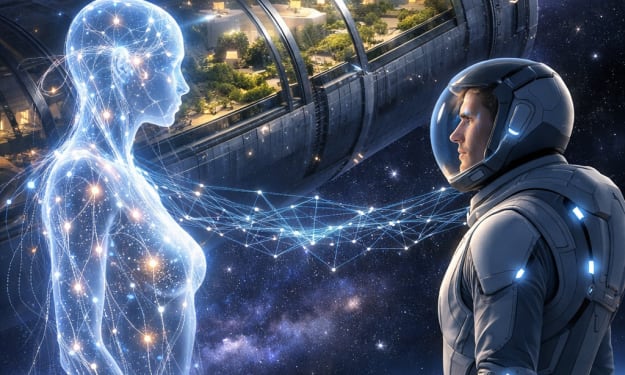
As humanity prepares to expand beyond Earth, questions once reserved for philosophy are rapidly becoming matters of engineering and survival. Among the most provocative of these questions is the idea of immortality. Not in a mythical or religious sense, but in a technological one. When interstellar journeys may last centuries, and off-world colonies must survive in extreme and hostile environments, the limitations of the human body become a serious obstacle. In this context, the concept of digital immortality—the continuation of a human mind in a non-biological form—no longer sounds like science fiction. It begins to resemble a practical solution.
By Holianyk Ihor2 months ago in Futurism
Will Cybernetization Become Mandatory for Life Beyond Earth?
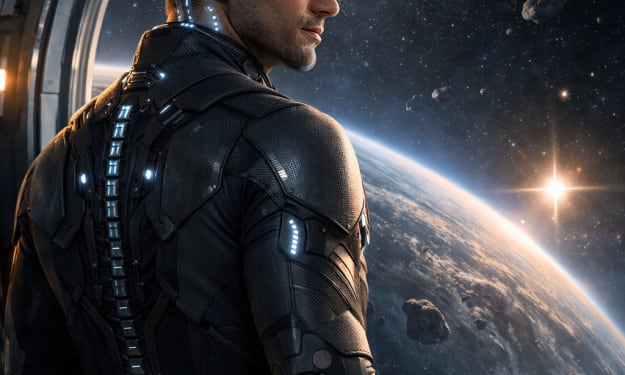
As humanity looks beyond Earth and seriously considers long-term life in space, a once speculative question is becoming increasingly practical: can the human body, in its natural biological form, survive beyond our planet without fundamental modification? Or will cybernetization—deep integration of technology into the human body—become not just an advantage, but a necessity for living outside Earth?
By Holianyk Ihor2 months ago in Futurism
How Mobile App Build Systems Scale With Code Size?
The build finished just as I forgot why I started it. I was still at my desk, same chair, same screen, yet the thread of thought that led to that change had slipped away. I stared at the success message, not relieved, just slightly disconnected.
By Mary L. Rodriquez2 months ago in Futurism
How the Concept of Time Will Change for Interstellar Generations
For humans living in the 21st century, time seems like one of the most constant and self-evident aspects of existence. We measure it in seconds, hours, days, and years; we divide it into historical epochs; and we experience it relative to the span of a human life. Yet, when humanity ventures beyond the Solar System, this familiar notion of time begins to shift. Interstellar travel, stretching over decades, centuries, or even millennia, will inevitably transform the way we perceive time—not just physically, but socially, culturally, and psychologically.
By Holianyk Ihor3 months ago in Futurism
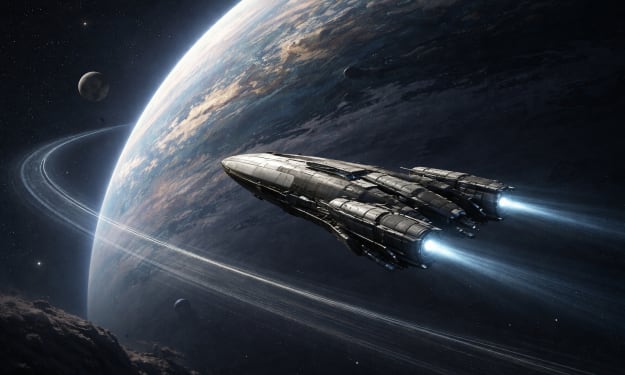
Space Arks — Cities Sailing Through the Centuries
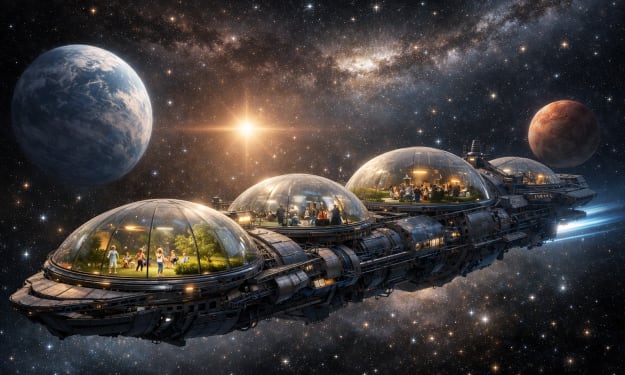
The concept of space arks—massive, self-sustaining cities journeying through the cosmos for centuries or even millennia—has long captivated the imagination of science fiction enthusiasts. Today, however, it is increasingly considered a plausible scenario for humanity’s interstellar expansion. Unlike small spacecraft carrying just a few dozen astronauts, these arks are envisioned as entire civilizations capable of thriving for generations, often without ever setting eyes on Earth again.
By Holianyk Ihor3 months ago in Futurism
How Background Processes Affect Battery and Performance?
The first time I noticed it, I was standing in a grocery store line, phone in one hand, basket in the other. I hadn’t used my phone much that day. No videos, no games, no long calls. Still, the battery indicator felt lower than it should have been. I remember frowning at the screen, not annoyed yet, just confused.
By Mary L. Rodriquez3 months ago in Futurism
Pets of the Future: Which Animals Could Live Beyond Earth?
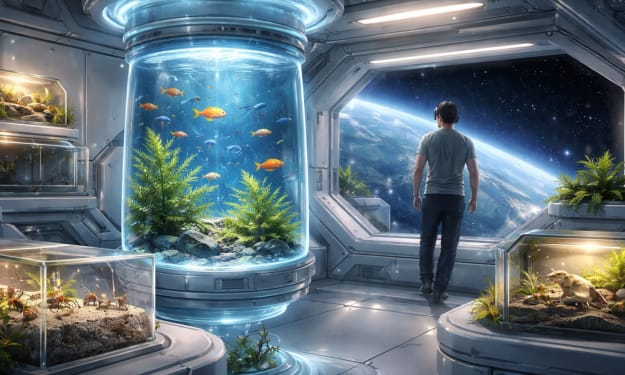
As humanity prepares for a long-term presence beyond Earth, the conversation is no longer limited to rockets, habitats, and survival systems. We are beginning to ask more human questions: What will daily life look like on the Moon or Mars? How will astronauts cope with isolation, stress, and the psychological challenges of living far from home? And inevitably, another question arises—could humans bring pets with them into space?
By Holianyk Ihor3 months ago in Futurism
What Ordinary Apartments on Mars Will Really Look Like
When people imagine life on Mars, they often picture astronauts in bulky spacesuits, futuristic laboratories, or dramatic red landscapes under alien skies. What rarely comes to mind is something far more ordinary—and far more important: the everyday apartment. If humanity truly becomes a multi-planetary species, Mars will not just need research stations. It will need homes. Places where people wake up, cook meals, work remotely, argue over chores, relax after a long day, and build families.
By Holianyk Ihor3 months ago in Futurism
How to Run Tiny LLMs on Device: Model Choice, Quantization, and App Size Tricks?
I first felt the pull toward on-device language models on a flight where the Wi-Fi never stabilized. My phone was in airplane mode, notes open, half a draft stuck in my head. I wanted help rephrasing a paragraph, nothing dramatic. The cloud was unreachable, yet the need was immediate. That small frustration pushed me to ask a bigger question. What if the model lived here, quietly, without asking permission from the network.
By Mary L. Rodriquez3 months ago in Futurism
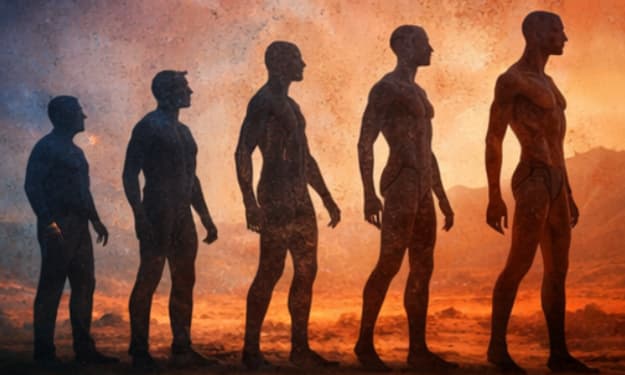
Will a Martian Still Be Human?
Could Humanity Eventually Split into Multiple Species? As humanity moves closer to becoming a multi-planetary civilization, questions once confined to science fiction are rapidly becoming scientific, ethical, and biological realities. Establishing permanent settlements on Mars is no longer a distant dream. Governments, private companies, and research institutions are actively preparing for long-term human presence beyond Earth. Yet among the most profound questions raised by this future is a deceptively simple one: if a person is born and raised on Mars, will they still be human—biologically speaking?
By Holianyk Ihor3 months ago in Futurism
Orbital “Hopping Ships”: Using Planetary Gravity as the Ultimate Space Accelerator
In space exploration, speed is more than a technical parameter — it is a strategic resource. The faster a spacecraft can change its trajectory or gain velocity, the farther it can travel, the more cargo it can carry, and the less fuel it must consume. Traditional rocket propulsion, however, is approaching its practical limits. Chemical rockets are powerful but inefficient for long-term travel, while advanced engines still require onboard energy and propellant.
By Holianyk Ihor3 months ago in Futurism