literature
Science fiction's most popular literary writers from Isaac Asimov to Stephen King and Frank Herbert, and the rising stars of today.
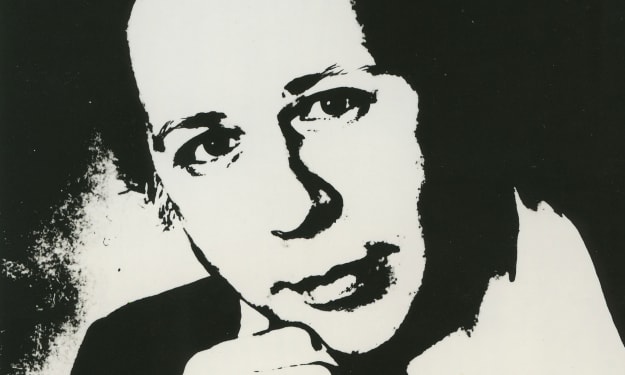
Ben Bova Interview
"Don't ask your readers to admire your words when you want them to believe your story." Science Fiction author Ben Bova realized that the general rules of science - don't add an experiment to an experiment, and don't make things overly complicated - also applied to science fiction. His theory certainly brought him success. Starting out as a technical writer for Project Vanguard in the 1950's, Ben Bova went on to become a successor to John W. Campbell as editor of editor of Analog Science Fact & Fiction where he won six Hugo Awards. Throughout his career he authored over 120 books on science fact and science fiction, worked as editorial director for OMNI magazine, and was president of both the National Space Society and the Science Fiction Writers of America. He has appeared as the Guest of Honor at the Florida convention Necronomicon on two separate occasions, and in 2000, he attended the 58th World Science Fiction Convention as the Author Guest of Honor.
By Claire Evans10 years ago in Futurism
Discognition Questions Consciousness
My new book, Discognition, looks at science fiction in order to think about questions of consciousness. Each of us knows that he or she is conscious; and most of us take it for granted that not only human beings are conscious, but animals like dogs and cats are as well. But how far downwards does consciousness go? Are lobsters conscious? Are trees? Are bacteria? We don't really know. But the enigmas go further. We don't even understand our own intelligence and mental activity. We live in a golden age of neuroscience; every year, we learn more and more about the functioning of the brain. And yet, despite this accumulation of knowledge, nobody really knows what consciousness is, or how it works. Philosophers and scientists disagree on even the most basic issues. We have no idea how to get from the brain to the mind: from electrochemical processes in our neurons to things like feelings and thoughts and experiences.
By Steven Shaviro10 years ago in Futurism
Interstellar Transit
This will be the beginning of a new age. Or I will fail. Again. For three hundred OE cycles, the We Together have dedicated our resources to this moment. Materials and refining facilities across the System have been shunted to the project, as both the Primary and a nontrivial proportion of upper tier secondary sentiences turned to designing and constructing the Transit Mechanism. Again.
By David Williams10 years ago in Futurism
'Star Wars' Sith Books
The Sith were the practitioners of the dark side and mortal enemies of the Jedi Order. Darth Sidious postulated that the source of dark side power was of the universe outside the borders of our maps. Star Wars Sith books explore the dark side and its most notorious characters on a deeper level than the films. There is a lot to learn when you delve deeper into the rivalry; In fact, some have postulated that the Sith are the good guys and the Jedi are the bad guys. From Darth Plagueis to The Dark Lord Trilogy, Star Wars Sith books expand your understanding of an ancient complex battle where sides are often gray and characters conflicted.
By Frank White10 years ago in Futurism
Best Sci-Fi Art Books
Sci-fi art doesn't just tell a story. It takes you into a story, often of your own making. Science fiction art inspires a creative process in the mind. Your intellect is forced to wrap a tale of other worlds and dimensions around the visual your eyes are locked on. From the erotic sci-fi art of greats like Hajimi Sorayama to the sweeping landscapes of sci-fi artist Vincent Di Fate, the works of sci-fi artists can be found in the best sci-fi art books, which provide countless hours of imagination and storytelling.
By Futurism Staff10 years ago in Futurism
Best Star Wars Books
Star Wars is perhaps one of the most important franchises of the 20th century. The 21st century promises to deliver more of the ever expanding universe. Disney has bought Lucasfilm and has mapped out the next decade of Star Wars activity. With some of the most exciting characters in the franchise being women, the audience for the franchise has grown exponentially. Not only has J.J. Abrams rebooted the movies, but the franchise has inspired an army of writers focused on the Star Wars universe. The Star Wars books enhance the experience of being a Star Wars fan, whether it’s learning ancient history, getting background on a favorite character, or following the heroes of the original trilogy.
By Frank White10 years ago in Futurism
Best Time Travel Books
Time: the final frontier. These are the voyages of storytellers throughout the mysteries of time, exploring how to break through its apparently-rigid barriers and break its (apparently equally rigid) rules. But when you think about it, we're all traveling through time together—in what we can perceive as forward. Not all of us pass through at the same subjective rate, of course, because there are teeny-tiny relativistic effects at work, which have to do with our relative motions.
By Natasha Sydor11 years ago in Futurism
Best Philip K. Dick Books
Philip K. Dick's work has transformed the way we view science fiction. He published 44 novels and over 100 short stories, and 12 book to film adaptations, extending his influence even to today. In most of his works, the wall between reality and illusion fails to exist, leaving his audience to figure out what is and is not real. He touched upon deep philosophical issues. What does it mean to be human? What is an identity? Can I trust my own memories? As a long time science fiction fan, I can't list the following PKD novels in any particular order. To impose my own order would be arrogant of me. Each of the best Philip K. Dick books can be enjoyed by any fan of science-fiction.
By George Gott11 years ago in Futurism
Sci-Fi Military Books
As a sub-genre of science fiction, sci-fi military books often imagine the future of war, relying heavily on speculative technology and, oftentimes, extraterrestrial combatants. Many authors rely on historical events, such as Hannibal or the Vietnam War, and transcribe them for the future. Instead of nations in conflict, authors present planets at war. The ethics of war and consequences of military action are on the front-lines of many sci-fi military books. When is war justified? What is the value of one life versus many? New moral dilemmas present themselves as science fiction concepts muddle the line between what is and is not permitted. Military science fiction is about the people engrossed by the carnage of war and the larger problems facing them.
By Futurism Staff11 years ago in Futurism