space
Space: The Final Frontier. Exploring space developments and theorizing about how humans fit into the universe.
Upcoming 5 Topmost Inventions Those May Change Everything Forever and redefine Human Civilizations
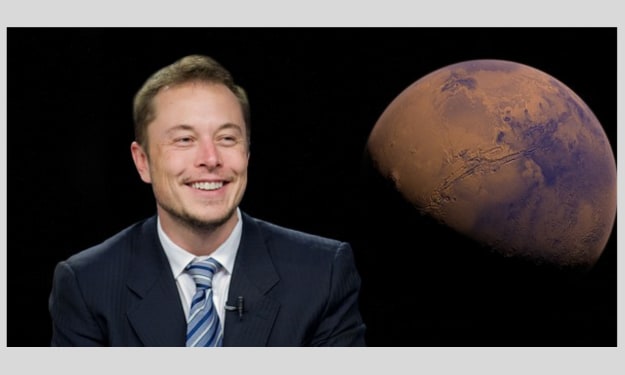
Manufacturing Industry in Space Source: SpaceWatch.Global The idea of Colonizing Mars or the Moon is nothing new although these endeavors have been considered as the most ambitious projects for any nation. Billions of dollars have been poured to take the human on the space. But this time there has been a slight change in the plan and that has made it more lucrative. The plan is to make space habitable for humans so that they can live permanently there. There are lots of merits to this. Space is a far more closer and known destination rather than Mars or the Moons. It involves fewer uncertainties. In today's world, 350-500 km is not a big deal to overcome to set up a base for a company and sell the products or services worldwide. But what if companies can set up their manufacturing unit on the space above 500 km vertically above sea level. Yes, that is going to be a reality very soon. Varda Space Industries, a satellite manufacturing company, is planning to put its manufacturing base in space by 2023. The unimaginable dream of a space industry will come true and get life with the majestic touch of SpaceX and Elon Musk, known as the chief engineer in his company. SpaceX has only the state-of-the-art facility to make the whole thing possible. Although it may seem a truly expensive option for many companies to manufacture in Space, fully automated manufacturing units controlled by computers and operated by robots may really compensate for a physical operational base on the earth.
By Moshiur Rahman4 years ago in Futurism
Deadly Beauty
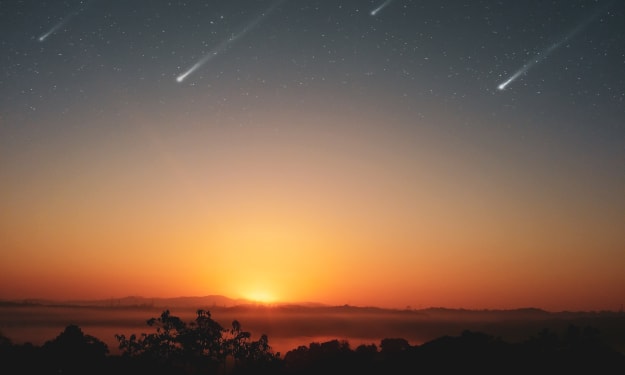
Deadly Beauty Alysa watched the night skies above her, filled with streaking lines of varying color. Hundreds and thousands of meteors scored the sky, each a different color than the last. The phenomena created a latticework of rainbow lines, the most beautiful thing she had ever seen.
By Luke M. Curren4 years ago in Futurism
Into the unknown
"The earth is the cradle of humanity, but mankind cannot stay in the cradle forever!” Said Konstantin Tsiolkovski, the famous scientist that pioneered space flight more than a hundred years ago. Space exploration has always been something that makes my imagination soar into new heights.
By Giovanni Profeta4 years ago in Futurism
Elon Musk Set to Become the World's First-Ever Trillionaire Very Soon
Elon Musk, the owner of the electric car company Tesla and the space exploration wing SpaceX, is going to be the world's first-ever trillionaire according to Analysts at Morgan Stanley. Although most of his net worth, currently around $241bn comes from selling electric cars, the investment bank forecasts that his becoming a trillionaire will be a reality soon because of SpaceX, which will also be the most valued company on the planet. In January this year, he became the world's richest man, overtaking Amazon’s Jeff Bezos, whose net worth is around $200bn.
By Moshiur Rahman4 years ago in Futurism
THE LOUIS MOINET SPACE REVOLUTION (REVISITED)
When developing a new watch, a brand can spend weeks, months or even years bringing its ideas to fruition. A simple ‘animation’ of an existing product, for instance, swapping one dial colour for another, is relatively straightforward. However, a timepiece that is seemingly overflowing with innovation can take an inordinate amount of time to bring to market.
By Angus Davies4 years ago in Futurism
Unsolved Mysteries in Physics
Quantum Entanglement, described by Albert Einstein as “far-fetched” is a state in which two particles from different parts of the world are connected and reflect the behavior and status of their partners. String theory enables scientists to harmonize the laws of particles (called quantum mechanics) with the laws of space and time (called general relativity) and to combine the four basic forces of nature into a single entity. This sophisticated theory explains that particles in the universe (knowing very little about them) are grouped and scattered throughout the vast universe.
By Madhav Khadka4 years ago in Futurism
Space Exploration
The opportunity to explore space delighted people from many walks of life, but only world governments were able to afford the high cost of sending people and equipment into space by the late 20th and early 20th centuries. At the end of the space race, a new idea of investing in space exploration emerged, focusing on improved space use to improve life on Earth. To calculate the benefits of space exploration, NASA calculated that 444,000 people were saved, 14,000 jobs were created, $ 5 billion in revenue, and $ 6.2 billion was raised through NASA research programs.
By Dipan Pathak4 years ago in Futurism