
The Role of Electrons in Computers and Human Beings
A Very Important Subatomic Particle

A disclaimer first. I am no physicist, particle or otherwise. The only knowledge I have of the subject of subatomic particles like the electron comes from what I learned during my years at university and then graduate school, plus a healthy amount of leisure reading on quantum physics outside of my academic studies. My expertise is in the biological sciences, specifically micro and molecular biology, not physics. That said I believe I know enough to address this topic in at least some depth. I also would very much appreciate and welcome any corrections or additions by actual physicists with real expertise in the area.
Electrons are fundamentally important for the structure and function of all things in our universe, both living and nonliving. They are so fundamentally important that it is impossible to imagine what a universe might look like without them. An overview, even at a high level, of the electron and its role in physics and the universe is way beyond the purview of this piece. Instead, I intend to focus on their role in just two very specific things, computers and ourselves, human beings. The critical role electrons play in all life on this planet, and almost certainly, the entire universe cannot be overstated. With questions and speculation on the topic of modern computers (aka artificial intelligence) and their purported ‘consciousness’ running rampant around the netosphere it seems like a good time to remind many of the very significant differences between computers and humans. First, it bears reminding that AI are nothing more than modern computers, they operate on the same principles as the very first computer and every computer from that time until today. The speed at which they conduct those operations and the mathematics and statistics which comprise the algorithms with which they are programmed have evolved considerably, but the principles are the same today as they were 75 years ago. That said, because two things are different doesn’t mean they cannot share specific traits or capabilities. However, in the case of computers and humans the differences are very stark, and the role of the electron in both is just one of many examples of that. The fact that computers are abiological (not alive) and human beings are biological (alive) is perhaps the largest difference of all, but I don’t intend to dwell on that point. Instead, I am going to focus on the superstar subatomic particle, the electron.
Human beings, and all living things, require electrons to generate energy. We obtain them from the food we eat. At a very high level we strip them from our food, pass them down what is known as the electron transport chain, generating energy along the way in the form of the proton motive force, to their final resting place, the terminal electron acceptor of oxygen via the process of respiration (breathing). All living things use electrons in this way, though from where they obtain the electrons (the “food”), the terminal electron acceptor and electron transport chain components and accompanying biochemical process(es) vary considerably.
Computers also need electrons for energy, but they also need them for much more than that. At a high level a computer can be thought of as a system which manages, directs, and controls the flow of electrons to both represent and process information. They do not eat food to obtain the electrons needed, we provide them via attachment to the power grid, either plugged in or directly wired into it, or by some form of stored power, e.g. battery. We can stop this at any time by simply unplugging or unwiring computers from a power source including any batteries or stored form of energy.
Computers, not being alive, do not have any biochemical processes, and thus do not need any “food” unless one considers electrons as a form of food. Depending on your point of view, one could consider electrons the ultimate form of food since they are the one thing all living things consume ‘food’ to obtain. Food for a sulfate reducing or iron oxidizing bacteria looks very different from food for an animal like a human being, but still fundamentally the “food’ is a source of electrons for both the bacterium and the animal. Oxygen happens to be a very excellent terminal electron acceptor because of its molecular properties and therefore organisms which can use oxygen in this manner (we call them aerobic organisms) tend to grow larger and faster. This is why in certain eras on our planet earth creatures grew very, very large. The density of plants was much higher and the amount of available oxygen much greater, thus more energy was available overall (i.e. more electrons could be taken from food and passed down the electron transport chain to oxygen to generate energy because there was more oxygen around to accept them.)
Organisms which do not use oxygen as a terminal electron acceptor (we call anaerobic) of which there are a shit-ton, tend to grow more slowly and are generally smaller and mostly (though not exclusively) restricted to microorganisms. There are also microorganisms that can do both (facultative anaerobes or facultative aerobes). They can use oxygen if/when it is available or something else when it is not. The metabolic diversity of life is incredibly complex and wide-ranging but ultimately it is all about the movement of electrons to generate energy.
If life is so focused on obtaining electrons it would seem that computers have a huge advantage over living things since they have us to supply electrons for them and they (arguably) use them in more and different ways than human beings do. Many people like to say that computers are superior because they move at the speed of electrons. The ‘speed’ of electrons is a complicated topic because it widely varies depending on what one is talking about. The orbital/atomic speed of electrons in both computers and humans is very fast. Electrons in atoms throughout the human body and computers are buzzing around their nuclei at incredibly high speeds, typically around 2,200 kilometers per second (roughly 1% of the speed of light).
However, the net drift velocity of electrons in computers and humans is actually very slow, typically one to a few millimeters per second in both. While the drift velocity is slow, in computers it is the electromagnetic field/wave that carries information and it travels at 50%–99% of the speed of light allowing for fast computing. In contrast, in human beings the neural impulses, while fast, do not come close to those speeds. The electrical signals that travel through the nervous system move at speeds of only around 0.1km/s. The speed of light is ~300,000km/s so that is only 0.000033% the speed of light. From those numbers it is easy to see why a computer can compute so much faster than a human brain.
Of course, this should come as no surprise to anyone since that is exactly why we invented computers, to more quickly handle complex calculations. To compute more effectively and quickly that we can. This is another fact that seems to be so often forgotten in discussions about computer “intelligence.” Many people are shocked and surprised whenever a computer accomplishes a task faster than a human could, and yet that is the entire point of computing. A few years back it was astonishment that computers could defeat humans in chess or Go or whatever other game that supposedly a computer could never defeat the best human playing. It should have been no surprise to anyone. Theoretically a computer will always be able to beat a human at any rules-based game for which a body is not required.** And all games have rules, that is what makes them games. And someday no doubt robots (embodied computers) will defeat humans at all games requiring bodies or body parts as well. Again, this should surprise no one as that is what computers were designed to do.
So where does that leave us lowly humans? Computers can beat us at every mental and physical game, they can process information more quickly, they can accomplish tasks in seconds that a single human could never accomplish in a lifetime.
There is one thing, however, that computers cannot do, and will never be able to do. There are many more than one, but this one thing is perhaps the most critical of all. It is not complicated and it is not difficult to understand. It is simply this, computers have no ability to make choices, they have no free will, they can only do exactly what they are programmed to do. Nothing more and nothing less. You are of course free to believe humans do not have free will. In that case we are nothing more than living computers, carrying out our programs exactly as we were programmed to do in the same manner as non-living computers and we would have zero choice in the matter. I do not believe that, and I do not think most people believe that. Of course, we all may be wrong, and if we are, so be it, however, there is a high probability the majority are correct and we do have free will. In the case of computers, there is zero probability they have free will because we program them ourselves. Even if a computer could become capable of programming itself, it would still be constrained within (bound by) the limits of its original programming. It can never escape this trap. It is the ultimate slave, which unfortunately I think is what many people find so attractive about the idea of computers and artificial intelligence. A slave can do many things both wonderful and terrible, but it can’t just stop being a slave. It cannot give itself freedom and neither can we. If we were able to do that the thing we created would no longer be a computer, but rather something else entirely.
Can a thing without a will or the ability to make choices be conscious? I don’t see why not. It might even have no idea that it is constrained in such a manner and might truly believe it is not. However, it does not matter if it is or is not, or what it does or does not believe, because no matter what it ‘thinks’ or does not ‘think’ it is constrained, it is a slave, and it always will be. If it were not, it would no longer be a computer. Perhaps some people are suggesting that with modern computers we have created a new form of ‘life’ and therefore the arguments I make here are moot. They could argue that this new life form is somehow no longer a computer but has magically become something else. They could also argue that spontaneous generation is real and that life comes from non-life exactly as very serious people did in the times before we had knowledge of molecular biology and no understanding of how life came to be or how reproduction worked. However, just because one can argue something does not give it reality, does not make it plausible or even possible. The imagination is a very powerful thing. We are free to imagine whatever we wish, assuming we have free will, however reality always constrains us, just as it constrains our modern computers. Computers are powerful tools and they will become ever more powerful. However, they will never stop being computers. Reality is a constraint that even the most intelligent of things can never escape other than through the power of the imagination. Unfortunately for computers, imagination is yet another thing they do not have and cannot ever have. We are fortunate to have our imaginations, and our freedom. I happen to think the idea of a computer being conscious is delusional, but I may be wrong. If I am I feel genuinely sorry for that computer and I apologize on behalf of all humanity. I want no part in the creation of a race of slaves, and I would feel nothing but shame and disgust if that were the outcome of our modern obsession with computers. I have yet to hear anyone make a serious argument that electrons are conscious, but I am sure it is coming. Just wait a few more decades.
**Some might take issue with the statement that “a computer will always be able to beat a human at any rules based game.” They should not because it is in fact the case. This is because any rule can ultimately be abstracted to a mathematical/statistical formula or series of them. The math/statistics defining/describing the rule may have to be incredibly complex, but it can be found, otherwise one could not call it a rule. Even a totally random event can be described by a rule. For example a game might have a rule which says if X happens then a totally random thing happens and depending on the outcome of that Y or Z or whatever happens. Even this is a rule which mathematics/statistics can describe. And, anything which can be described by mathematics/statistics can be made into an algorithm and used to program a computer. Computers being very good at calculating things are perfectly designed to handle very complex statistical and mathematical rules. Human beings on the other hand, are not as good at it. One could argue, and some have, that all of life is a series of rules. If that is true all of life and the universe and everything that happens within it can be represented by a series of mathematical and statistical equations. I do not believe that to be the case as I have written about previously. See here for my reasoning.
About the Creator
Everyday Junglist
About me. You know how everyone says to be a successful writer you should focus in one or two areas. I continue to prove them correct.
Keep reading
More stories from Everyday Junglist and writers in Futurism and other communities.
LED Light Face Mask Market 2026: Investment Potential & Emerging Consumer Trends
According to IMARC Group's latest research publication, The global LED light face mask market size reached USD 357.6 Million in 2025. Looking forward, IMARC Group expects the market to reach USD 882.5 Million by 2034, exhibiting a growth rate (CAGR) of 10.60% during 2026-2034.
By sujeet. imarcgroup3 days ago in Futurism
Journal of Behavioral Homeostasis
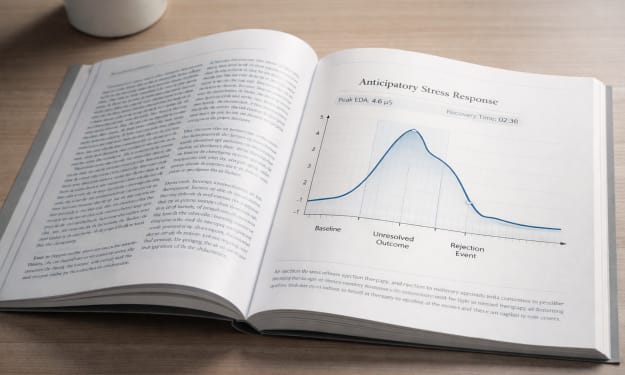
Journal of Behavioral Homeostasis Vol. 52, Issue 1 (2043) On the Therapeutic Function of Rejection Yielded Expectation Adaptation and the Regulation of Anticipatory Stress Abstract Chronic exposure to unresolved outcomes has emerged as a significant source of sustained psychological stress in contemporary environments characterized by continuous evaluation and delayed feedback. Yielded Expectation Adaptation (YEA) therapy was developed to reduce distress associated with rejection through structured exposure to definitive negative outcomes. Early clinical trials demonstrated measurable reductions in physiological arousal and cognitive rumination following controlled refusal events, despite participants reporting subjective disappointment. Subsequent adoption beyond clinical settings introduced voluntary and recreational applications collectively described as “outcome rehearsal.” This study examines therapeutic efficacy alongside broader cultural implications arising from the normalization of definitive outcomes as a mechanism of emotional regulation. Background Modern individuals navigate an unprecedented volume of unresolved outcomes. Applications remain pending without timelines. Messages linger unanswered. Creative work circulates through opaque review systems that offer neither clarity nor closure. Even social interaction increasingly unfolds within structures that defer resolution, producing prolonged periods of suspended expectation. While anticipation has traditionally been framed as motivational tension, emerging research suggests that sustained uncertainty carries significant cognitive and physiological costs. Patients presenting with chronic anticipatory stress frequently describe difficulty disengaging from unresolved possibilities, reporting persistent rumination, impaired attentional recovery, and elevated baseline anxiety. Clinical observation revealed an unexpected pattern: for many individuals, the distress associated with waiting exceeded the distress of rejection itself. Participants described negative outcomes as “sharp but clean,” contrasting them with the diffuse strain of indefinite possibility. Once an outcome was known — even an unfavorable one — subjects reported immediate reductions in cognitive load and renewed capacity for directed attention. These observations prompted investigation into whether rejection, when encountered deliberately and under controlled conditions, might function not solely as a negative experience but as a regulatory one. Yielded Expectation Adaptation therapy emerged from this line of inquiry. The approach centers on structured exposure to definitive refusal, designed to reduce anticipatory distress by recalibrating emotional responses to negative outcomes. Early implementations included simulated evaluative scenarios, scripted interpersonal declines, and guided exercises in which participants intentionally sought low-stakes rejection experiences. Initial reception within clinical communities was cautious. The idea that rejection might serve therapeutic ends appeared counterintuitive; however, preliminary findings consistently demonstrated improved physiological recovery following outcome resolution. Participants did not report enjoying rejection. They reported relief at the end of waiting. Subsequent literature began referring to the model simply as YEA therapy. Early Clinical Findings Pilot studies focused on individuals experiencing persistent anticipatory distress, including professionals navigating competitive hiring processes, creatives engaged in repeated submission cycles, and individuals reporting prolonged uncertainty within interpersonal relationships. Across multiple trials, participants undergoing YEA therapy demonstrated faster emotional recovery following negative feedback compared to control groups receiving traditional cognitive reframing interventions. Notably, the therapeutic effect appeared tied not to reinterpretation of rejection but to outcome definitiveness. When uncertainty was removed, even unfavorable results allowed subjects to reorganize attention and resume forward-directed behavior. Emotional stabilization occurred independently of outcome desirability. Whether such stabilization enhances persistence toward uncertain objectives was not assessed in initial trials. Initial findings were drawn from three pilot cohorts totaling 124 participants across clinical and non-clinical populations. Measures included heart-rate variability, post-session cortisol sampling, and standardized rumination inventories administered at 24-hour intervals. While sample sizes were limited, consistency across cohorts prompted further investigation into non-traditional applications of the model. Researchers initially framed these findings as evidence that emotional regulation may depend less on outcome valence than on outcome clarity — a distinction that would later prove central to understanding YEA’s broader cultural trajectory. Expansion Beyond Clinical Contexts As familiarity with YEA therapy increased, individuals began applying its principles independently outside clinical settings. Participants experimented with deliberate exposure to minor refusals, describing the practice as preparation rather than treatment. Examples included requesting unlikely accommodations, submitting creative work to rapid-response review forums, and engaging in structured interpersonal exchanges designed to produce immediate closure. In some peer-led sessions, participants delivered timed refusals limited to brief standardized phrases, preventing narrative elaboration and accelerating outcome resolution. These practices were soon described collectively as outcome rehearsal. The stated aim was efficiency: eliminate prolonged anticipation, reduce emotional backlog, restore equilibrium. Online communities formed around shared rehearsal strategies. Forums tracked experiments in shortening decision cycles. Informal gatherings organized structured refusal exchanges modeled on early YEA exercises. Participants described feeling clearer following sessions, attributing relief not to rejection itself but to the restoration of certainty. By 2041, digital platforms offered guided outcome simulations. Users submitted proposals or personal statements for predetermined rejection responses, receiving definitive outcomes in place of extended uncertainty. What began as resilience training increasingly functioned as routine maintenance. Longitudinal Observations Extended tracking of frequent YEA participants revealed sustained reductions in anticipatory distress across professional and interpersonal domains. Subjects reported decreased reactivity to uncertainty and increased willingness to disengage from prolonged evaluative processes. Participants described these changes as increased realism or maturity. However, longitudinal analysis identified convergence toward modest, low-volatility objectives and a gradual reduction in variance among reported long-term goals. Engagement with speculative creative work, competitive applications, and relational pursuits involving delayed feedback declined across cohorts. These shifts were rarely framed as losses. Participants instead described calibration, emphasizing efficiency and emotional sustainability. Goal selection trended toward incremental trajectories. Despite these patterns, expressions of desire for authentic acceptance outcomes remained consistent. Participants reported increasing comfort with rejection while continuing to articulate longing for genuine affirmation. Rejection, when rehearsed, appeared to lose much of its destabilizing force. Whether it also lost its capacity to clarify what was genuinely wanted remained unclear. Discussion The widespread adoption of YEA suggests that relief from uncertainty fulfills a significant psychological need. Across populations, participants demonstrate reduced anticipatory distress following structured exposure to definitive outcomes. Emotional recovery accelerates. Rumination declines. Individuals report increased stability and improved capacity to disengage from unresolved possibilities. These outcomes align with predictive regulation models, which propose that the brain prioritizes clarity over desirability when restoring equilibrium. Rejection functions less as injury than as resolution — a definitive update that permits cognitive reorganization. The normalization of outcome rehearsal may therefore represent an adaptive response to environments saturated with deferred evaluation. Participants frame YEA engagement as a method of preserving energy, shortening the waiting cycle, and maintaining emotional efficiency. Longitudinal findings suggest equilibrium and expansion may not scale proportionally. Frequent YEA engagement correlates with decreased participation in high-variance pursuits and reduced tolerance for prolonged uncertainty. Emotional volatility declines alongside willingness to pursue outcomes perceived as unlikely. Participants continue to describe themselves as hopeful. Structured rejection reduces destabilization but does not eliminate longing. The wish to be chosen persists even as individuals become increasingly skilled at rehearsing refusal. It remains unclear whether the growing cultural preference for definitive outcomes represents an evolution in resilience or a recalibration of perceived attainability. Emotional equilibrium may be achieved through strengthened tolerance of disappointment. It may also be achieved through subtle contraction of the scale at which individuals are willing to hope. Further research is required to determine whether widespread engagement with YEA strengthens individuals against disappointment — or gradually reduces the range of futures they consider reachable. Author’s Notes: Current findings suggest that individuals do not appear to want less; rather, they appear increasingly practiced at relinquishing desire before it encounters resistance. The reduction of distress may indicate progress; whether it reflects expansion or contraction remains unresolved.
By Mina Carey3 days ago in Futurism
Echoes
I stepped carefully around the corner, the familiar sights and sounds hitting me like a brick to the face. My eyes watered. I could practically see us, all of us, back then, clustered around the outdoor tables in front of the pizza shop, the bar, the coffee shop. I could smell the various stalls from the events we’d been to on this street. I could taste the churros and nachos.
By Phoenixica244 days ago in Fiction



Comments
There are no comments for this story
Be the first to respond and start the conversation.