
Hispanic vs. Latino(a)
Decoding the Difference Between Hispanic and Latino(a)

We have all been there. You are filling out a form, scrolling through a drop-down menu, or perhaps you are in the middle of a conversation, and you pause. You find yourself mentally juggling two words that seem to be used interchangeably but feel distinct: Hispanic and Latino.
Are they the same thing? Is one more polite than the other? Does it depend on where your grandmother was born?
If you are confused, you aren’t alone. Even the U.S. Census Bureau has spent decades trying to figure out the best way to categorize these identities. The reality is that while there is a massive overlap between the two groups, the difference between Hispanic and Latino comes down to two specific things: language and geography.
Here is your cheat sheet to getting it right.
The Short Answer
If you want the quick "dinner party" definition, memorize this:
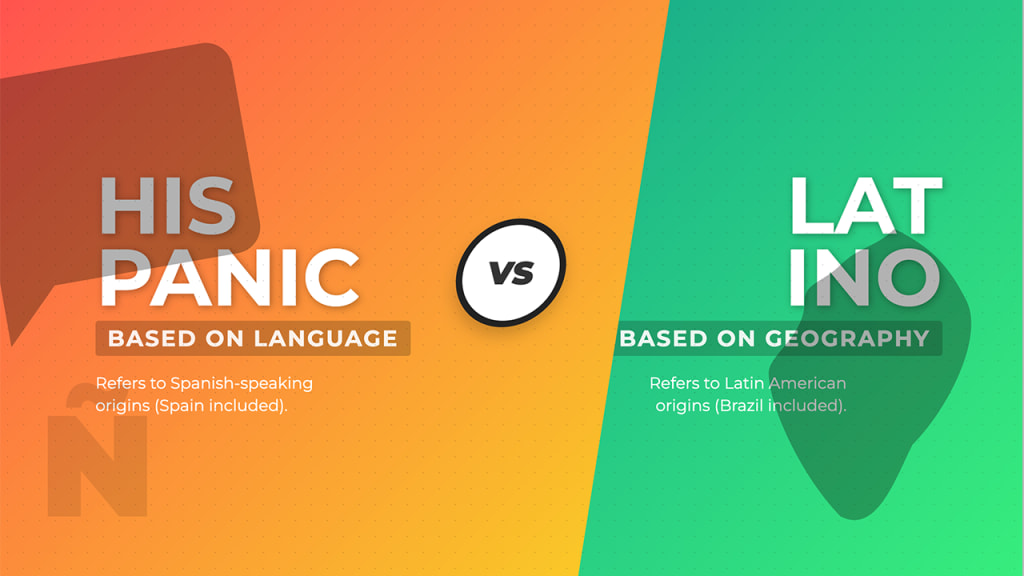
Hispanic is about Language (Spanish).
Latino is about Geography (Latin America).
Hispanic: It’s All About the Tongue
The term "Hispanic" derives from Hispania, the Roman name for the Iberian Peninsula. Consequently, this label refers to people who speak Spanish or descend from Spanish-speaking populations.
This focuses strictly on the language. If a country’s primary language is Spanish, its people are generally considered Hispanic.
The Key Outlier: Spain. Because people from Spain speak Spanish, they are Hispanic. However, because Spain is in Europe and not the Americas, they are not Latino.
Latino: It’s All About the Map
"Latino" is shorthand for Latinoamericano. This label refers to people with roots in Latin America—specifically Central America, South America, and the Caribbean.
This focuses strictly on location. If you are from this specific region of the globe, you are Latino, regardless of whether you speak Spanish, Portuguese, or French (though the latter is often debated).
The Key Outlier: Brazil. This is the biggest source of confusion. Brazilians are South American, making them Latino. However, because their official language is Portuguese, not Spanish, they are generally not considered Hispanic.
The Venn Diagram: Where They Overlap
The reason these terms are often swapped is that for millions of people, both apply.
If a person is from Mexico, Colombia, Cuba, or the Dominican Republic, they are usually both Hispanic (they speak Spanish) and Latino (they are from Latin America).
However, the distinction becomes vital when you look at the edges of the map:
Spaniards: Hispanic, but not Latino.
Brazilians: Latino, but not Hispanic.
Wait, What About Race?
This is the most common misconception. Neither Hispanic nor Latino refers to a race.
You can be White and Latino. You can be Black and Hispanic. You can be Indigenous and Latino. You can be Asian and Hispanic.
As noted by the Pew Research Center, these terms refer to ethnicity, culture, and identity. A person from the Dominican Republic might identify their race as Black and their ethnicity as Hispanic. A person from Argentina might identify as White and Latino. In fact, many people from Latin America simply identify as "mixed" or mestizo due to the historical blending of Indigenous, European, and African populations.
The "Latinx" Debate
In recent years, you may have seen the term Latinx (or sometimes Latine) pop up in media and academic circles. This was introduced as a gender-neutral alternative to the gendered Spanish words Latino (male/neutral) and Latina (female).
While often used by LGBTQ+ communities and younger generations in the United States to promote inclusivity, it is worth noting that the term has faced pushback. Some critics view it as "linguistic imperialism"—an attempt to Anglicize the Spanish language. Surveys suggest that while the term is visible in media, a large portion of the population in Latin America and older generations in the U.S. still prefer the traditional terms.
Which Term Should You Use?
If you are worried about which word to use to avoid offending someone, context matters.
Geographically in the United States, usage varies. People in Florida and Texas (and rural areas) tend to use Hispanic more often. Meanwhile, Latino is the preferred term in urban areas, the West Coast, and the Northeast (like New York). Media outlets and pop culture also lean toward Latino as it feels slightly broader and more inclusive of culture rather than just language.
However, the Golden Rule is simple:
When in doubt, be specific. Most people don’t walk around thinking of themselves as a census category. A person is much more likely to identify as Mexican, Puerto Rican, Salvadoran, or Brazilian than they are to attach themselves to a broad label like "Hispanic."
So, the next time you aren't sure? Just ask, "Where is your family from?" It’s a lot more personal, and you’ll never get the geography wrong.
About the Creator
Opinion
A dedicated space for bold commentary and honest reflections on the world around us. Whether you agree or dissent, my goal is always to get you thinking.


Comments
There are no comments for this story
Be the first to respond and start the conversation.