Latest Stories
Most recently published stories in FYI.
Did You know? - The never-ending Rodent family
Rodents are among the most successful mammals in the world; almost half of all mammalian species belong to this family and their numbers are likely to be higher than the other mammals combined. This is due to their high reproduction rate: the house mouse reaches sexual maturity at 5-7 weeks and females can give birth to more than 50 pups every year as they can mate right after giving birth.
By Daniel Toth5 years ago in FYI
Biology, Lesson 101: The *Strange* Animal Kingdom
If you are looking for the answer to if aliens helped build the great pyramids, if DaVinci ever successfully flew or if the chicken came before the egg- this article isn’t for you. You are about to walk down a dark path of completely useless, semi-entertaining, and just plain weird information that you never knew you never knew. How did I come across this? Why was there any interest? It probably began when I watched a documentary about the Galapagos turtle and then it was just all downhill from there. A million questions that just had to be answered and honestly, the internet was just asking for trouble!
By Carissa Brown5 years ago in FYI
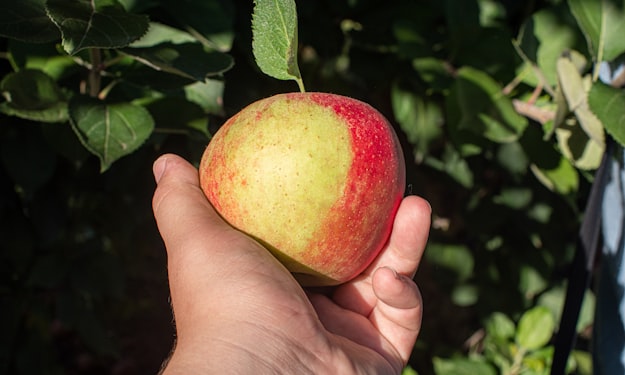
A Pandemic and an Apple
Little to nothing was known of germs and bacteria prior to the 17th century. The Bubonic Plague or as it was more commonly named, the Black Death, was a major pandemic that raged through the known world in the Middle Ages from time to time with the people having no knowledge of its origins. Superstition was rife in these times and infection was attributed to a number of things including bad air, evil spirits, poisoned wells, foreigners and sin amongst other things. Populations affected by the plague had little reason to suspect it was transmitted from rats and mice to humans by the bites of fleas. It was incredibly virulent and is now known to have been caused by the fleas being infected with the bacterium Yersinia Pestis.
By Michael Trigg5 years ago in FYI
Tesla's Smartphone
So says Nikola Tesla. “We shall be able to communicate with one another instantly, irrespective of distance. Not only this, but through television and telephony we shall see and hear one another as perfectly as though we were face to face, despite intervening distances of thousands of miles; and the instruments through which we shall be able to do this will be amazingly simple compared with our present telephone. A man will be able to carry one in his vest pocket.”
By Cleve Taylor 5 years ago in FYI
Five Minutes to Live: The Story of the Female Dolania Americana
What would you do if you only had five minutes to live? For many, the idea of having 24 hours left to live can already present a difficult metaphysical quandary; to reduce the timespan to five minutes at a moment’s notice can seem, from a human perspective, almost inconceivable.
By Samuel Twicks5 years ago in FYI
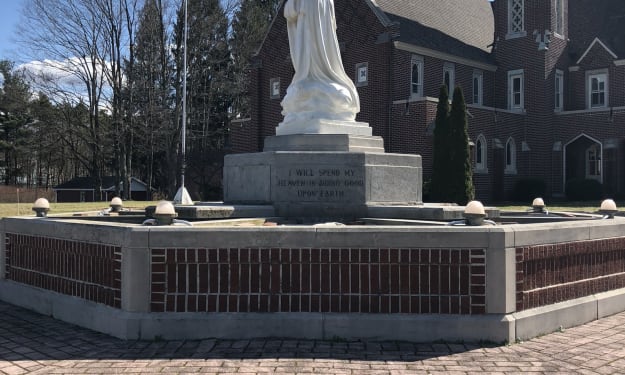
The Steel Magnate and the Monastery: Sharing a Beautiful Story Unknown to Many in Today’s World
Regardless of your religion I think you will enjoy the story of this beautiful monastery located in a small western Pennsylvania town. The story about this monastery and its connection to the steel magnate, Charles M. Schwab, who built it is very fascinating. The name of the monastery is the Carmel of St. Thérèse of Lisieux or “Loretto Carmel” and it is located in the small town of Loretto, Pennsylvania. Some people may have heard of Saint Francis University, which is located just down the road from Loretto Carmel and practically across the road from Charles M. Schwab's former mansion. Loretto Carmel is named for Saint Thérèse of Lisieux, a very popular saint who lived in a monastery in Lisieux, France. There are many Carmelite monasteries named after Saint Thérèse but Loretto Carmel is the only one in the United States founded directly from France. The Sisters who founded this monastery came to the United States from Bordeaux in September 1926 at the invitation of a local bishop. However, before these founding Sisters traveled to the United States they visited with three of Saint Thérèse's sisters, who were not only religious sisters but they were her blood sisters as well. One of Saint Thérèse's sisters gave the founding Sisters a first-class relic of Saint Thérèse to take to the United States and in return a promise was made to name the new monastery after Saint Thérèse. In case you are not familiar with religious relics, first-class relics include the physical remains of a saint, such as, a strand of their hair.
By Margie Anderson 5 years ago in FYI
Celebrating Staten Island. Top Story - March 2021.
New York City. The Big Apple. When most people speak of New York City, they are often talking about Manhattan. Home of the Empire State Building, Times Square and The Statue of Liberty. But actually, New York City consists of five boroughs. These include Manhattan, Brooklyn, Queens, The Bronx and my home town, Staten Island.
By MATTHEW FLICK5 years ago in FYI
Prohibition in America
Why in the world would anyone want to ban alcohol? Well, a lot of people did around the start of the 20th century. So much so that The Prohibition act was ratified in 1919, and enacted into law by 1920 under the 18th amendment to the American constitution. For the next 12 years, the manufacturing, sale and transportation of alcohol was outlawed. You may already know a little bit about prohibition, but there are some interesting facts that might surprise you.
By Wendy Sanders5 years ago in FYI