vr
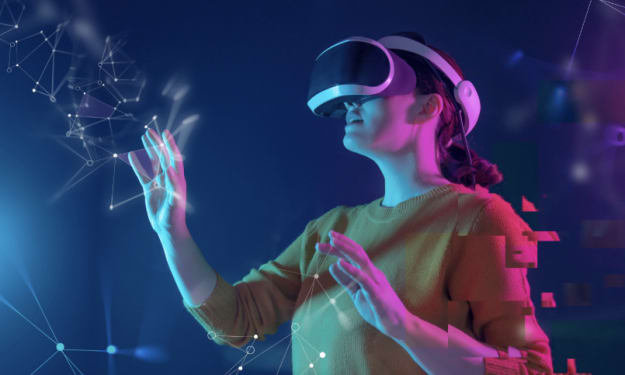
Virtual Reality is becoming the new normal in the gamer-verse; explore the best VR games and accessories available.
The Klegendairy Effect: How Keith Simpson Impacts the Virtual Gaming World
Keith Simpson, known globally in the virtual world as KLegendairy, is not just a name in gaming circles—he’s a transformative force. As the reigning #1 superstar of the Metaverse Gaming League (MGL) and the creative mind behind the groundbreaking series "The Infiniverse Saga," Keith has solidified his legacy as a multifaceted innovator. His influence extends across gaming platforms, captivating audiences with his dynamic gameplay and immersive storytelling. Nowhere is his impact more visible than in the Metaverse, where his presence has shaped both competitive gaming and virtual community-building.
By Calvin Wolfabout a year ago in Gamers
Myles Garrett
Myles Garrett is one of the most talented and dominant defensive players in the National Football League (NFL). Known for his incredible strength, speed, and skill, Garrett has established himself as a key player for the Cleveland Browns. In this article, we will explore his early life, college career, journey in the NFL, and his impact on the game.
By Farhan Sayedabout a year ago in Gamers
Marcus Rashford. AI-Generated.
Marcus Rashford is a famous English footballer who plays as a forward for Manchester United and the England national team. He is known for his incredible speed, skill, and goal-scoring ability. But Rashford is not just a footballer—he is also a hero off the pitch, using his voice to help children and families in need. In this article, we will explore his early life, football career, achievements, and impact on society in simple and easy English.
By Farhan Sayedabout a year ago in Gamers
Justin Tucker
Justin Tucker is one of the best kickers in NFL history. He plays for the Baltimore Ravens and is known for his strong and accurate kicks. Many football fans and experts believe he is the greatest kicker of all time because he has made many game-winning kicks and holds several NFL records.
By Farhan Sayedabout a year ago in Gamers
Where to Watch Kansas City Chiefs vs. Buffalo Bills
The Kansas City Chiefs and Buffalo Bills are two of the most exciting teams in the NFL. When these teams face each other, it’s always a game full of action, drama, and incredible plays. Whether you are a passionate fan or a casual viewer, knowing where and how to watch their games is important.
By Farhan Sayedabout a year ago in Gamers
The Metaverse
Introduction Imagine a world where you can interact with others, explore digital landscapes, attend virtual events, and work, all from the comfort of your home—or even from anywhere in the world. The Metaverse, a collective virtual shared space, is quickly becoming the next frontier of digital interaction. Though the concept of the Metaverse was once confined to science fiction, advances in VR (Virtual Reality), AR (Augmented Reality), and blockchain are now making it a tangible reality. But what exactly is the Metaverse, and how will it change our lives in the future?
By vidun Arambageabout a year ago in Gamers
A Day in the Life of Keith Simpson (Klegendairy): A Multi-Sports Pro Athlete
Being a multi-sports professional athlete requires extraordinary discipline, skill, and dedication. For Keith Simpson, widely known in the sports world as KLegendairy, every day is a calculated blend of physical training, mental preparation, and recovery. With a rigorous daily routine designed to maximize performance across multiple disciplines, Keith exemplifies what it means to push the limits of human potential.
By Kledge “KLegendairy” TVabout a year ago in Gamers
Are Virtual Reality and Mixed Reality Sports a Real Sport?
Virtual reality (VR) and mixed reality (MR) sports have grown from niche hobbies into legitimate athletic disciplines. When compared to traditional sports, VR/MR sports not only match their physical intensity but may even surpass them in terms of competitive difficulty. The blend of physical and cognitive demands—reaction times, adaptability, and precision—sets a high bar for players. This article explores these aspects through specific sport comparisons and analyzes why qualifying for VR/MR competitions might be even more demanding. ________________________________________ Boxing: Traditional vs. VR Physical and Cognitive Metrics • Calories Burned: o Traditional Boxing: 600–800 calories/hour during sparring or training. o VR Boxing (Thrill of the Fight): 600–800 calories/hour, matching traditional boxing as players mimic full-body movements, including punching, dodging, and weaving. • Heart Rate: o Traditional Boxing: 150–170 bpm during intense bouts. o VR Boxing: Comparable 140–160 bpm, with sustained cardio from dynamic movement. • Cognitive Challenges: o Traditional Boxing: Relies on reading your opponent, adapting strategies, and managing endurance. o VR Boxing: Requires rapid adaptation to AI opponents who change tactics in real-time and demand split-second reflexes. Competition Qualifying for a VR boxing tournament can be tougher than its traditional counterpart. Players must exhibit the same physical stamina but add precise hand-eye coordination and rapid reaction times under the pressure of adaptive gameplay. Reflexes and decision-making are continuously tested against AI or global opponents, raising the bar for mental engagement. Takeaway: VR boxing combines physical intensity with an additional layer of cognitive challenge, making competitions fiercely competitive and difficult to qualify for. ________________________________________ Tennis: Traditional vs. VR Physical and Cognitive Metrics • Calories Burned: o Traditional Tennis: 400–600 calories/hour during singles play. o VR Tennis (Racket Fury): 300–500 calories/hour, slightly less due to reduced running, but requiring consistent upper-body engagement and fast reflexes. • Heart Rate: o Traditional Tennis: 130–160 bpm during moderate-to-intense rallies. o VR Tennis: 120–140 bpm, slightly lower due to limited full-court movement but elevated by fast hand motions and reaction speed. • Reflexes and Adaptability: o Traditional Tennis: Reaction times average around 300 milliseconds for most players. o VR Tennis: Reflexes are tested at an even faster rate, often under 200 milliseconds, as virtual opponents can increase ball speed unpredictably. Competition Qualifying for VR tennis competitions demands not just physical skill but the ability to anticipate complex ball trajectories and execute perfect timing. Traditional tennis players may face environmental factors like wind or court surface, but VR players deal with unpredictable opponent behaviors powered by AI. The constant need for focus and adaptability places VR tennis players under a unique competitive strain. Takeaway: While traditional tennis emphasizes endurance, VR tennis pushes players to their cognitive limits with reaction times and adaptability becoming make-or-break factors in competition. ________________________________________ Soccer: Traditional vs. Mixed Reality Physical and Cognitive Metrics • Calories Burned: o Traditional Soccer: 450–600 calories/hour for players who consistently run. o MR Soccer (HADO Soccer): 400–550 calories/hour, with bursts of sprinting, lateral movement, and shooting. • Heart Rate: o Traditional Soccer: 140–160 bpm during competitive play. o MR Soccer: 130–150 bpm, with cardiovascular intensity comparable to real soccer. • Cognitive and Reflexive Demands: o Traditional Soccer: Players rely on spatial awareness, communication, and physical execution. o MR Soccer: Players must integrate strategic thinking with fast reflexes to hit or dodge virtual targets, demanding precision and adaptability. Competition Qualifying for MR soccer tournaments often involves advanced skills in both physical agility and mental acuity. Players must think ahead while responding to unpredictable movements of virtual opponents or teammates. Additionally, players receive real-time performance feedback (reaction time, shot accuracy, movement speed), raising the bar for qualification. Takeaway: MR soccer integrates physical exertion with advanced analytics, making the path to competition more data-driven and mentally challenging than traditional soccer. ________________________________________ VR/MR Sports: A Higher Bar for Entry Qualifying for high-level VR/MR competitions can be harder than in traditional sports due to: 1. Physical and Mental Duality: o Traditional sports test physical endurance, but VR/MR sports demand equal exertion from the body and mind. For example, VR competitors must maintain peak reflexes (sub-200 ms in some cases) while managing complex strategies. 2. Adaptability: o Traditional sports often follow established patterns—field conditions, known opponent strategies, and predictable dynamics. VR/MR sports introduce AI or dynamic gameplay mechanics that require constant adaptation. Athletes must learn to outthink ever-evolving systems, a challenge unique to this medium. 3. Precision and Real-Time Feedback: o VR/MR athletes receive immediate data on their accuracy, speed, and reaction time. This detailed feedback encourages perfection and makes qualifying tougher, as small errors can mean the difference between success and failure. 4. Global Competitor Pool: o Unlike traditional sports, which may limit competition to local or regional levels, VR/MR competitions are global. Athletes face a larger and more diverse competitor base, raising the difficulty of standing out. ________________________________________ Comparative Metrics Across All Sports Metric Traditional Sports VR/MR Sports Key Observations Calories Burned 400–800 calories/hour 300–800 calories/hour Nearly identical caloric output in high-intensity games. Heart Rate 130–170 bpm 120–160 bpm Comparable cardiovascular engagement. Reaction Time 300 ms <200 ms VR/MR sports demand faster reflexes and adaptability. Adaptability Environmental factors Dynamic AI and mechanics VR/MR athletes must adapt to rapidly changing gameplay. Global Competition Regional or national Worldwide via online platforms VR/MR sports amplify the talent pool and competition. ________________________________________ Conclusion: The Pinnacle of Competition VR and MR sports combine the physical demands of traditional sports with an additional layer of cognitive and adaptive challenges. Whether it's reflexes tested at unprecedented speeds, strategies against dynamic AI, or the pressure of competing on a global scale, VR/MR athletes face a uniquely intense competitive environment. In many ways, qualifying for VR/MR sports competitions is harder than traditional sports, as it requires mastery over the body, mind, and a new frontier of digital athleticism. The future of sports doesn’t just emulate the past—it pushes boundaries, offering players and spectators alike a thrilling new dimension of competition. Want to check out Pro VR and MR Sports and see top athletes like Keith Simpson? Check out the Metaverse Gaming League (MGL), the top league since Day 1.
By Kledge “KLegendairy” TVabout a year ago in Gamers
Australian Open 2025 live Schedule, where to watch and highlights
The Australian Open is more than just a tennis tournament—it’s an event that brings together the world’s best athletes, fans, and the excitement of summer in Melbourne. As we look ahead to the 2025 edition, there’s a buzz in the air about the matches, the rising stars, and the unforgettable moments that await. Whether you’re a long-time tennis fan or a newcomer eager to experience the thrill, this blog will guide you through the Australian Open 2025 live schedule, how to watch it, and the highlights you’ll want to catch. You can watch every match online and live updates here.
By vogueheadlinesabout a year ago in Gamers