
Get Two to Four More Surgeries’: How Atiqa Odho Became the Punchline in Fahad Mustafa’s Bruised Ego
After veteran actress Atiqa Odho jokingly advised Fahad Mustafa to act with contemporaries, his quip about “two to four more surgeries” ignited criticism, sparking debate on ageism and respect in Pakistani entertainment.

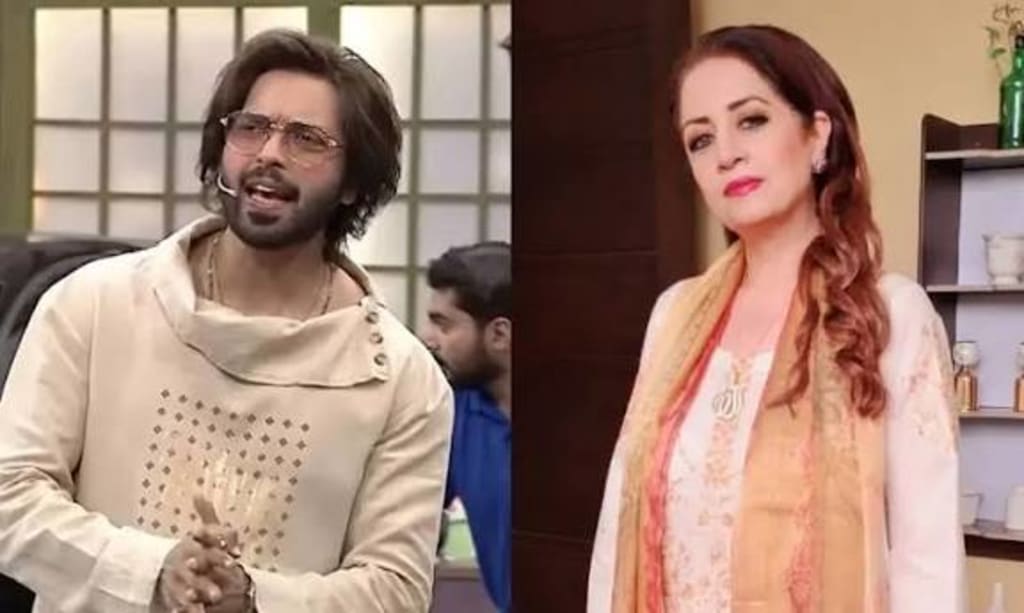
A televised exchange between two of Pakistan’s most recognisable entertainment figures — Fahad Mustafa and Atiqa Odho — has ignited a widespread debate about ageism, respect in the industry, and the responsibilities of public personalities when speaking live on air. What began as a light-hearted suggestion turned into a viral controversy that resonated well beyond the screens of viewers.
The On-Air Exchange
The episode began innocuously on Hasna Mana Hai, a popular TV show hosted by Tabish Hashmi, when veteran actress Atiqa Odho was shown a set of celebrity photos and asked to give advice. When Fahad Mustafa’s image flashed on the screen, Odho suggested he should consider working “with girls of his own age” instead of much younger co-stars — a comment that pointed to a perennial discussion in Pakistani dramas about age differences between actors and their on-screen partners.
Odho, 58, prefaced her advice with praise for Fahad’s hard work and good looks, but her remarks were intended as professional guidance rather than personal criticism. Yet what followed quickly took a different direction.
A Crass Response on Prime-Time TV
Later that evening on Jeeto Pakistan, where Fahad is both host and producer, he addressed Odho’s comments alongside fellow actor Humayun Saeed. With humor that many viewers interpreted as insensitive, Fahad replied: “Atiqa Apa, you are the only heroine left for us now. Inshallah, we will come with you. You may want to get two or four more surgeries and then we’ll be your heroes.” The implication — a joking suggestion about cosmetic surgery — was meant to elicit laughter but immediately drew criticism for its ageist and appearance-focused tone.
While some saw it as classic banter, a significant number of viewers and industry peers were unsettled by the remark, describing it as unnecessary and disrespectful on a high-profile Ramadan programme watched by families.
Public and Peer Reactions
The response on social media was swift. Many critics argued that Fahad’s comment reinforced harmful stereotypes about ageing and women in entertainment, especially when made in prime time during a culturally significant month. One renowned actress, Urwa Hocane, publicly called out Fahad for what she described as “age-shaming” and called for greater respect toward senior artists. Her statement amplified the discussion and brought further attention to the issue.
Online communities also heatedly debated the situation, with many voicing disapproval of the joke and framing it as indicative of a broader “fragile ego” problem in celebrity culture. Others noted that age gaps in casting have long been criticized, and Odho’s original comment was no more than a reminder of industry double standards.
Apologies and Attempts to Quell the Backlash
Facing backlash, both celebrities issued public apologies in the days that followed. Odho took to social media to soften the situation, writing that her earlier remark may have hurt Fahad’s feelings and apologising “to anyone she unintentionally offended.” She urged fans and the public not to over-analyse or prolong the controversy, praising Fahad as a “talented and hardworking professional.”
Fahad also apologised on Jeeto Pakistan, expressing respect for Odho and calling her “our elder” and “one of Pakistan’s most beautiful women” while offering blessings and calling for harmony between artistes. However, many critics said his apology focused more on flattery than addressing the deeper issues raised by his remarks.
Underlying Industry Conversations
Beyond the immediate clash, the incident has reignited an ongoing conversation about how age and gender are treated in South Asian entertainment. Age differences between leading men and their female co-stars have been a recurring topic, particularly when younger actresses are paired with much older leading men — and when senior actresses are sidelined or typecast into supporting roles. Some observers noted that Odho’s suggestion was reflective of a wider discomfort with these casting norms.
The row also underscores how quickly on-air banter can escalate in the digital age, where clips become viral and audiences — both local and international — engage in real-time commentary and critique. What might once have been dismissed as simple television banter is now dissected across social platforms, fan communities, and mainstream commentary.
A Moment of Reflection for Viewers and Stars
As the dust settles, many in the entertainment community say the episode should prompt broader reflection on how public figures use humour and how the industry treats senior artists. For some fans, Odho’s grace in apologising and urging an end to the controversy elevated her reputation, while others see the event as an overdue reckoning with the way performers engage with each other and their audiences.
Suno News
Whether this incident becomes a footnote in celebrity gossip or a catalyst for deeper cultural discussions about ageism and respect in media remains to be seen. What is clear, however, is that even seemingly light-hearted moments on popular TV can spark significant cultural debates in an age of instant reaction and amplified voices.
About the Creator
Fiaz Ahmed
I am Fiaz Ahmed. I am a passionate writer. I love covering trending topics and breaking news. With a sharp eye for what’s happening around the world, and crafts timely and engaging stories that keep readers informed and updated.
Keep reading
More stories from Fiaz Ahmed and writers in Geeks and other communities.
Ukraine War Anniversary and Snow in New York: Photos of the Day – Tuesday
On Tuesday, images from around the world captured both the resilience of people in conflict zones and the striking beauty of nature, highlighting the stark contrasts that define our global landscape. Two stories stood out in particular: the commemoration of four years since Russia’s full-scale invasion of Ukraine, and a heavy winter storm blanketing New York City in snow. Ukraine Marks Four Years of War Across Ukraine, solemn ceremonies marked the fourth anniversary of Moscow’s invasion. In Kyiv, President Volodymyr Zelensky addressed the nation, paying tribute to soldiers and civilians who lost their lives. Street-side memorials were adorned with flowers and photographs, while church bells tolled in remembrance. Families who survived the early months of occupation shared stories of resilience, reflecting a nation determined to endure despite ongoing conflict. Photographs from frontline towns, including Bucha, Irpin, and Mariupol, depicted both devastation and determination. Buildings reduced to rubble, military checkpoints, and trenches were juxtaposed with images of civilians returning to work, children playing amid temporary shelters, and volunteers distributing aid. The anniversary highlighted not only the human cost of war but also the remarkable spirit of Ukrainians striving to maintain normalcy under extraordinary circumstances. Analysts note that the war continues to shape Europe’s geopolitical landscape. With eastern and southern regions of Ukraine heavily contested, humanitarian and reconstruction efforts remain challenging. The anniversary photos serve as a powerful reminder of both the ongoing struggle and the international attention the conflict continues to command. New York’s Winter Wonderland Meanwhile, across the Atlantic, New York City experienced a dramatic winter transformation. A powerful storm dumped several inches of snow across the metropolitan area, creating picturesque streets, parks, and landmarks covered in white. Photographers captured the city’s iconic skyline, tree-lined avenues, and busy streets blanketed with snow, offering a momentary pause from urban bustle. Subway entrances, traffic intersections, and bridges were photographed amid efforts by city workers to clear roads and ensure public safety. Commuters braved the weather with umbrellas and winter gear, while children and adults alike were seen enjoying the snow with sleds, snowmen, and impromptu snowball fights. The storm led to temporary flight cancellations and slowed transportation, but the city’s resilience and adaptation were visible in every frame. Social media platforms were flooded with snapshots of snow-covered landmarks, from Central Park and Times Square to quieter residential neighborhoods. The images highlighted not just the beauty but also the challenges posed by severe winter weather, prompting reminders from local authorities to drive carefully, clear sidewalks, and protect vulnerable populations from the cold. A Day of Contrasts Tuesday’s photographs underscore the contrast between regions at peace and those in conflict. While New Yorkers navigated snow-covered streets with a sense of leisure, Ukrainians reflected on loss, courage, and survival. Photojournalists captured both realities, emphasizing the diversity of human experience in a single day. Environmental photographers noted the unusually heavy snowfall, linking it to changing climate patterns that continue to affect global weather systems. Meanwhile, conflict photographers emphasized the enduring human toll in Ukraine, documenting how families adapt amid uncertainty, destruction, and ongoing military threats. Global Attention Through Imagery In an age dominated by visual media, photographs serve as more than just records—they convey emotion, context, and immediacy. From snow-laden cities to war-torn towns, Tuesday’s images illustrate the resilience of communities and the beauty and fragility of our environment. While the snow offered a serene moment in New York, Ukraine’s anniversary reminded the world of the enduring impact of conflict. The juxtaposition of these stories in a single day highlights the varied realities humanity faces: natural wonder and urban life on one hand, and war, displacement, and loss on the other. As journalists and photographers continue to document daily life across the globe, these images provide a lens into the challenges and triumphs shaping our contemporary world, reminding viewers of the interconnectedness of global events, whether through weather, conflict, or cultural memory.
By Fiaz Ahmed a day ago in Geeks
Why Every Good Meal in Cincinnati Now Starts on Your Phone (2026)
I was standing outside a brewery at The Banks last Friday, freezing my tail off while trying to scan a QR code that just wouldn't load. Ope, there I was, staring at a spinning circle while my friends were already inside ordering a round. It’s 2026, y’all, and I reckon we should be past the "broken link" era of dining out.
By Sherry Walkera day ago in Geeks
It's 2026. Songs Turning 10 This Year
In 2016, we saw the rise of short form videos and what would lead to the birth of TikTok. We cannot forget the Snapchat filters no matter how cringe worthy some of them might have been. It was also the year in which the hit series Stranger Things debuted.
By Jasmine Aguilar3 days ago in Beat



Comments
There are no comments for this story
Be the first to respond and start the conversation.