literature
Geek literature from the New York Times or the recesses of online. Our favorite stories showcase geeks.
On Fairy Stories
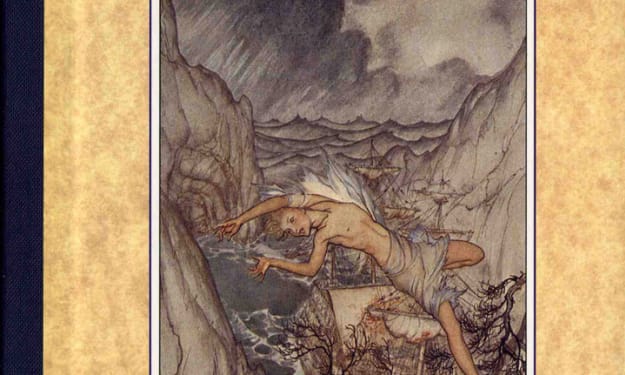
On Fairy Stories: Tolkien’s Apologia Fairytales or fairy stories have been a large part of the world’s body of literature. They serve as a way to instruct, inform, and entertain those who read or hear them. They have captivated and inspired for generations. Of course, most of the inspiring and captivating that happened, happened to children. When most people think of fairytales or fairy stories, they think of them as children’s stories and as things that are meant for children that have no place in the lives of adults. Fairy stories have long been considered the realm of children and that these fairy stories are something to be eventually outgrown as a child reaches adulthood. This was especially true in the early part of the twentieth century in Great Britain. J. R. R. Tolkien is widely known as the father of modern fantasy. The author of such works as The Lord of the Rings, The Hobbit, and The Silmarillion had a different idea than most of his time. Tolkien believed that, although fairy stories were great for children, fairy stories are ideally suited for adults. Tolkien argues in his essay, "On Fairy Stories," that fairy stories have a unique and deserving place in the hearts and minds of everyone, not just children. Tolkien aims to persuade his audience that they should read whatever they desire to read. His argument that fairy stories are a beautiful thing, a chance for men to create great works of art, is intended to reach as many as possible. Tolkien even goes on to say that, because fairy stories are seen as the realm of children, they have been decreased in value. “Fairy-stories banished in this way, cut off from a full adult art, would in the end be ruined; indeed in so far as they have been so banished, they have been ruined” (349). Tolkien uses his credentials as a highly respected professor as well as remembering what it is like to be a child and to escape from the real world, and well-crafted questions to try to convince his readers that fairy stories are something that should be read and enjoyed by people of all ages, not just children.
By Kenyon Willard8 years ago in Geeks
Preface to 'The Further Works of William Shakespeare'
A nasty debate has raged on for decades in essentially every liberal arts department across the globe. It goes like this: who, out of history's most noteworthy deceased authors, would be most entertaining on an intimate lunch date?
By Surreal Time Press8 years ago in Geeks
'The Hobbit'
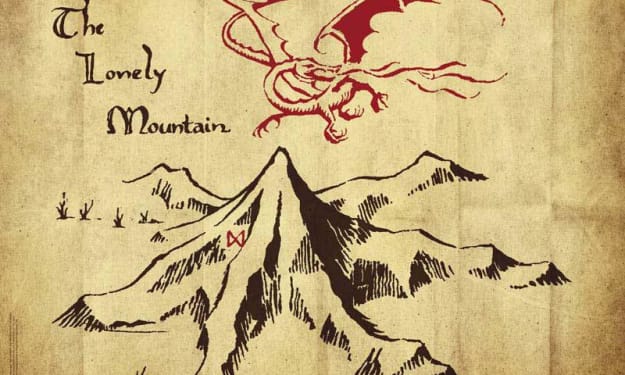
Fairy Tales, the beginnings of wonderment. Why did they begin? Will they end? All questions are unknown. Children are raised on such fantastical stories. They weave into their hearts and minds. Epic heroics and tales of magic fly off of the worded page. There is a catch to all of this. Not all fairy tales, are fairy stories. Not just the ones that have the magical beings classes as fairies are fairy tales. There are several criteria that must first be thought of. If you dream of a fairy realm, that dream story is not a fairy tale. Talking animals with no apparent cause as to how, again, are not a fairy story. Many of these are found in books that are labeled “fairy tales,” but their content was not taken into consideration. The technicality was not thought out. Why label things as fairy tales when they are not fairy tales? J. R. R. Tolkien wrote a marvelous essay, On Fairy Stories, in which he studies the idea of what actually qualifies as a fairy tale. In accordance to the essay, fairy tales are only “fairy tales” if they take place in the realm of Faerie. Tolkien’s book, The Hobbit, does indeed take place in the fantastical realm. It is a fairy tale.
By Kendra Burnett8 years ago in Geeks
5 Grimm's Fairy Tale Princesses Who Definitely Won’t Be Getting Their Own Disney Movies
The Grimm's fairy tale princesses whose tales have been sanitized by Disney are impossibly angelic. Snow White is as pure and gentle as the precipitation that inspired her name, and Sleeping Beauty is as harmless as they come; it’s kind of hard to be a bad girl when you spend most of your fairy tale fast asleep. Oh, and let’s not forget that both of these heavy sleepers and that poor pushover Cinderella are so kind and sweet that wild animals don't fear them. The power of their virtue can melt the heart of the grumpiest of dwarfs, and it can even make mice sew beautiful ball gowns.
By Treva Bowdoin8 years ago in Geeks
Young Adult Books: A Rising Star
It might surprise you to know that books are hot at the moment, especially in this age of social media and internet. One genre that really stands out because of its popularity is that of the young adult genre. You’re probably wondering, what exactly qualifies as a "young adult" book? Well, it needs to appeal to just that audience. Most have some form of romantic plot, it needs to deal with some issue that is relevant to the young generation, and the characters need to be relatable.
By Rowan Eagles8 years ago in Geeks
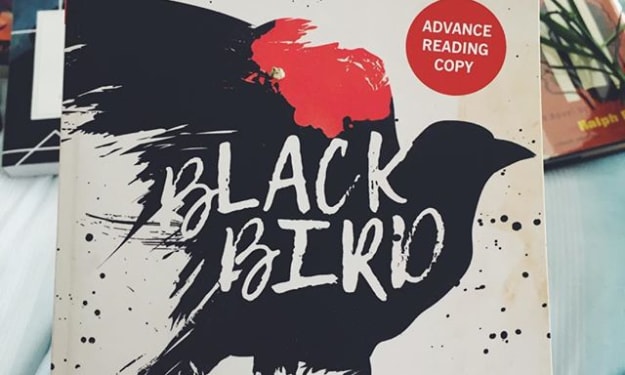
'Blackbird' by Michael Fiegel
"You spend enough time with someone and your molecules blend." Michael Fiegel is a writer and designer whose Internet cult classic, Ninja Burger, has given birth to a series of books and games. Blackbird is his debut novel, a novel he has been writing since 1999.
By Enobong Tommelleo8 years ago in Geeks
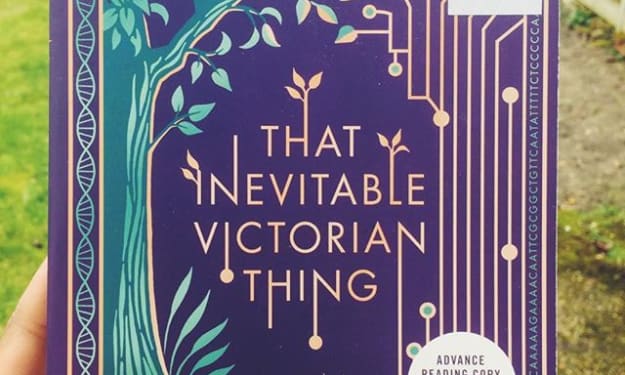
'That Inevitable Victorian Thing' by E K Johnston
I hate to be sanctimonious about it, but it turns out that good conversation solved a great many problems. That Inevitable Victorian Thing, by Canadian novelist E. K. Johnston, tells the story of a world where the British Empire never fell and technology dictates whom the royal heirs may marry based on genetic compatibility. It's a world in a which Queen Victoria I recognized the political advantages of marrying her children to political leaders throughout the empire, not just in Europe, regardless of race and in which the more diverse your genetic makeup, the more desirable you are. Several generations later, the story focuses on the young heir to the thrown, Victoria-Magaret, posing as a commoner for her last summer of freedom before she comes on age and must enter in her adult career as the future Empress. She meets two friends who not only change her future, but may possibly change the world.
By Enobong Tommelleo8 years ago in Geeks
The Real Jane Austen
So, we’ve all heard of the popular "Jane-ites"—women and men who celebrate Austen as much as the famous "Twi-Hard" fans of 2008. They dress in early nineteenth century fashions, they attend regency balls and dances, and some even know all of Jane’s books by heart. Of course, this is a pretty extreme passion for Jane Austen, but it does make a very clear statement about how truly popular our lady is. Although she hasn’t been around for just over 200 years, somehow her quirky satirical writing still resonates with us today.
By Issy Howell8 years ago in Geeks
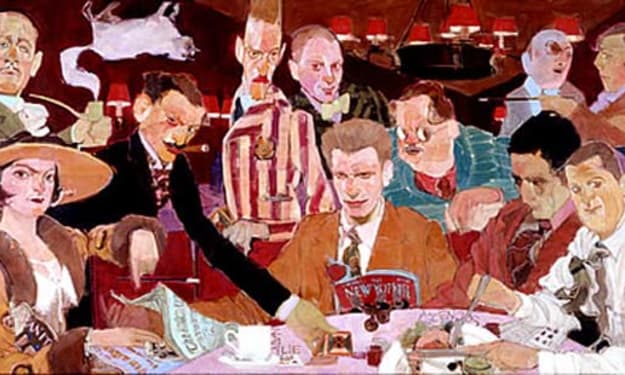
The Round Table of Writers
Among the well-known and prestigious hotels in New York City is The Algonquin Hotel. It is also famous for The Algonquin Round Table which was a group of writers who had a daily meeting spot at the hotel. WWI was over and Vanity Fair writers and those who frequented the hotel regularly like Dorothy Parker, Robert Benchley, and Robert E. Sherwood started lunching together. It was 1919 and they came together in the Rose Room along with some literary friends. It was a welcome back lunch for acerbic critic Alexander Woolcott who had served as a war correspondent.
By Rasma Raisters8 years ago in Geeks
Book Review: 'Pestilence' by Laura Thalassa
Let me start off this review by saying this book brought me out of a reading rut. I tried to stick to my posted TBR, I really did. I tried and tried and would get anywhere from two to 100 pages into a book before I'd toss it back on my TBR shelf, knowing it would be months before I finished it if I tried to keep chipping. I just wasn't in "the mood." It was honestly taking a toll on me, I see all these beautiful titles—both on my physical shelf and in my kindle app—being raved about on social media, piquing my interest, and yet they remain on the literal and metaphorical shelf. There are a few tricks in the book world to getting over the slump. Rereading a favorite, simply taking a break from reading, or browsing GoodReads's "if you loved this, you'll like this" section. All of them, quite frankly, made me huff in frustration. Then my lovely best friend said she'd just finished Pestilence, she raved about it, highly recommending it to me. This didn't come as a shock. We're both long-time fans of Laura and her husband Dan's work. I expressed to her my rut, but she still gave it another push, which is unusual.I waited. I did not want this potentially (okay, most likely) amazing book to be stained by the meh-ness of The Slump. But I kept coming back to its Amazon page and thought, "Is this...interest?" So, I swept up the book (along with a Kindle Unlimited trial because your girl is broke) and tentatively started reading.It was
By Angela Clark-Sola8 years ago in Geeks
The Sixth Wife
Katherine Parr had been a widow three times, and this book is written in the point of view of the Queen Dowager's best friend, Catherine, the Duchess Of Suffolk. Katherine Parr is an unusual subject for a novel and the famous rhyme about the fate of Henry's wives ends with her. Katherine is known as the survivor because she outlived Henry, but the marriage was not scandal-free. She was almost executed for heresy.
By Chloe Gilholy8 years ago in Geeks