review
Reviews of the top geek movies, tv, and books in the industry.
Review on 'No Game No Life'
First, before we dig in, let's talk about how I got into this anime. It was recommended to me by a friend (like more to come) and I was curious because she told me it was like an epic chess battle-and as a lover of strategy I eagerly went to check it out. I will tell you now, I give the anime a 10/10. It would have been 9/10 because the ending—but as of now there is news of a second season so I will give it that extra point.
By Selena Field9 years ago in Geeks
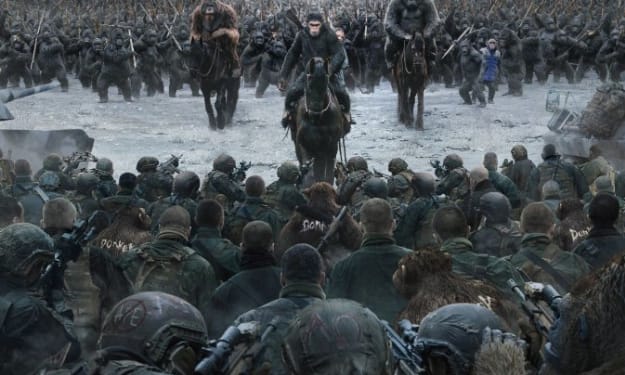
'War for the Planet of the Apes'
The rebooted Planet of the Apes franchise reaches its third installment, the final film in a trilogy driven by Andy Serkis' Caesar. Matt Reeves helms this epic masterfully, taking the series to new territory. After the events of Dawn of the Planet of the Apes, men and apes are at war. Caesar has been forced into the conflict, not because he wanted to, but because he knows what man is capable of. We see him and his monkeys pitted against the ruthless Colonel, played by Woody Harrelson, who is bent over the extermination of ape-kind. Caesar must now face his own demons as he prepares for one last battle.
By Camilo Caballero9 years ago in Geeks
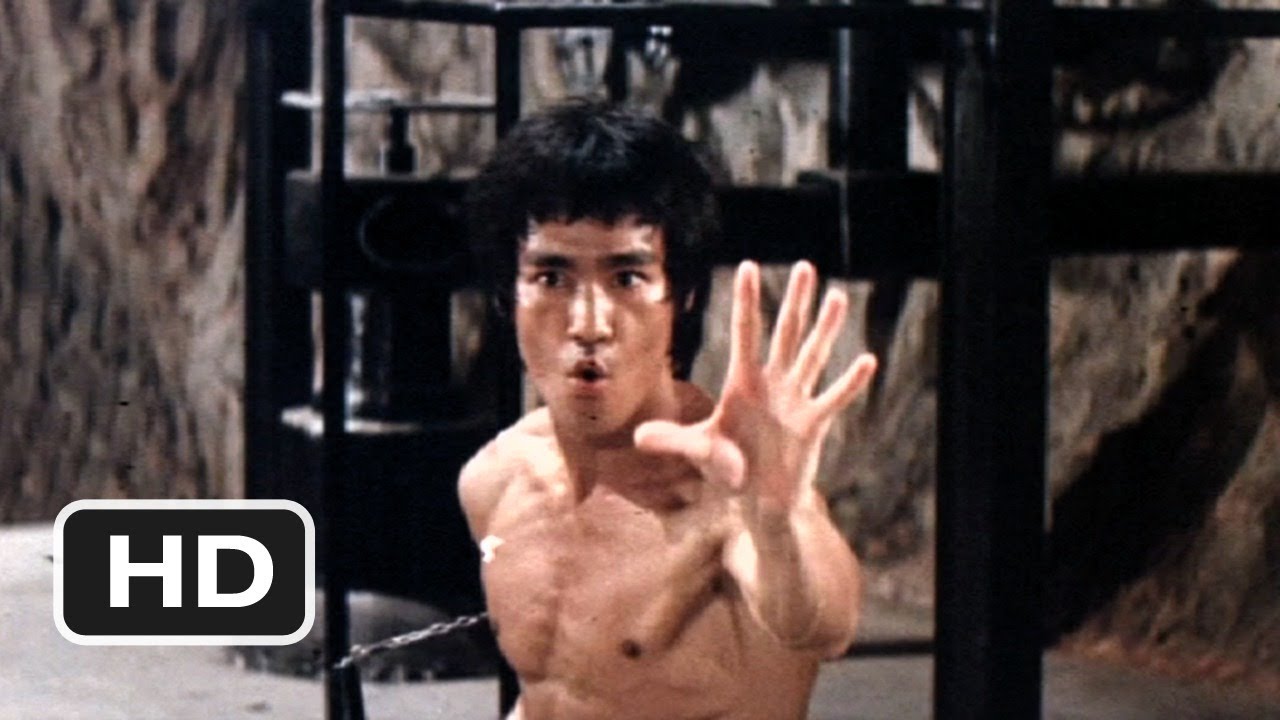
Classic Movie Review: 'Enter the Dragon'
This week’s classic on the Everyone’s a Critic Movie Review Podcast is Enter the Dragon, the final film in the all too short career of the legendary Bruce Lee. I have had little exposure to kung fu movies in my nearly 20 years as a film critic. Aside from some 80s cheese like The Last Dragon or the work of Jackie Chan, I have mostly ignored the genre having written it off based mostly on the stereotypes built from years of Bruce Lee knock-offs and cash-ins that soured more than just me on the idea of kung fu movies as anything other than the sad side of the B-movie genre.
By Sean Patrick9 years ago in Geeks
Is God a Playwright?
William Shakespeare famously writes in his play As You Like It that, “All the world’s a stage, and the men and women merely its players.” Tom Stoppard, playwright, director, and student of Shakespeare, explores the full potential of this ideology in the film adaptation of his play Rosencrantz & Guildenstern are Dead. Tom Stoppard’s first and only film is an experimental tragicomedy that depicts the events of William Shakespeare’s Hamlet as experienced by the titular Rosencrantz (Gary Oldman) and Guildenstern (Tim Roth), two minor characters sent for by the King to determine the cause of Prince Hamlet’s troubled disposition. Throughout the film the two heroes grapple with their predetermined fate and their seemingly meaningless existences as they encounter the unnatural forces of theatricality, forces that dictate reality as explained by the wit of The Lead Player (Richard Dreyfuss).
By Devin O'Brien9 years ago in Geeks
Movie Review: Logan Lucky
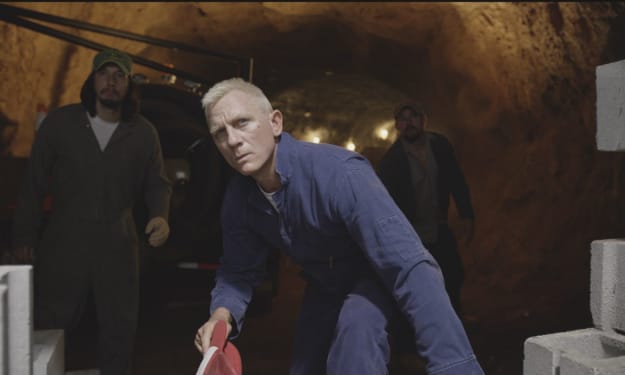
Being a fan of the American history podcast The Dollop allows me to watch a movie like Logan Lucky and never for a moment find the story implausible. Take a listen to them tell the remarkable true story titled Jet-Pack Madness and you will find within it a story every bit as brilliant as a Coen Brothers comedy. Everything in Logan Lucky feels completely plausible when you compare it to such historic silliness as what transpired with the Jet-Pack or the L.A Freeway Shootout or The Human Taco.
By Sean Patrick9 years ago in Geeks
Book Review: 'Manitou Canyon'
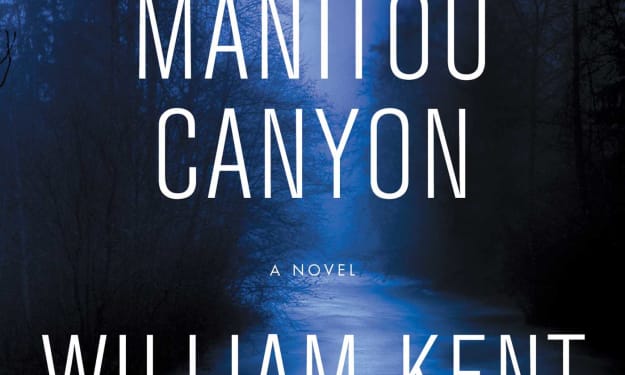
Cork O'Connor is a half-Irish, half-Anishinaabe Minnesotan private investigator with a history of getting in too deep. Since 1998, his sleuthing exploits have been the subject of 15 books by author William Kent Krueger, and have seen him traveling across Minnesota and north Ontario to destroy a human trafficking ring, take down corrupt business moguls, solve inexplicable murders, and rebuild a marriage with a wife whose death he'd later find himself investigating. If you haven't checked out Krueger's work, do yourself a favour and head down to your local bookstore.
By Calvin Hayes9 years ago in Geeks
The Struggle to Adapt
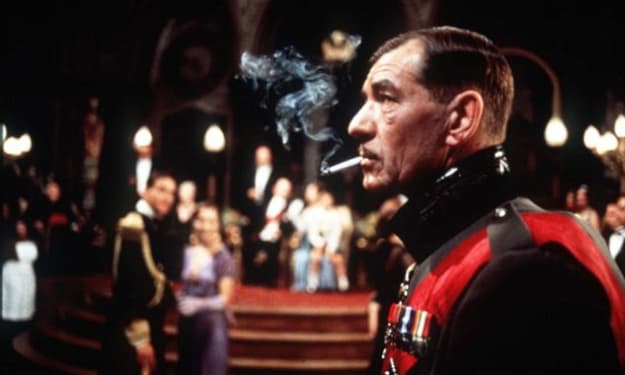
The greatest pain in adapting a stage play to the screen is bridging the disconnect between the experience of a film viewer and a playgoer. Whereas the play is for the most part stationary in its setting, the film is fluid. Whereas the performance of a play is ever-changing with each performance, the film remains fixed in existence. These differences are felt most prominently in the adaptation of a Shakespearean work, as these plays were written at a time when the very concept of filmed performance was beyond the bounds of the imagination. They were written with the knowledge that the play could not be fully realized without the audience’s active suspension of disbelief. Film has neither that luxury nor burden, as modern filmmaking affords the audience with an abundance of details, ensuring their disbelief is not suspended to a point of distraction from the drama at hand. As such the Shakespearean film adaptation loses some of its originator’s charm, and in turn demands creative liberties to fill the gaps made in the act of adapting. A straightforward stage-to-screen adaptation is impossible (the word “impossible” here meaning “incapable of being good”), for the qualities of a play are far too dissonant from the qualities of a film, and therefore adaptation necessitates reimagination. This necessity can be best explored in Richard Loncraine’s 1995 film Richard III. Loncraine’s film adaptation takes incredible liberties with the source material, most namely in setting and music, while still adhering to the original text. In doing so, Loncraine more adeptly captures the original tone of Shakespeare’s play than could a film adaptation that strictly follows how the piece would have been performed at the time of its writing.
By Devin O'Brien9 years ago in Geeks
Book Review: Full Dark, No Stars
Hello all, and welcome to the first of presumably many book reviews to come from yours truly. Before we get into the review proper, I'd like to give a little background information regarding why I'm reviewing a seven-year-old book. The long and the short of it is this; I've challenged myself this year to read 100 books, none of which I'm allowed to have read before. Yes, I'm on track, and yes, I really do enjoy it. But reading nine or more books a month has its downside—I've had to exhaust my bookshelf to find things I haven't read yet. So, more or less, that's what's brought me to this point (and a little further info—the bulk of my reviews will be of books I've read for this challenge, so many of the books reviewed here will fall into this "dated" category).
By Calvin Hayes9 years ago in Geeks
Classic Movie Review: Pathfinder
While watching a Criterion Film on an app on your phone is something akin to listening to Beethoven’s Fifth on a blown out Walkman, I must say that my purchase of the FilmStruck app has been a pretty great investment thus far. This week alone I watched Joan Crawford and Henry Fonda in Daisy Kenyon, my 10th viewing of Bogart in In a Lonely Place and this evening I indulged my taste for obscure foreign adventure films by watching the 1987 Norwegian hunting thriller Pathfinder.
By Sean Patrick9 years ago in Geeks
Movie Review: The Hitman's Bodyguard
The Hitman’s Bodyguard is a very divisive film. Not because it has any challenging themes but rather because it is both a laugh riot and quite a bad movie. At once, The Hitman’s Bodyguard is very, quite intentionally, funny and quite poorly directed. I call the film divisive not because audiences will either love or loathe the film in equal measure but rather because I am divided personally by the fact that I repeatedly laughed quite loud during the film and by the fact that the film’s green screen effects, storytelling, and casting are so shoddy that at times I physically wretched.
By Sean Patrick9 years ago in Geeks