
Wanda Maximoff was Romani. The MCU made her vague.
How Comics Canon, Natalya Maximoff, and Hollywood Adaptation Collided–and Why That Distinction Still Matters

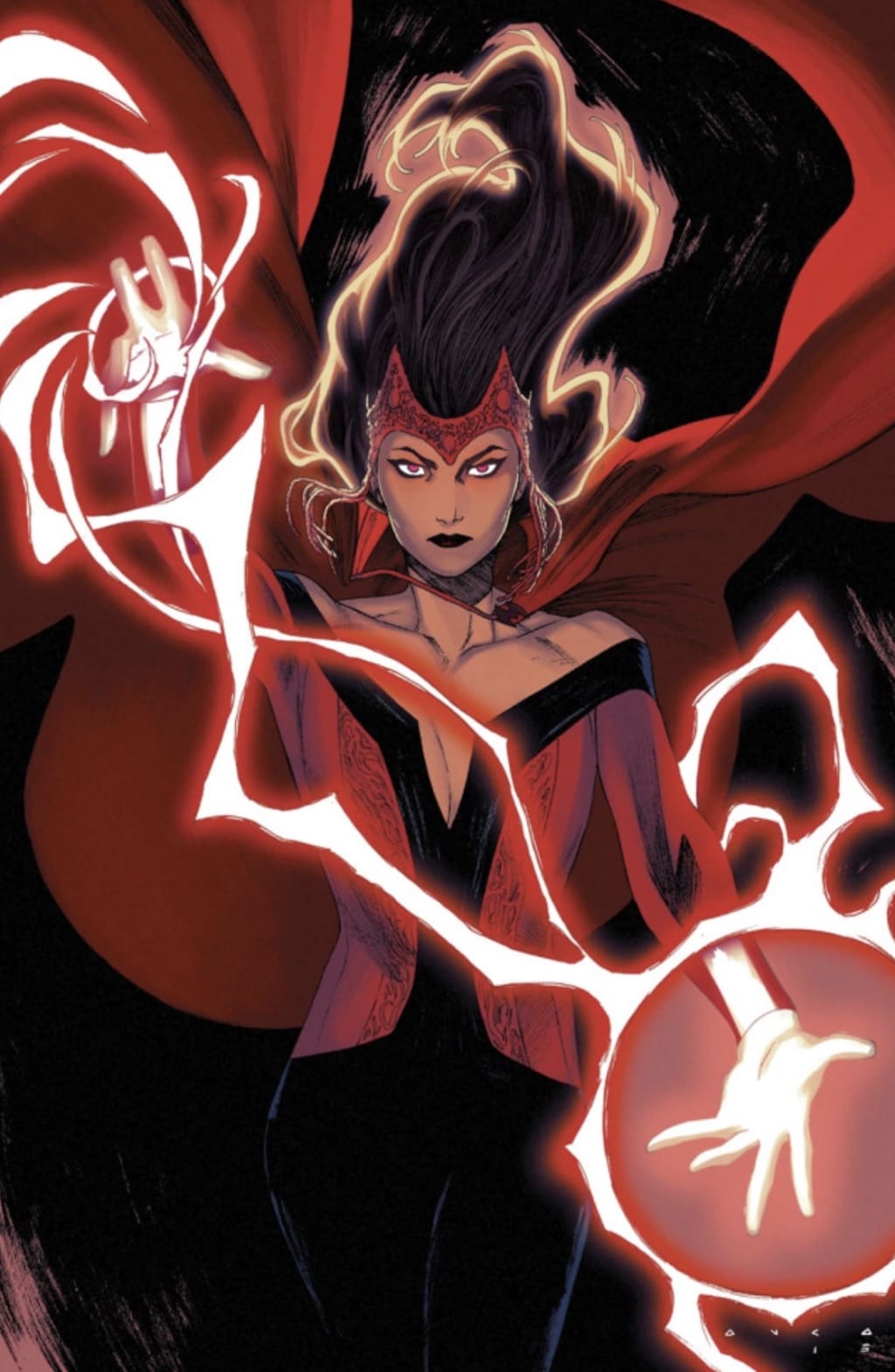
There are conversations in fandom that get flattened too quickly.
“Comics aren’t canon.”
“The MCU is its own universe.”
“Adaptations change things.”’
All technically true.
But sometimes the changes aren’t cosmetic. Sometimes they shift the cultural and historical spine of a character. And when that happens, especially with a character as visible as Wanda Maximoff, it deserves more than a shrug.
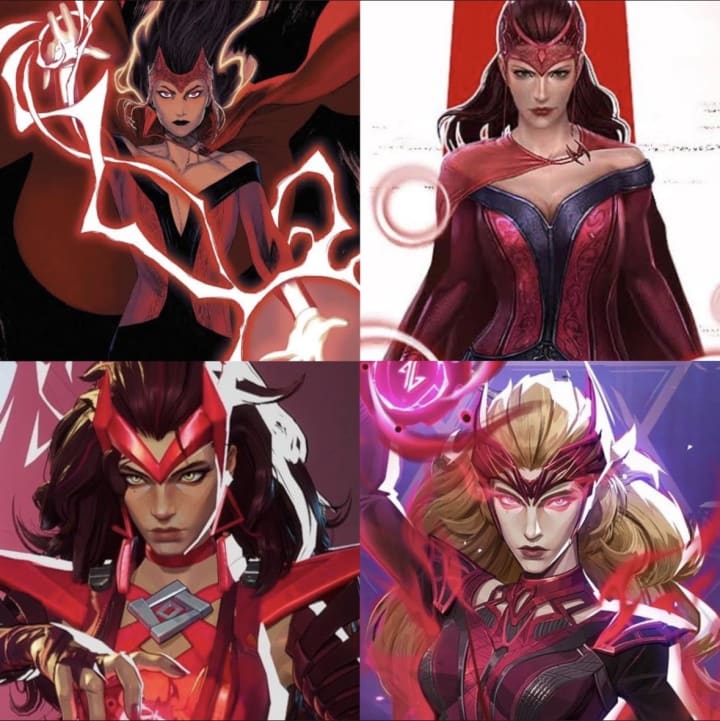
In Marvel Comics, Wanda Maximoff is Romani. Her mother, Natalya Maximoff, was a Romani witch—the previous Scarlet Witch. For a substantial era of canon, Wanda was also the daughter of Magneto, a Jewish Holocaust survivor. Even after Marvel retconned Magneto’s paternity, her Romani heritage through Natalya remained intact.
That wasn’t aesthetic window dressing.
It was narrative architecture.
And when Avengers: Age of Ultron (2015) introduced Wanda to the Marvel Cinematic Universe under director Joss Whedon, that architecture was altered.
Before we critique that decision, we need to lay the groundwork.
The Comic Book Wanda: Romani Witch, Inherited Power
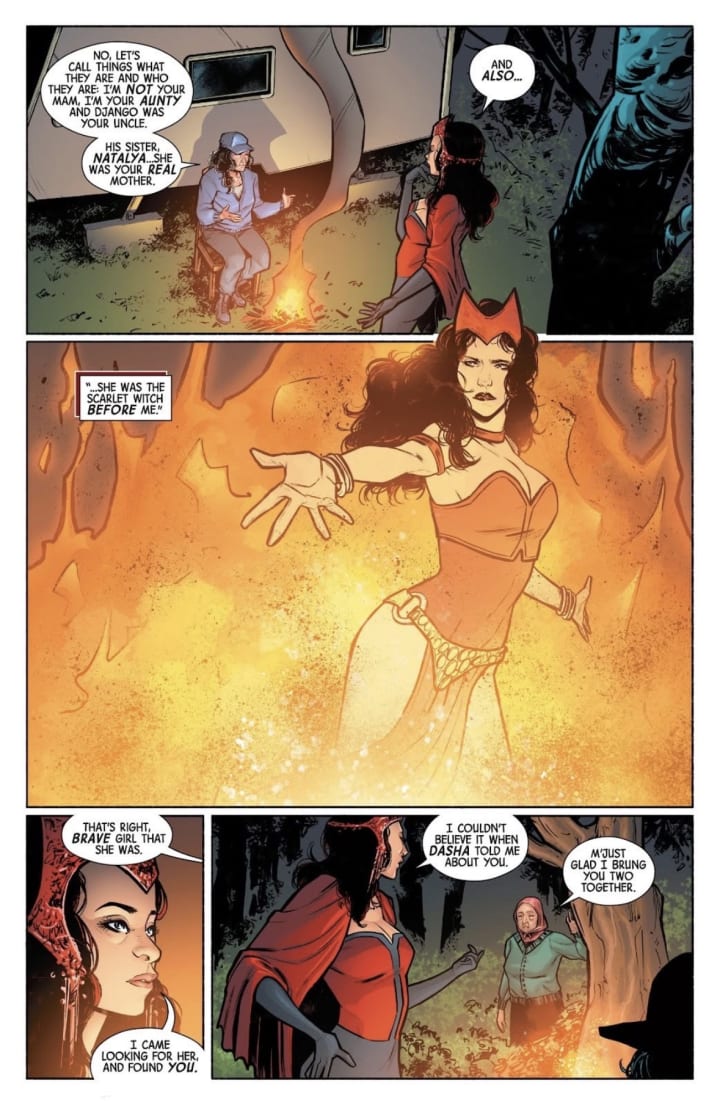
Wanda’s maternal lineage is not ambiguous in modern Marvel canon. Her mother, Natalya Maximoff, was a Romani sorceress from Serbia and the original Scarlet Witch. She inherited her magical lineage from her own father, known as the Scarlet Warlock. Witchcraft wasn’t something Wanda stumbled into. It was in her blood.
Natalya didn’t just pass down power. She passed down the mantle, identity, and cultural grounding.
The name “Scarlet Witch” wasn’t an edgy superheroine branding exercise. In Romani tradition within Marvel’s lore, red was considered an unlucky color. Natalya embraced it intentionally–reclaiming misfortune as weaponized symbolism. That inheritance gives Wanda’s identity texture. It connects her to a persecuted European ethnic minority (originally from Southern Asia) whose representation in Western media is historically sparse and frequently distorted.
Romani people, often mislabeled and stereotyped, have endured centuries of systemic discrimination across Europe. To place a major Marvel heroine within that heritage was significant.
It made Wanda specific.
And specificity matters.
When Wanda later trains under Agatha Harkness and becomes one of Marvel’s most powerful magic users, that arc builds on Natalya’s foundation. Wanda’s chaos magic, her intuitive grasp of the mystical, even her spiritual encounters on the Witches’ Road–all of it ties back to her maternal bloodline.
In the 2016 Scarlet Witch solo series, Natalya’s spirit literally guides Wanda. She heals family wounds. She sacrifices herself to preserve witchcraft. She confirms Wanda’s lineage.
This isn’t background trivia.
It is the core of who Wanda is in print.
The Jewish Lineage (and why it complicated everything further)
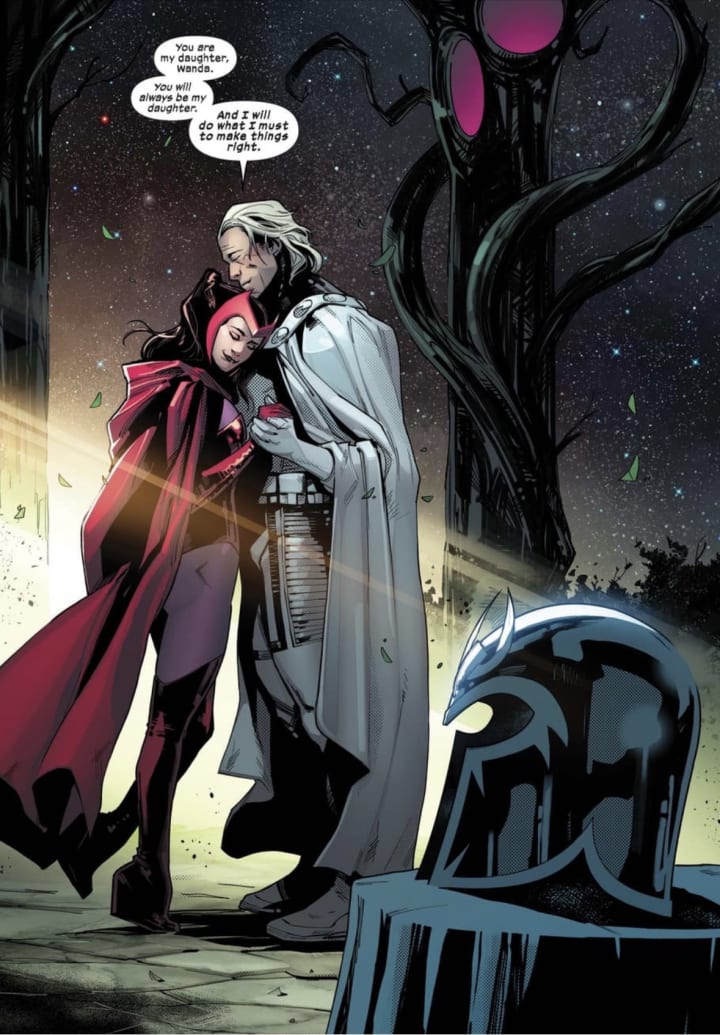
For decades, Wanda and Pietro were also written as the children of Magneto. That connection mattered because Magneto’s Jewish identity–and his survival of genocide–informs his worldview.
That legacy reframes Wanda’s internal conflict. When your father is a man shaped by genocide, whose militancy is born from systemic atrocity, questions of power, survival, and moral extremity take on historical depth.
Marvel later retconned that relationship, in part to align comics continuity with film rights issues. But for a long stretch of influential storytelling, Wanda existed at the intersection of Romani and Jewish identities–both groups historically persecuted in Europe.
That layering gave her narrative moral gravity.
The MCU Wanda: Emotionally Rich, Culturally Vague
Now let’s pivot carefully.
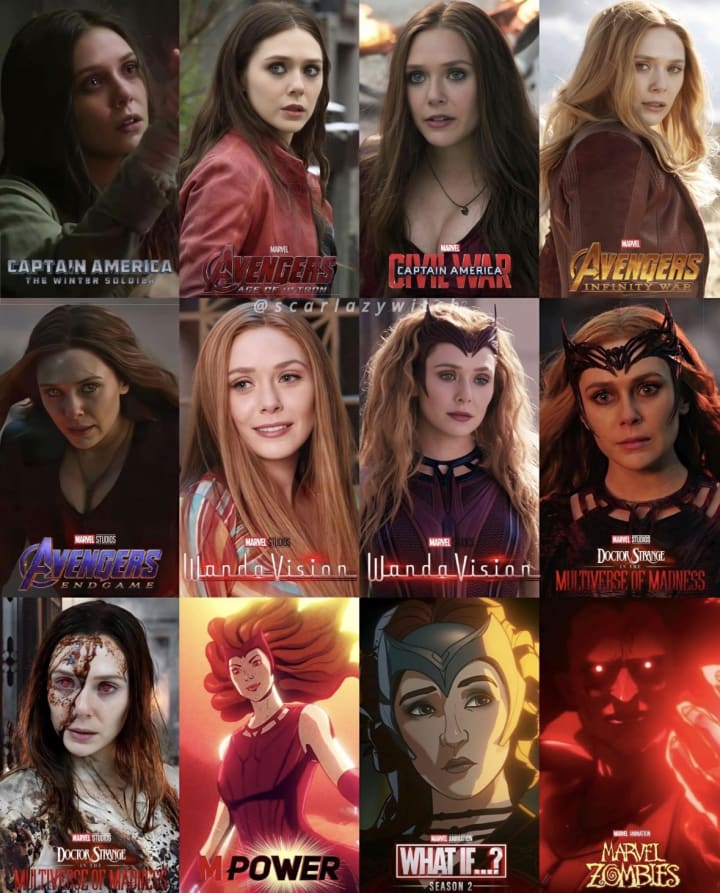
Elizabeth Olsen delivered an interesting, grounded performance as Wanda across
- Avengers: Age of Ultron
- Captain America: Civil War
- Avengers: Infinity War
- Avengers: Endgame
- WandaVision
- Doctor Strange in the Multiverse of Madness
Grief defined her portrayal of Wanda.
She loses her parents in a bombing. She loses her brother. She kills Vision to save half the universe from Thanos. She watches him die again. She creates children and loses them.
Olsen’s portrayal lens into vulnerability, instability, longing, and emotional collapse. It is intimate. It is human. It works.
There is nothing inherently wrong with that interpretation.
The issue isn’t Olsen. The issue is structural.
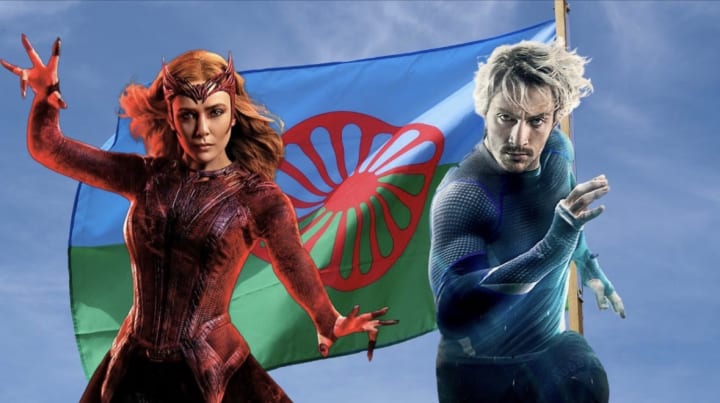
When Wanda entered the MCU in Avengers: Age of Ultron, she and Pietro were reframed as Sokovians, from a fictional Eastern European nation. They were no longer mutants. They were no longer Magneto’s children. And crucially, their Romani identity was not meaningfully depicted.
Sokovia is a narrative placeholder. It signals “Eastern European” without invoking real ethnic specificity. Wanda is culturally ambiguous.
Ambiguity is marketable
But ambiguity also erases.
Whitewashing Isn’t Always About Casting
When people hear “whitewashing”, they often reduce it to casting a white actor in a non-white role.
But there’s a broader definition at play: removing or diluting a character’s specific ethnic or cultural identity in adaptation.
The MCU didn’t merely change Wanda’s backstory for rights reasons. It flattened her into a generalized European war orphan.
Legal restrictions prevented Marvel Studios from using Magneto or mutant terminology. That explains part of the shift.
It does not require erasing her Romani heritage.
Natalya Maximoff’s existence does not depend on Magneto. Wanda’s Romani lineage could have been preserved independently.
It wasn’t.
That choice reflects a broader industry pattern: minority identities are often considered expendable in the translation to global blockbuster storytelling.
And when that pattern repeats, it’s no longer accidental.
Performance Vs. Representation
It is possible–and intellectually consistent–to hold two truths at once:
- Elizabeth Olsen gave Wanda emotional depth and vulnerability.
- The MCU adaptation diluted her ethnic specificity.
Those positions are not mutually exclusive. In fact, they coexist comfortably.
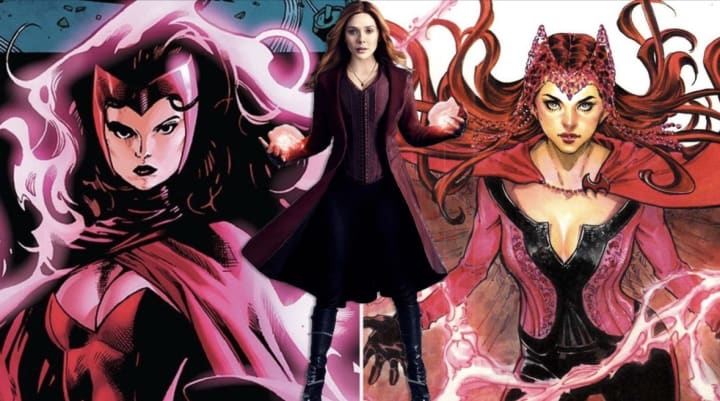
Olsen’s grounded performance in WandaVision elevated Wanda from a side character to a tragic antihero. The exploration of grief, denial, and psychological fracture was nuanced. It expanded Wanda beyond “mind-control villain” into something tragic and operatic.
But imagine that same narrative layered with explicit Romani identity.
Imagine Wanda confronting persecution not only as a super-powered being but as a descendant of a marginalized ethnic lineage historically scapegoated for “witchcraft”.
That story hits differently.
It gains historical echo.
Instead, the MCU opted for universalized trauma. Safer. Broader. Easier to export globally.
The Pop Culture Pattern
This isn’t about one filmmaker. It’s about a system.
Hollywood has a long track record of smoothing ethnic specificity into something “neutral”. Characters become generically European instead of distinctly Romani. Culturally rooted backstories become fictionalized nations. Complexity is traded for global palatability.
In isolation, each choice feels minor.
Collectively, they form a pattern.
And when a character as globally visible as Wanda Maximoff–now a centerpiece of Marvel’s TV and film universe–is detached from her Romani roots, that absence is felt.
Romani representation in major franchises remains exceedingly rare. Wanda was one of the few high-profile examples in mainstream comics.
The MCU could’ve amplified that.
It chose not to.
Why This Matters?
Here are the facts:
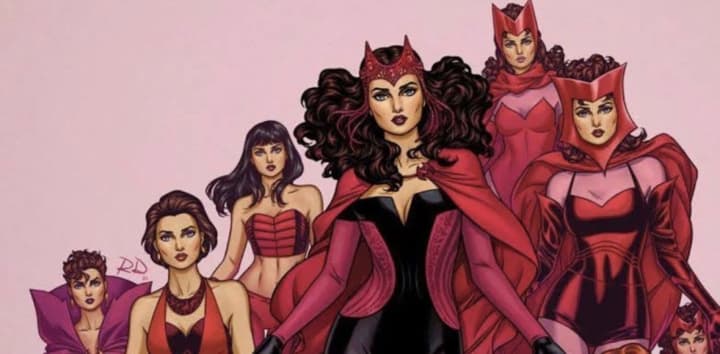
- In Marvel Comics, Wanda Maximoff’s mother, Natalya, is a Romani witch.
- Wanda is canonically of Romani descent in the modern comic continuity.
- The MCU does not meaningfully depict that heritage.
Fiction strengthens. Continuities diverge. Adaptations change details.
But erasing ethnic specificity isn’t a neutral rewrite. It has cultural implications.
Representation in pop culture shapes perception. It shapes visibility. It shapes who gets to see themselves reflected in myth.
Superheroes function as modern folklore. When folklore omits marginalized identities, it reinforces their invisibility.
The Bottom Line
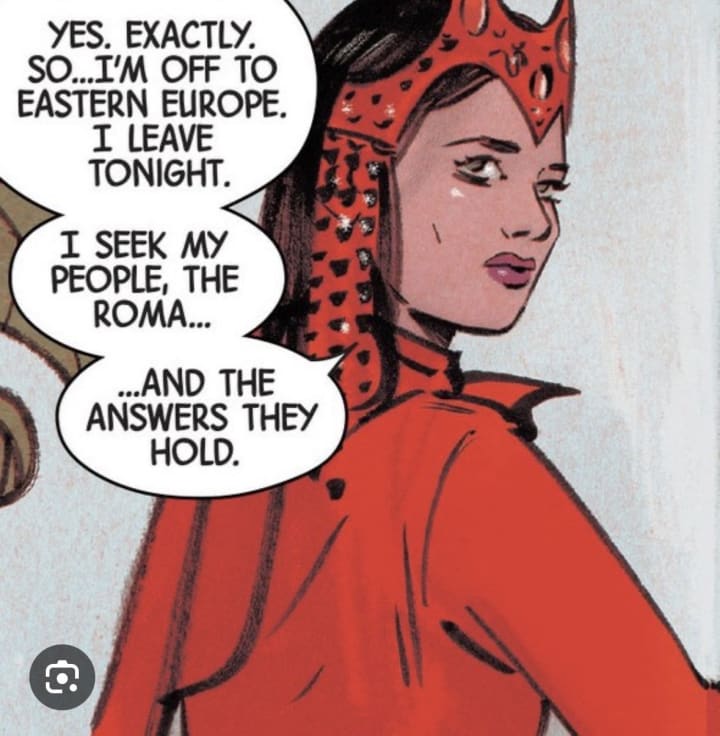
Wanda Maximoff on the page was a Romani witch shaped by generational legacy and persecution. For years, she also carried the Jewish lineage through Magneto. That layered identity gave her stories historical and thematic weight.
The MCU version, beautifully acted by Elizabeth Olsen, foregrounded grief and psychological vulnerability while stripping away much of that cultural specificity.
You can appreciate the art.
You can critique the adaptation.
You can admire Olsen’s humanity on screen while acknowledging that something meaningful was left behind in translation.
Those positions are not contradictory. They’re simply honest.
Wanda Maximoff deserved to be specific.
And specificity, especially for marginalized identities, should never be treated as expendable.
About the Creator
Jenna Deedy
Just a New England Mando passionate about wildlife, nerd stuff & cosplay! 🐾✨🎭 Get 20% off @davidsonsteas (https://www.davidsonstea.com/) with code JENNA20-Based in Nashua, NH.
Instagram: @jennacostadeedy
Keep reading
More stories from Jenna Deedy and writers in Geeks and other communities.
A Knight of the Seven Kingdoms Series Review (Season 1)
As one of the biggest properties in fantasy, A Song of Ice and Fire remains immensely popular with audiences. After reaching far into the past with House of the Dragon, a second spin-off was on the cards. A Knight of the Seven Kingdoms serves up a bite-sized slice of action and drama, but it still claims a spot among the best small-screen titles.
By Robert Cain5 days ago in Geeks
Flower Bloom 369
FLOWER Bloom 2/25/26 Wednesday By Mariann Carroll Karen had been with Tony for 7 years. Tony started acting strangely after her surgery. He would mow the lawn in the rain and be on his cellphone. He started pushing Karen away. Tony came clean about seeing someone. Karen moved out two months later. Karen moved in with a friend. She felt betrayed.
By Mariann Carroll7 days ago in Fiction



Comments
There are no comments for this story
Be the first to respond and start the conversation.