Discoveries
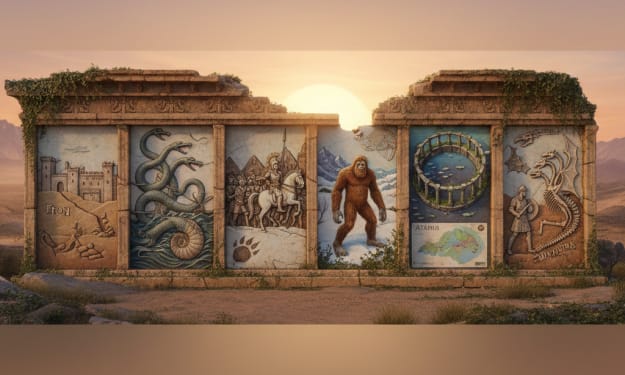
6 Ancient Legends That Were Surprisingly Real
Humans are natural storytellers. For thousands of years, myths and legends have ignited our imagination, fed our souls, and passed wisdom from one generation to the next. While many of these tales are just that, stories, some are rooted in real events, revealing fascinating truths about our planet and the universe.
By Areeba Umair10 days ago in History
6 Bizarre Taxes From History That Will Make You Thank Modern Life
Throughout history, taxes haven’t always been about income or property. Some levies were downright bizarre, targeting everyday life, personal habits, and even your body. From medieval England to ancient Rome, here are six of the strangest taxes ever recorded.
By Areeba Umair10 days ago in History
Día de San Valentín: 25 Powerful Facts That Reveal the True Meaning of Valentine’s Day
Introduction to Día de San Valentín Día de San Valentín is celebrated every year on February 14 and is widely known as a day dedicated to love, affection, and emotional connection. Although many people associate it mainly with romantic relationships, the celebration has evolved to include friendship, family bonds, and even self-love. Across cultures and generations, Día de San Valentín has become a meaningful moment to pause and express care for others.
By Story Prism11 days ago in History
Botswana
In the mid-20th century, the landlocked territory now known as Botswana was a sleepy British protectorate called Bechuanaland, a vast expanse of Kalahari sands and sparse settlements spanning over 580,000 square kilometers but home to fewer than 500,000 people. The 1950s marked a pivotal era of transition, as colonial winds of change swept across Africa. Under British oversight since 1885, Bechuanaland had been largely neglected, administered from distant South Africa until 1963. Yet, seeds of nationalism were sown early. In 1956, the Legislative Council was established, granting limited local input, but it was the formation of the Bechuanaland Democratic Party (BDP) in 1962 by Seretse Khama—exiled Tswana chief and future president—that ignited the independence flame. Khama, a Cambridge-educated leader with a controversial interracial marriage to Ruth Williams, symbolized a break from tribalism and colonial paternalism. By the late 1950s, economic stagnation and South Africa's apartheid shadow loomed large, pushing demands for self-rule. In 1960, a constitutional conference in London paved the way, and on September 30, 1966, Bechuanaland transformed into the Republic of Botswana, a beacon of stability amid the continent's turbulent decolonization.
By Mogomotsi Moremi11 days ago in History
Plane: 121 People SilThe Ghost ent at 34,000 Feet part 2
At that moment, the engineer remembered something important. Before the flight, the same engineer had checked the aircraft’s pressurization system, because its controls were close to the controls the captain seemed confused about.
By Imran Ali Shah11 days ago in History
The Ghost Plane: 121 People Silent at 34,000 Feet part 1
On 14th August 2005, a strange and terrifying visitor was circling the skies above Athens, the capital of Greece. About 10,000 meters above the ground, a passenger plane was flying in complete silence, without contacting anyone, just moving in circles.
By Imran Ali Shah11 days ago in History
Who Discovered America?. AI-Generated.
The question "Who discovered America?" has been a point of debate and discussion for centuries. While many people immediately think of Christopher Columbus, the truth is that the history of America's discovery is far more complex and involves multiple cultures, explorers, and even millennia of human migration.
By Backlinks Cart13 days ago in History
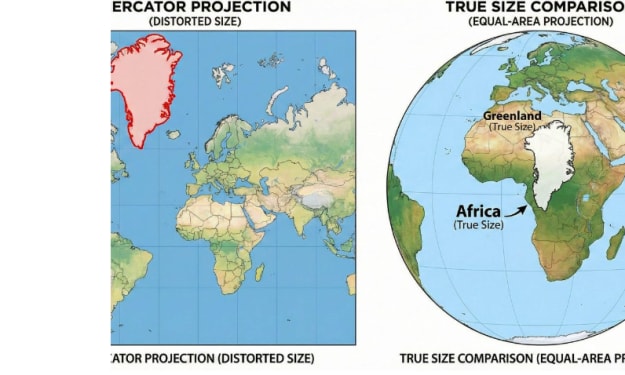
Most global maps make Greenland appear larger than it is in reality.
According to a global investigation, people's perceptions of major nations are systematically changed by the type of world map they view, making Greenland one of the most overstated locations on the planet.
By Francis Dami16 days ago in History
Mummy CT scans provide fascinating insights on ancient Egyptian life.
The purpose of CT scanners is to diagnose the living by precisely mapping concealed tumours, obstructed arteries, and fractured bones. Restoring individual stories that have been silent for thousands of years is an unanticipated outcome of applying the same technology to the ancient past.
By Francis Dami16 days ago in History