Fiction
Who Are the Monsters of Beowulf?
The Epic of Beowulf Beowulf is an Old English epic poem written by an anonymous Anglo-Saxon poet in England sometime between the 8th and 11th centuries. It tells the story of the Geat hero Beowulf who aids the king of Danes Hrothgar in exterminating Grendel, a monster plaguing the great hall Heorot. Beowulf slays Grendel by ripping off his arm. When Grendel's mother finds out that her son was slain she kills Hrothgar’s closest advisor as revenge. In response, Beowulf travels to her lair and slays her, bringing back Grendel’s head as a trophy. Beowulf is rewarded greatly for his efforts and returns home to Gautland, eventually becoming its king.
By Tommy Yuen3 years ago in History
The Strange Death of Professor Shockley
There is both good and evil. That night, the wicked appeared. We had a good one here, we got a report about the woman being submerged for a minute or two, don't close anything, her boyfriend claimed he stepped out in the woods, but when you come back, she was popped up in the hot tub and she wasn't breathing, tell me her name again. The Shuffle of Marianne
By Francis Dami3 years ago in History
In Plain Site
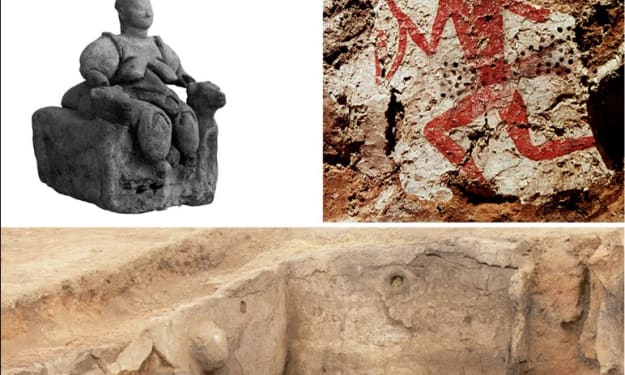
Çatalhöyük is an archeological site situated on the Konya plain in Turkey, and boasts extensive ruins of a group of prehistoric proto-cities. These hive-like structures were entered through the roofs, and fostered a tight-knit and unique communal structure of living. One of their most famous features were their burial practices: the dead were left on the rooftops to be de-fleshed by birds, and the skeletons were disassembled, and reassembled with other remains. They were decorated and painted, then these relics were shared between different homes where they would be enshrined beneath the floors. Children are thought to have been raised between different households as well. The inner walls of the small cell-like rooms were meticulously and repeatedly plastered and whitewashed. One of their favored objects [of worship?] are immense bull or Auroch horns that decorated many of the chambers. This culture flourished in the 7000's B.C.E.
By Rob Angeli3 years ago in History
Trench
Once upon a time, in the grim and brutal era of World War I, a young soldier named Thomas found himself trapped in the midst of a seemingly endless labyrinth of trenches. The year was 1916, and the war had already raged on for two long years, claiming countless lives and shattering the world's illusion of stability.
By William Bergström3 years ago in History
Virgil's Aeneid: The Revolutionary Epic that Shaped an Empire
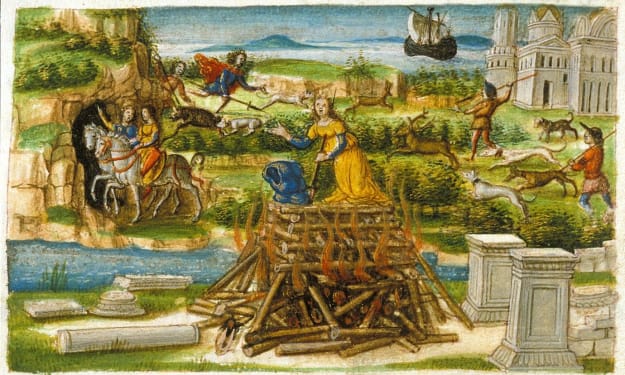
In the rich tapestry of literary history, certain works stand out as revolutionary masterpieces that transcend their time and place. Virgil's "Aeneid" is one such work. With its ambitious scope, political allegory, and poetic brilliance, the "Aeneid" revolutionized Roman literature, reshaped cultural identity, and left an indelible mark on Western literature. In this article, we will delve into the multifaceted ways in which Virgil's epic poem was truly revolutionary, both in its historical context and in its enduring legacy.
By James Henry3 years ago in History
TOP MUST-READ BOOKS ONCE IN A LIFETIME
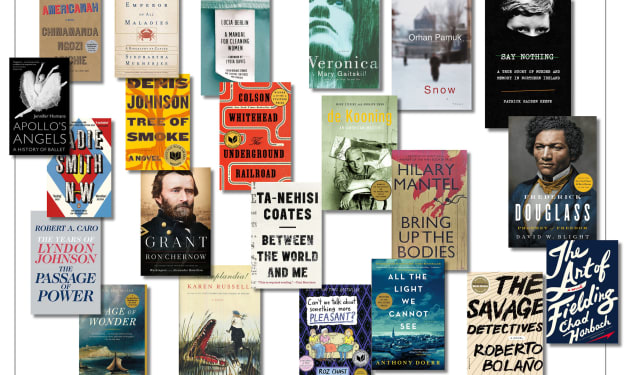
Top Must-Read Books Once in a Lifetime Introduction Reading books is not only a pleasurable pastime but also an enriching experience that broadens our knowledge and enhances our understanding of the world. With countless books available today, it can be overwhelming to choose which ones are worth our time. This article aims to provide you with a curated list of top must-read books that you should consider adding to your reading list. These books span various genres and have made a significant impact on literature and society. So, let's dive into the world of literature and explore these timeless treasures.
By Abdul Majeed Shaikh3 years ago in History
Friedrich Nietzsche
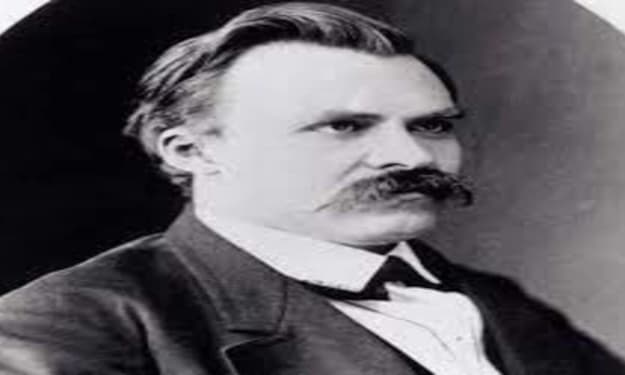
Friedrich Nietzsche A Philosopher Beyond Good and Evil Friedrich Nietzsche, born on October 15, 1844, in Röcken, Germany, was a profound and controversial philosopher whose ideas continue to resonate in the world of philosophy and beyond. Nietzsche's works have had a profound impact on various fields, including philosophy, literature, psychology, and cultural studies. Despite his relatively short life and battles with mental health, Nietzsche left an indelible mark on intellectual discourse, challenging conventional wisdom and questioning the very foundations of morality, religion, and human nature.
By imran khalil3 years ago in History