Perspectives
Nigeria vs the United States: Governance, Corruption, and Lessons for Development
Nigeria and the United States: Governance, corruption, and lessons for National Development Introduction Nigeria and the United States are both federal republics with diverse populations and vast resources. Yet, their development outcomes differ sharply. While the United States has managed to build relatively stable institutions that support economic growth and democratic governance, Nigeria continues to struggle with policy inconsistency, weak institutions, and widespread corruption. This article looks at the difference between both countries in policy-making and corruption control, and highlights realistic steps Nigeria can take to strengthen its governance and improve national development.
By Ugochukwu Nwadike18 days ago in History
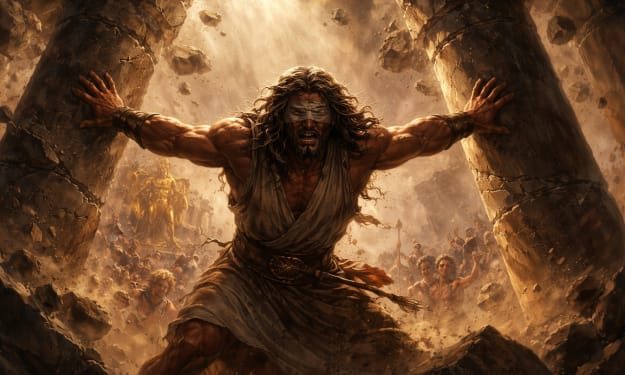
The Rise and Fall of Samson. AI-Generated.
Once, a young man walked the earth, and the earth itself seemed to listen when he did. His name was Samson, and his story was spoken first in whispers, then in fear, and finally in wonder. Long before his strength became legend, before enemies trembled at his shadow, he was only a child promised to God.
By Kelly Munala Brookes18 days ago in History
The Retreating Left
Democratic Socialism, Anarchism, and Left Communism are variations of the same failure. Each represents a retreat from the inherited legacy of communism and the revolutionary left. These three ideologies are idealist, Eurocentric, and petty bourgeois. They emerged in our context as different strategies of retreat — positions I once inhabited but no longer do. Through these three ideologies I carried variations of similar bourgeois fears about Marxism-Leninism. I followed multiple paths during my time on the left. Each promised a way forward. Three led to retreat. One did not.
By Victor Zemprano18 days ago in History
Looking Back:The Folly of the March for Life Fiasco: How Not to Write on a Contentious Topic
A "Pithy" Writer Makes His Opinions Known The fiasco at the 2019 March for Life—and concurrent demonstrations in the National Mall—was bound to have a consequence. As soon as a viral, one-minute video hit Twitter in late January, the tale of two opposing groups confronting one another became political fodder. Pundits and political writers were more than happy to dissect and formulate a narrative to their liking.
By Dean Traylor19 days ago in History
Augustus Caesar — The Silent Victor
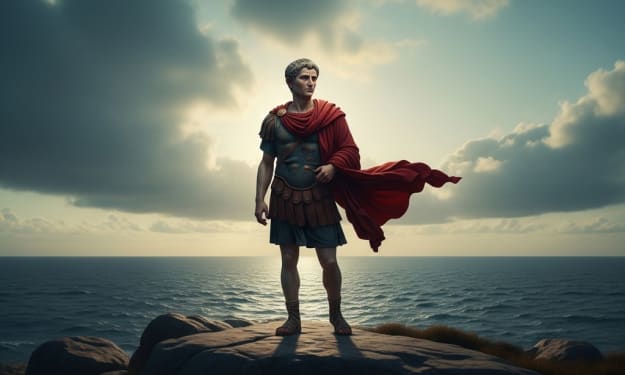
Augustus Caesar did not conquer Rome with thunder and spectacle. He conquered it with silence, patience, and restraint. Where others seized power through open violence, Augustus mastered something far rarer: the ability to win without appearing to rule. In doing so, he ended a century of civil war and founded an empire that would endure for centuries. His genius was not in dramatic battlefield heroics, but in knowing when *not* to act—and when to let others believe nothing had changed.
By Fred Bradford21 days ago in History
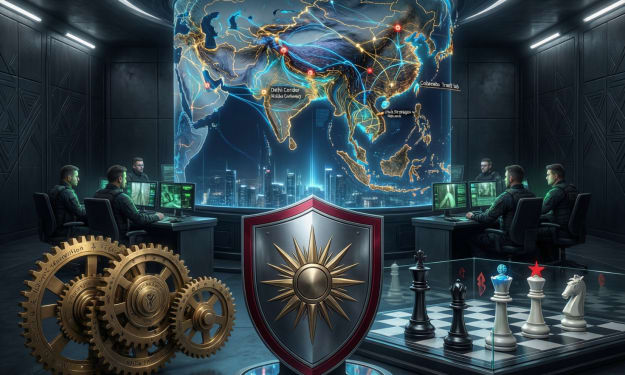
AI, Nuclear Weapons, and Accidental War
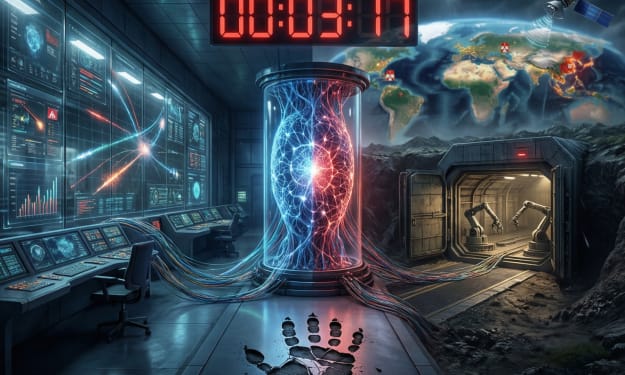
AI, Nuclear Weapons, and Accidental War In the modern world, wars are no longer fought only with soldiers, tanks, and planes. A new and dangerous element has entered global security: artificial intelligence (AI). While AI brings speed, efficiency, and advanced decision-making, it also introduces a serious risk—especially when combined with nuclear weapons. The greatest danger of the future may not be a planned nuclear war, but an accidental one.
By Wings of Time 22 days ago in History
Future Wars in the Age of Artificial Intelli
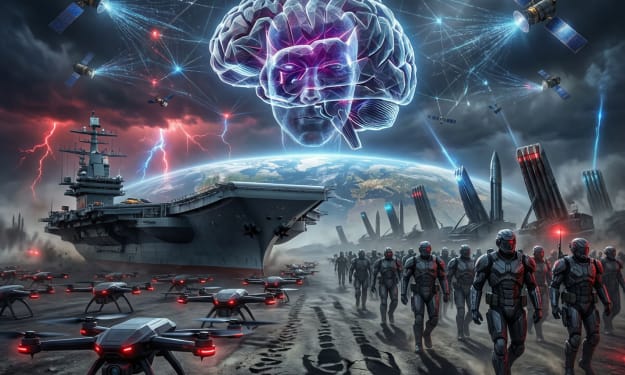
Future Wars in the Age of Artificial Intelligence If the new battlefield is hidden inside a nation’s systems, then Artificial Intelligence is becoming the most powerful weapon within it. Future wars will not begin with tanks crossing borders or fighter jets in the sky. They will begin with algorithms, data, and decisions made at machine speed. AI is changing not only how wars are fought, but also who controls power and how quickly conflicts can spiral out of control.
By Wings of Time 22 days ago in History
She Chose to Be Sicilian. Others Died for Being Sicilian.. Content Warning.
Copenhagen, 1925. There’s a young woman at the harbor, watching the Little Mermaid disappear into the fog. Her bags are at her feet. She’s got a ticket tucked in her coat. Tomorrow, she’s sailing south.
By Olga Angelucci23 days ago in History
When the Circus Came to Town
Long before stadium tours, streaming premieres, or “limited engagement” billboards glowing along the interstate, there was a different kind of announcement. It arrived quietly... Sometimes on a handbill tacked to a feed store, sometimes by rumor passed between kids at school.
By The Iron Lighthouse24 days ago in History
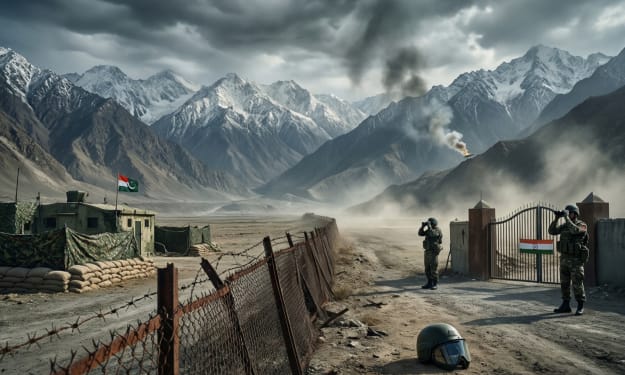
South Asia on Edge: Why Small Crises Carry Big Global Risks
South Asia on Edge: Why Small Crises Carry Big Global Risks South Asia is one of the most sensitive regions in the world today. It is home to a very large population and includes countries with strong militaries and nuclear weapons. Because of this, even small problems can turn into serious crises very quickly. Tensions, mistrust, and long history make the region fragile, and the whole world watches closely when situations become tense.
By Wings of Time 24 days ago in History
Coordinated Attacks and Regional Stability: Why Pakistan’s Security Situation Matters Globally
Coordinated Attacks and Regional Stability: Why Pakistan’s Security Situation Matters Globally How internal security challenges, regional rivalry, and geopolitics are deeply connected
By Wings of Time 24 days ago in History