
The Wanderer family - glassmakers, 1500 - 1850.
Czech Republic, glass history.

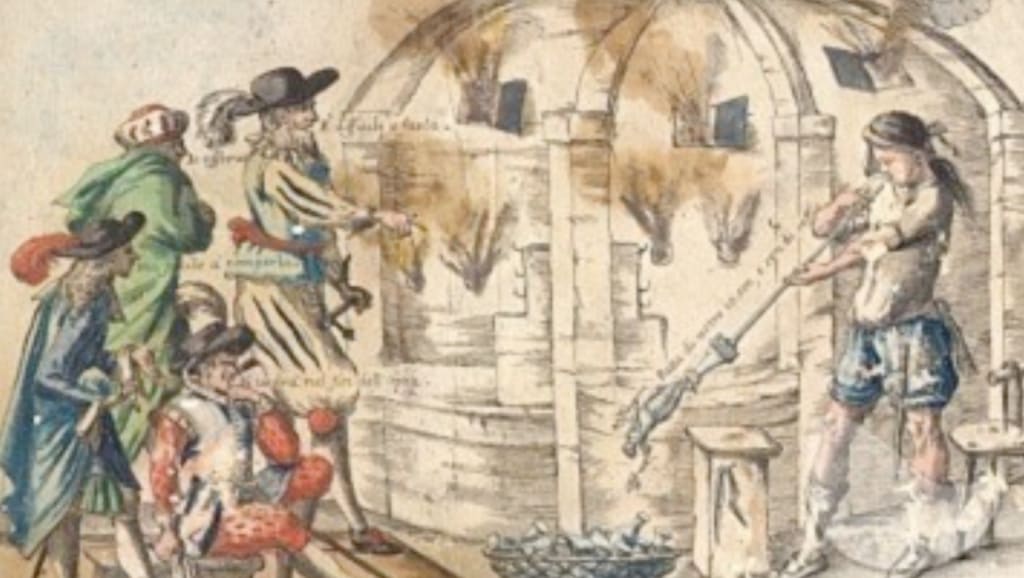
In the 16th century, the Wanders developed among the most important glassmaking families of the Renaissance Bohemia. The fates of the offspring of this family branch show a remarkable journey leading from glassmaking masters and glass painters of the 16th and 17th century through glass jewellery traders to high posts in the government of the Habsburg monarchy in the late 18th and the first half of the 19th century, and finally into obscurity.
Family tradition, captured in writing in the 18th century, provides two different legendary versions of the origin of the Wanders. According to the first one, they came from Flanders, from where brothers Wilhelm, a glass painter, Ambros, a mirror maker and Georg, a glass master already came to Bohemia in the first half of the 15th century. They had jointly founded a glasswork in the Křivoklát estate in Central Bohemia and the latter mentioned invented a method of cutting hollow glass into plates, i.e. sheet glass production. Their original surname was „van der Hus“, but they were Catholics, so they changed it to „Wander“ in new „Hussite“ country. In the war times, during the reign of King Vladislas II. Jagiellon, they left Křivoklát region and headed north to the Jizera Mountains, where they built a glasswork in today’s village Huť, which is part of the municipality Pěnčín. The second version of the family story is in favor of that the family came from Sweden. Their true origin, however, can be traced most likely in Saxony, where in Crottendorf in Ore Mountains, glassmakers of this name worked since 15th century. The first of the family was a man whose first name is unknown. He was born around 1440 and died after 1500. His son Ambrosius Wanderer (before 1460 – 1529), who was evangelical, was already documented as a glassmaster in Crottendorf.
According to the latest genealogical data, Ambrosius Wander’s wife, nee Schürer, gave birth to two sons, of whom the older Peter Wander (before 1485 – before 1560) took over the glasswork in Crottendorf in 1529 and his existence is documented in writing by a petition to the nobility from 1537, in which he asked for glasswork’s fee reduction, otherwise he would be forced to stop working. Thirteen years later, he left the glasswork to his son Brosius Wander (*around 1530). However, he was not successful in business and he was even put in jail in 1557 for his disputes with the nobility. Two years after this incident, he left the glasswork to his brother-in-law and reeve Christoph Schürer. Already on September 8th, 1560, however, the Elector of Saxony imposed ban on operating of the glasswork in Crottendort and ordered to turn the surrounding woods into a manorial hunting field. The second son of Peter Wander, also Peter Wander (*around 1520) could be the ancestor of a family branch, which founded a glasswork in Bedřichov in Jizera Mountains region in the late 16th century.
Elias Wander – Wanderer (* around 1590 – 1657), a glass painter and son of Elias Wander, left to Bischofsgrün in Fichtelgebirge in 1611, where the glassmaking business flourished at that time. He married into the Glaser family, which operated a glasswork there.
Johann Matheus Wanderer (1620-1692) became a glassmaking master in Bischofsgrün and shareholder of the glasswork´s homestead. He apprenticed as a glass painter and his two wives – the first of them was Anna Glaser, a daughter of the glassmaking master Adam Glaser – gave birth to nineteen children altogether
His second born son Wolfgang Wanderer (1651-1725) first, between 1671 – 1682, worked as a preceptor in Lausche. Then, he returned to Bischosgrün, where he, supported by his father, built a new glasswork, which operated until 1721. He was a master not only in painting, but also in glass engraving. As the last glassmaking master of the Bischofsgrün family branch, he already had to face greater challenges. The new glasswork burned down and he had to pay or feed the numerous siblings and offspring. By marriage, „the old glasswork“ eventually went back into the hands of the Glasers.
Peter Christoph Wanderer (1686-1748), however, continued the family tradition of glassmaking, in Bayreuth.
Two of his sons engaged with the craft of painting - Paulus Wilhelm Wanderer (1725-1792), who decorated the porcelain in Bayereuth and Peter Christoph Wanderer (1723-1792), the author of a goblet from 1747 with painted genealogy. The Wanderers worked in glassmaking professions in Bischfosgrün until 1887, when the local glasswork burned to the ground and was not restored.
Permission to establish a glasswork in Liberec estate was issued by Melchior of Redern to glassmaking master Peter Wander – Wanderer in 1598. As in Mšeno, a settlement formed around it. On September 25th, 1602, Wander bought the glasswork from the Rederns. Peter Wander’s origin is unclear, but what is certain is that he owned the glasswork in Bedřichov for sixteen years.
On February 20th, 1618, he left the glasswork´s homestead to his son Georg Wander. In the contract, there are, in addition to glasswork, mentioned a mill and a brewery. Interestingly, the „old glassmaking master“ stipulated the right to have „middle“ workshop available in the glasswork for four years, where he or his chosen assistant could work in the production of window targets or „good glass“.
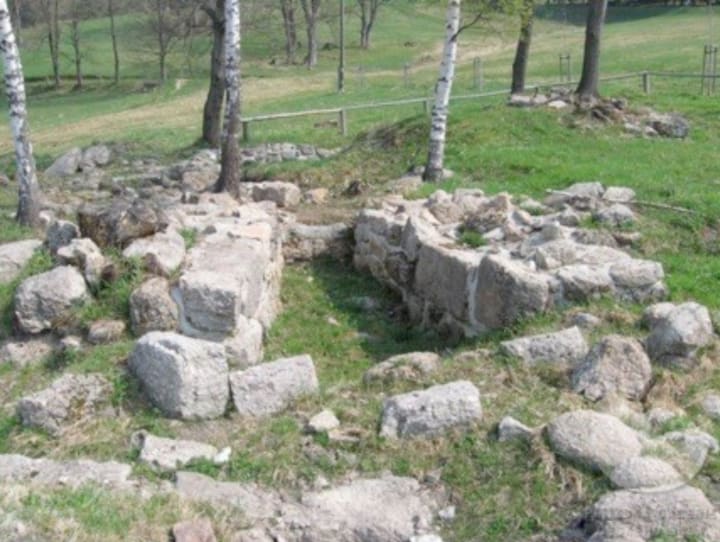
location of the glasswork in Bedřichov
Current state.
glasswork in the village huť – Kaspar Horn and his son-in-law Georg Wander von Grünwald
The glasswork in today’s Huť, which is a part of Pěnčín municipality, was founded by the Schürers in 1558, who ran it for nearly two hundred years. After 1638, its owner became a burgrave Kaspar Horn from Liberec, who was related to the Schürers. It is likely that Horn, who was not qualified in glassmaking, did not manage the glasswork by himself. In 1656, he married his daughter Anna Justina (1640-1718) to Georg Wander (1736-1712), a glassmaker who probably came from Mšeno family branch. His father was Elias Wander, son of Georg Wander, the coat of arms user from Mšeno. Elias Wander is found as a witness at baptisms in Huť in years 1659-1668 and it is possible that it was he, who initially managed the glasswork with Horn.
Georg Wander (1636-1712) is first documented as a glassmaking master in connection with Huť on October 13th, 1665, when he was invited to award the glasswork in Mšeno. Between the years 1657–1683, Wander’s wife gave birth to a total of twelve children, six boys and six girls.
On November 22nd, 1676, the predicate „von Grünwald“ was added to his name.
In Maloskalsko urbarium from 1687, however, he is still listed only as Georg Wander, the owner of the mill and „only three houses“ in Jistebsko,
After the death of Georg Wander von Grünwald, the glasswork was under control of his son Georg Franz Wander (1681-1749), the skilled glassmaker. In addition to problems with the nobility there were also claims of other heirs, so the new glassmaking master resigned after several years and on October 27th, 1717 he sold the glasswork property to Countess Polyxena Elisabeth Desfours. Apart from him there are other sellers signed on the contract - Elias Franz Wander, Johann Karl Wander, Johann Christoph Wander, Ignatz Florentin Wander and Barbara Blaschkova, nee Wanderova. All of the undersigned were deprived of privileges, i.e. they became normal subjects. Although Georg Wander von Grünwald won the inherited predicate for his offspring, none of them used it when signing the contract.
After selling the glasswork in Huť, Georg Franz Wander (1681 - 1749) had left to Turnov, where he bought a house and set up a wine tavern.
Life stories of the other two sons of the wine tavern owner from Turnov are more colorful. Johann Wander, a husband of Theresie Špísová (Speissová), invented the „Czech diamonds“, according to the family tradition. If it is true, it was probably yet unknown type (or a cut perhaps?) of jewellery stones. Anywhere else than within the family tradition, however, this information has not been discovered yet. Johann Wander allegedly collaborated with Viennese jeweler Fries, he himself was working as a merchant in Vienna and then he engaged in trade in Turnov.
Albert Wilhelm Ferdinand Wander (1722 - 1780), a truly remarkable personality from the history of Turnov´s business, belonging among the most esteemed burghers at that time. Around 1742, after his military experience, he had bought a house in the city and began to trade with jewellery stones. He also supplied other decorations for the army and soon achieved a considerable fortune.
Employee theft in his business ruined him, and eventually he settled in Mlada Boleslav as a postal clerk.
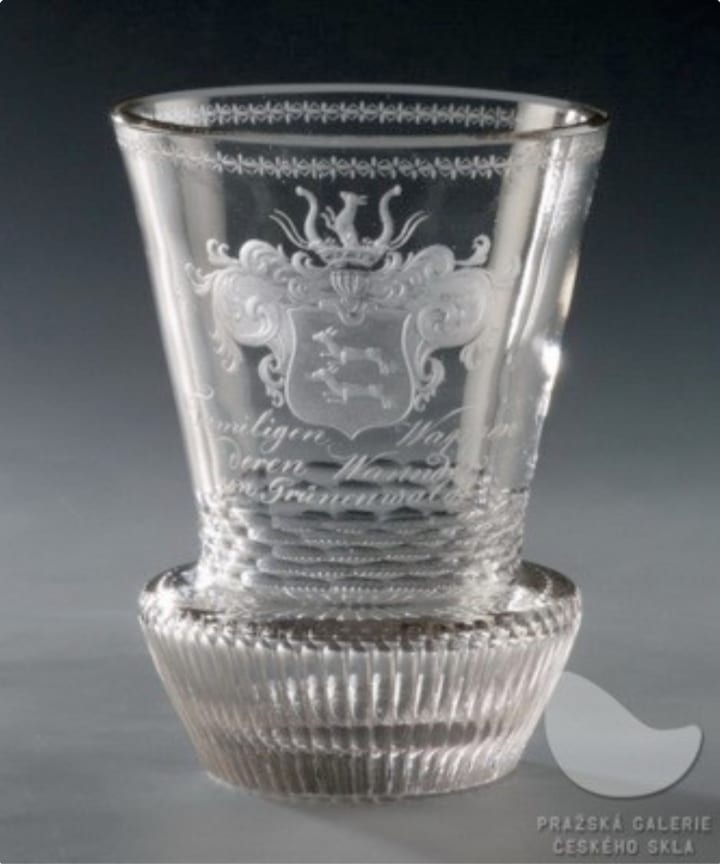
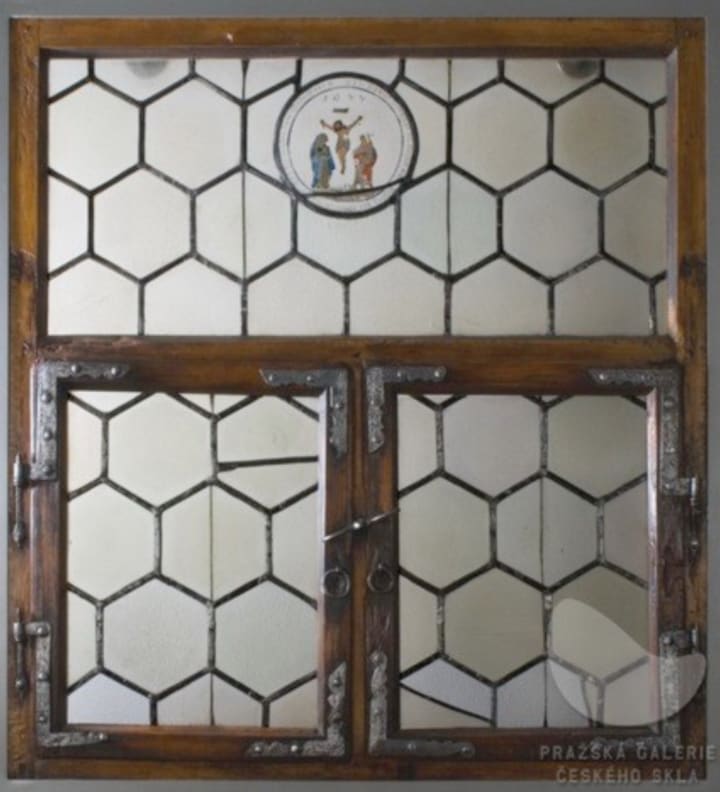
The Wander family fell into obscurity from this point on.
Thanks to Petr Novy and Prazka Galerie for information in this article.
____________________________________________________
J-Me and Guy are the owners of Wild Things Beads; a small family run import business specializing in Czech glass beads and buttons. They also run working button and bead tours to Jablonec: click here: http://www.wildthingsbeads.com/czechtour/ and Hong Kong: click here: http://www.wildthingsbeads.com/hongkongtour/ Their warehouse is located deep in the Sierra Nevada foothills of Northern California, and can be reached by phone at (530) 743 1339 or on the web at http://www.wildthingsbeads.com They are also open by appointment at their warehouse.
About the Creator
Guy lynn
born and raised in Southern Rhodesia, a British colony in Southern CentralAfrica.I lived in South Africa during the 1970’s, on the south coast,Natal .Emigrated to the U.S.A. In 1980, specifically The San Francisco Bay Area, California.



Comments
There are no comments for this story
Be the first to respond and start the conversation.