art
The best relationship art depicts the highs and lows of the authentic couple.
The One Habit That Quietly Changed My Entire Life
There are many habits people talk about waking up at 5 AM, journaling, meditation, exercising daily, reading books, cold showers, and more. I tried many of them. Some worked, some didn’t. But there is one habit that quietly changed my entire life, and surprisingly, it is not something dramatic or trendy.
By Sathish Kumar 17 days ago in Humans
Rabbi Rachel Rosenbluth: Reimagining Jewish Ritual, Kehilla, and Communal Covenant in Modern Life
Rabbi Rachel Rosenbluth is the founder of Bluth’s Ritual Studio, a Toronto-based practice that works globally, and is devoted to reimagining Jewish ritual for modern life. Ordained by Beit Midrash Har El, an Orthodox yeshiva that ordains women, she works largely in a Conservative-inflected mode as a rabbi, educator, wedding officiant, and artist. Her work blends pastoral care, theology, and aesthetic craft, including Hebrew calligraphy and ceremony design. She is developing a stunning coffee-table book to help people build community around the rituals that matter most. She collaborates with couples and communities to make belonging resilient.
By Scott Douglas Jacobsen17 days ago in Humans
The Paradox of "Chill": Why Relaxation Has Become Our Newest Source of Anxiety
In our modern pursuit of a "decent" life, the goalposts are constantly shifting. In the workplace, our primary task is "emotional management." When we return to our hometowns, we are told to stop "internal emotional friction." And when we finally manage to take a trip to clear our heads, we find ourselves reflecting on why we lack a certain "sense of relaxation"—or what is currently trending in Chinese social media as Song-chi-gan (松弛感).
By Elena Vance 17 days ago in Humans
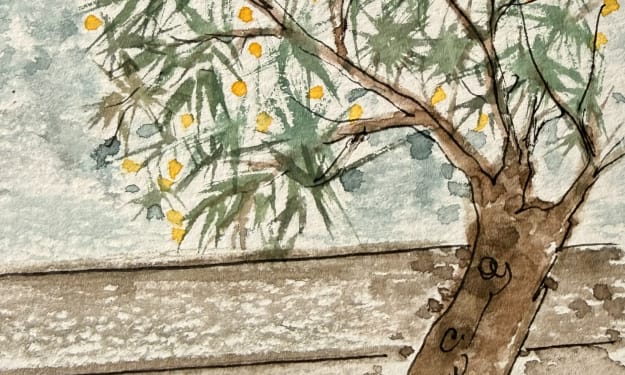
Role Apple Tree
I have an enormous stream of thoughts, and I never get tired of writing, but when I write about plants it feels very peaceful and meaningful. So, I have started a series as a tribute to the trees that have given me joy. I wrote about the guava, mango, neem and cluster fig some time back.
By Seema Patel17 days ago in Humans
The Stranger on the Train
Sami took the same train every morning, the 7:15 from the outskirts to the city center. He liked the routine, the predictability, the way the rhythmic clatter of wheels against rails seemed to organize his scattered thoughts. He usually sat in the same seat, by the window, earbuds in, pretending not to notice the other passengers. People came and went, faces blurred into the background, lives crossing his without consequence. Life, he believed, was to be observed quietly, not participated in.
By Sudais Zakwan18 days ago in Humans
🌍 Real Life Struggle Story — “From Darkness to Dawn”
Ravi was born into a very poor family. He was only 7 years old when his father passed away. He was so poor that he could not even afford to eat two meals a day. In school, he was not allowed to study because he could not pay the fees. When he turned 15 years old, he started his struggle life journey. This is Ravi’s story.
By Harsh Sharma19 days ago in Humans
The Silent Struggle: Understanding the "Non-Proactive" Heart of a Woman
In the world of emotions, everyone eventually encounters a period of agonizing hesitation—especially when "holding on" becomes the dominant theme of the heart. For many women, affection is a delicate and deep-rooted tapestry. Even when a relationship reaches its breaking point, truly letting go is rarely a clean break.
By Elena Vance 20 days ago in Humans
Alexander the Great — Part 4: Death, Division, and an Immortal Legacy
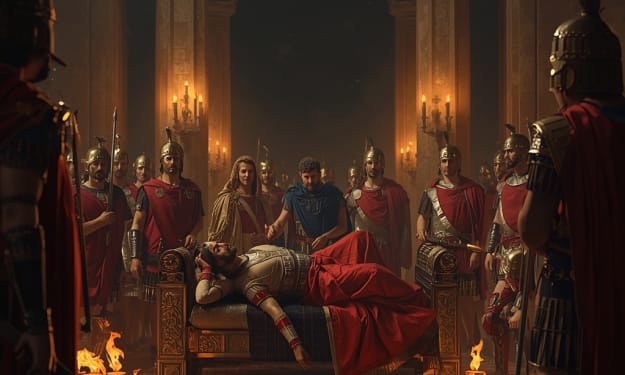
Babylon had become Alexander’s administrative center and was intended to be the capital of his vast empire. The city was strategically located and symbolized the blending of Eastern and Western cultures — a key vision for Alexander. He planned new military campaigns, including a possible invasion of Arabia, and began organizing naval expeditions. However, after days of heavy drinking and planning, Alexander suddenly fell ill. Ancient sources describe him suffering from fever, weakness, and the gradual loss of speech. Within roughly ten days, he died. The exact cause of Alexander’s death remains one of history’s great mysteries. Some historians suggest malaria, typhoid fever, or another disease common in the region. Others believe complications from old battle wounds and exhaustion contributed to his decline. There have also been theories of poisoning, though evidence remains inconclusive. Whatever the cause, the sudden loss of such a powerful ruler left a massive empire without clear leadership. Alexander had not named a definitive successor. When asked on his deathbed who should inherit the empire, he reportedly said, “To the strongest.” Whether this statement is accurate or not, it reflected the reality that followed. His generals, known as the Diadochi, began competing for control. At first, they attempted to maintain unity by ruling in the name of Alexander’s unborn son and his half-brother, but tensions quickly escalated into open conflict. The Wars of the Diadochi lasted for decades. Former allies turned against each other, carving the empire into separate kingdoms. Ptolemy took control of Egypt and established a dynasty that would rule for nearly three centuries. Seleucus gained vast territories in the east, forming the Seleucid Empire. Antigonus and his descendants controlled parts of Asia Minor and Greece. Instead of a single unified empire, Alexander’s conquests transformed into a network of Hellenistic states. Despite political fragmentation, Alexander’s cultural influence continued to grow. His campaigns had spread Greek language, art, and philosophy across Asia and the Middle East. This fusion of Greek and local traditions created what historians call the Hellenistic world. Cities founded by Alexander, especially Alexandria in Egypt, became centers of learning and innovation. The Library of Alexandria housed thousands of scrolls and attracted scholars from across the known world. Advances in science, mathematics, astronomy, and medicine flourished during this period. Alexander’s leadership style also left a lasting impact. He encouraged cultural integration, adopting aspects of Persian dress and customs and promoting marriages between his soldiers and local populations. Though some of his Macedonian troops resisted these policies, they contributed to the blending of cultures that defined the Hellenistic age. Trade routes expanded, connecting Mediterranean markets with those in India and Central Asia. Ideas and technologies traveled along these routes, shaping civilizations for centuries. Over time, Alexander became more than a historical figure; he became a legend. Stories about his life were retold in many cultures, each adding its own interpretations. In Greek and Roman traditions, he was portrayed as a heroic conqueror and brilliant strategist. In Persian and Middle Eastern tales, he appeared as a complex ruler, sometimes wise and sometimes destructive. In South Asian folklore, he was remembered as a powerful but distant invader. These varied portrayals demonstrate how deeply his story resonated across different societies. Historians continue to debate Alexander’s character. Some view him as a visionary who sought to unite diverse peoples under a shared culture. Others see him as an ambitious conqueror driven by personal glory. He could be generous and respectful toward defeated enemies, as seen with King Porus, but also ruthless when facing resistance. His execution of close companions, such as the general Parmenion, and his increasing demand for divine honors reveal the pressures and changes he experienced as his empire grew. What is certain is that Alexander transformed the ancient world in an extraordinarily short time. In little more than a decade, he dismantled one of the largest empires in history and replaced it with a new cultural and political landscape. His campaigns opened routes for trade and communication between East and West, influencing the spread of ideas that would shape future civilizations. Even the rise of the Roman Empire was indirectly influenced by the Hellenistic states that emerged from Alexander’s conquests. Alexander’s tomb itself became part of the mystery surrounding his legacy. After his death, his body was placed in a golden sarcophagus and eventually transported to Egypt. It was displayed in Alexandria, where later rulers and visitors reportedly paid their respects. Over time, however, the exact location of his tomb was lost. Despite numerous searches, it has never been definitively found, adding another layer to the legend of the man who conquered so much yet left behind unanswered questions. Part 4 of Alexander’s story shows that while his life ended abruptly, his influence did not. His empire fractured, but his vision of cultural connection endured. He remains a symbol of ambition, leadership, and the complexities of power. Alexander the Great’s journey from a young Macedonian prince to the ruler of a vast empire continues to inspire fascination. His story is not only about conquest but also about the spread of ideas, the blending of cultures, and the enduring impact one individual can have on the course of history.
By Say the truth 21 days ago in Humans