science
The Science Behind Relationships; Humans Media explores the basis of our attraction, contempt, why we do what we do and to whom we do it.
The science of thinking
Why is this important when discussing the nature of thinking? Well, because it is this very same concept that has bought about the current state of what we view as right and what we view as wrong. Our choice isn’t fully based on reason and fact but similarly on our emotional nature. And this is what gives use our understanding of what is right and what is wrong. From the facile to the laborious decisions. Our emotional views play a role just as important as our logical view when it comes to enabling policies. Now of course the main obvious truth about this concept, is that if it is true then it means that no one can ever be right.
By alain Junior4 years ago in Humans
The Complete & Utter Idiocy of NYS Contact Tracing
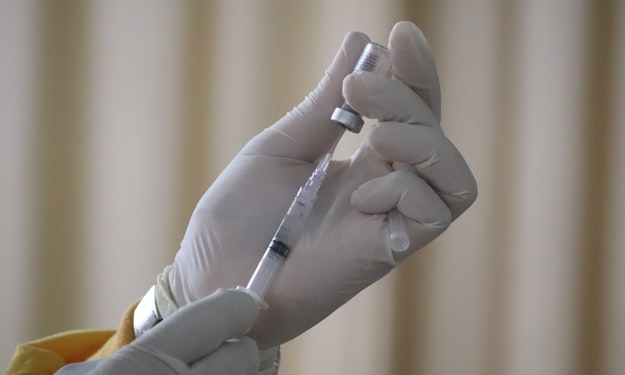
Like many people out there, I've had it with COVID-19. Mind you, I'm fully vaccinated and so is my husband. I know many people that have gotten COVID-19. One family member died of it two weeks ago. In total, I personally know 34 people that have had people die of COVID in their families. I personally know 11 people that died of COVID, including my cousin in August. I'm not a COVID naysayer.
By Candice Cain4 years ago in Humans
Don't Panic! It's Just Life.
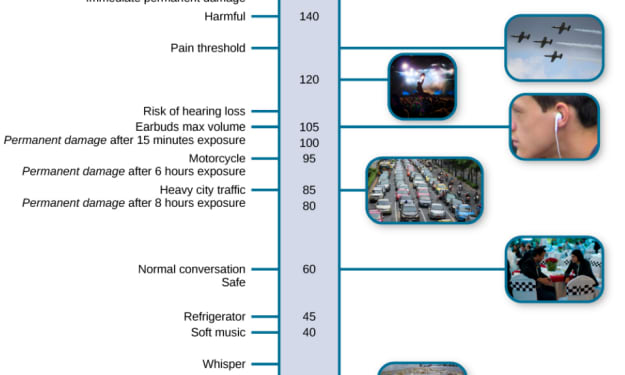
I wonder who decided on the tones that emanate from the medical equipment in hospital rooms? One particular eerie melody disrupts my spirit, leaving me on edge. "Do-deedo-dodo. Do-deedo-dodo." I'm certain it was playing when I was comatose-- a forgotten memory only to emerge when my ear catches that robotic song.
By Robin Jessie-Green4 years ago in Humans
Evolution: The Slow Life Hypothesis and It’s Applicability (or Not) In Human Beings
What is the Slow Life Hypothesis? Greatly simplified one aspect of the slow life hypothesis (itself an aspect of evolutionary life history theory) of evolutionary biology. says that as resources become more and more abundant species adapt/evolve a strategy of delayed maturation and take longer and longer to reach sexual maturity. A corollary of the theory suggests that these species take longer and longer to reach social maturity as well, and often display adolescent or even pre-adolescent behaviors at ages that were once considered hallmarks of adulthood. Finally, the theory also postulates that these species become more and more risk averse and tend to favor long term survival strategies over those that may deliver big rewards in the short term but are high risk. There is (limited) evidence for each aspect of the theory as described above in various animal species. The first postulate is by far the most well studied and the (only?) for which direct evidence has been published. The question I wish to address is if this hypothesis also applies to human beings, and, if so, what might the implications be for our long term survival as a a species. (Philosophers of science will no doubt take issue with the appropriateness of my usage of the terms hypothesis and theory in this post. I tend to go back and forth between the two suggesting an equivalence where there is only a relationship. My selection of the use of either term was based on what sounded better at the time and I am happy with the final result of my choices.)
By Everyday Junglist4 years ago in Humans
The Robots that Fight Cancer
In Spring of 2014, I fell in love with robots. I remember the exact moment that it happened. I was studying an undergraduate degree in mechanical engineering, and I had the excellent opportunity to work as an intern for the iRobot Corporation. Towards the end of the semester, another intern and I were sent down to Cape Canaveral with one of iRobot’s directors to represent the company at a robotics convention. We were there for a few days, and most of the time the director had other responsibilities, so the two of us were left in charge of the booth.
By Matt Spaziani4 years ago in Humans