social media
Social Media for pets and their people; Insta-famous puppies, the best animal accounts to follow and beyond.
Viral Image Shows 100 Baby Crocodiles Riding on Their Father’s Back in a Heartwarming Display of Nature.
Viral Image Shows 100 Baby Crocodiles Riding on Their Father’s Back in a Heartwarming Display of Nature. The animal kingdom never ceases to amaze with its fascinating behaviors and a recent viral image has captured one of the most heartwarming moments in nature. The photograph which has been widely shared across social media platforms, shows a remarkable sight 100 baby crocodiles clinging onto their father’s back as he gently glides through the water. This extraordinary display of parental care has captivated audiences worldwide challenging common misconceptions about crocodiles as cold blooded and ruthless creatures. Crocodiles are often seen as fierce predators but they also exhibit remarkable parenting skills particularly when it comes to safeguarding their young. While many reptilian species abandon their eggs after laying them crocodiles, especially the gharial species featured in this viral image display an unusual level of care. The father in the image is a gharial, a critically endangered crocodilian species found in South Asia primarily in India and Nepal. Known for their long slender snouts adapted for catching fish these reptiles have a unique way of nurturing their offspring. In this touching image, the father gharial is seen carrying his hatchlings on his back, ensuring they remain safe from potential predators lurking in the waters. Baby crocodiles when they first hatch are vulnerable to a variety of dangers including larger fish birds and even other crocodiles. By offering his back as a secure platform the father provides them with protection and a means of transportation across their aquatic habitat. This behavior significantly increases the survival rate of the hatchlings reinforcing the importance of parental care in the reptilian world. Scientists and wildlife conservationists have long studied crocodilian parenting behaviors but such a massive gathering of babies on a single father's back is a rare and remarkable sight. Usually crocodilian mothers are more commonly associated with parental care as they often guard their nests and help their young reach the water after hatching. However in the case of gharials the role of the father is crucial. Since gharials live in river ecosystems with strong currents and numerous predators the father’s presence plays a significant role in ensuring the well being of his offspring. The viral image serves as a powerful reminder of the delicate balance of nature and the importance of conservation efforts. Gharials, once abundant in South Asian rivers have faced severe population declines due to habitat destruction pollution and human activities such as sand mining and illegal fishing. Conservation programs have been working to revive their numbers and this image highlights the success of such efforts in protecting and preserving these majestic reptiles.
By Adnan Rasheed12 months ago in Petlife
Can animals understand human language?
Can animals understand human language? Clever Hans a horse from early 20th century Germany captivated audiences with his apparent ability to understand human language solve arithmetic problems and even tell time. His talents seemed to suggest that animals could comprehend human speech and respond in meaningful ways. However a deeper investigation into Clever Hans' abilities led to a surprising discovery one that has shaped our understanding of animal cognition and communication ever since. The story of Clever Hans begins with his owner Wilhelm von Osten a former schoolteacher with a keen interest in mathematics and animal intelligence. Von Osten was convinced that animals particularly horses possessed untapped intellectual potential. Through rigorous training he taught Hans to respond to questions by tapping his hoof. When asked what two plus two was Hans would tap four times. If asked what day followed Monday he would tap once for Tuesday. To many spectators it appeared that Hans truly understood human language and numbers. News of the horse’s abilities spread quickly and he became a sensation across Germany. Scientists journalists and even government officials came to witness the remarkable animal eager to determine whether his abilities were genuine. After all if a horse could understand language it could revolutionize our understanding of animal intelligence. A psychologist named Oskar Pfungst took on the challenge of examining Clever Hans in detail conducting a series of experiments to determine how he arrived at his answers. Pfungst's findings were groundbreaking but not in the way von Osten had hoped. It turned out that Hans was not actually performing arithmetic or comprehending language. Instead he was incredibly skilled at reading subtle unconscious cues from his human questioners. When someone asked a question they would unknowingly give off slight changes in posture facial expressions or breathing when Hans reached the correct answer. These cues signaled him to stop tapping. In cases where the person asking the question did not know the answer Hans' accuracy dropped significantly.
By Adnan Rasheed12 months ago in Petlife
The Struggle of the Kakapo Parrot
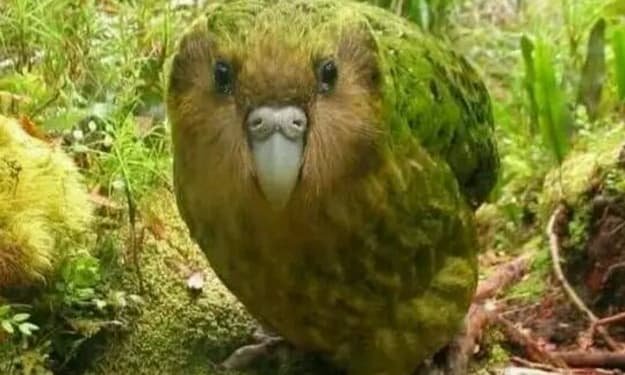
Kakapo parrots Although not related to farming, this knowledge is valuable for children. It is very rare for animals like pandas, white rhinos, and mountain gorillas to breed. But there is an animal in New Zealand that is more lazy to breed than all of them. In fact, it is a parrot. A parrot. Known as the Kakapo (night parrot), a parrot
By Rohitha Lanka12 months ago in Petlife
The fire fox
The Fire Fox is an extraordinary yet elusive variant of the common red fox, marked with a rare gene mutation that confers its unique appearance and superb qualities. This variation is so uncommon that it accounts for under 1% of all red foxes globally. This elusive creature has risen to prominence among wildlife enthusiasts and researchers despite its rarity.
By Rohitha Lanka12 months ago in Petlife
How Long Do Pekingese Live?
Have you ever seen a Pekingese dog? These fluffy little dogs look like tiny lions! They have a long, flowing coat, a flat face, and a proud walk. But did you know these dogs have a secret history? They were once the pets of Chinese emperors! People say they were so special that stealing one could get you in big trouble—even punished by death!
By Shane Watson12 months ago in Petlife
How Long Do Bichon Frise Live?
Have you ever wondered how long a Bichon Frise can live? These fluffy, white dogs are like little clouds of joy, but how many years can they stay by your side? In this article, we’ll uncover the mysteries of how long do bichon frise live, share shocking stories, and reveal secrets that will keep you hooked. Let’s dive into the fascinating world of these adorable dogs!
By Shane Watsonabout a year ago in Petlife
The Heartbreaking Reality of The Circle Life.
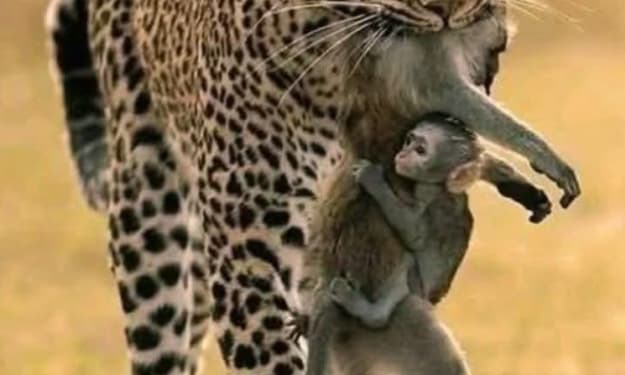
In the wild, all manner of life exists according to the law of the jungle, and for species to survive they must achieve a fragile equilibrium of predator and prey. A few days ago, I saw an interaction that I sat with in discomfort and contemplation regarding life itself.
By Rohitha Lankaabout a year ago in Petlife
How Long Does a Shar Pei Dog Live?
Chapter 1: The Mystery of the Shar Pei’s Wrinkles Have you ever seen a Shar Pei dog? They are the ones with all the wrinkles! Their skin looks like a blanket that’s too big for them. But did you know those wrinkles hold a secret? They are not just for looks. They tell a story about how long these dogs live. Let’s dive into the mystery of the Shar Pei’s life!
By Shane Watsonabout a year ago in Petlife