depression
It is not just a matter of feeling sad; discover an honest view of the mental, emotional and physical toll of clinical depression.
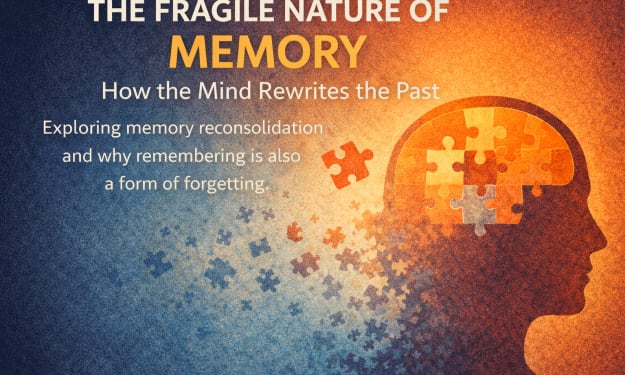
The Fragile Nature of Memory: How the Mind Rewrites the Past
We often view memory as a recording device. Something happens, and the brain stores it. Later, we recall it unchanged, like opening a file. Psychology presents a different picture. Memory is not fixed; it is fluid, reconstructive, and surprisingly fragile. One interesting aspect of cognitive psychology is memory reconsolidation, which is the process that alters our memories every time we recall them. This instability is not a flaw; it shows how our minds adapt, protect themselves, and reshape our identity over time.
By Kyle Butler18 days ago in Psyche
When Thinking Feels Like Action
There is a particular satisfaction that comes from understanding something clearly after wrestling with it for a long time. The mind settles. Tension releases. Pieces line up. In that moment, it can feel as though real movement has occurred, as though something meaningful has been accomplished. That feeling is not imagined. Cognitive resolution is a real event. The danger appears when that internal resolution is quietly mistaken for external change, and thinking begins to substitute for action rather than prepare the way for it.
By Peter Thwing - Host of the FST Podcast18 days ago in Psyche
Am I unwell? or, is the Australian Mental Health System?. Content Warning.
Content Warning: The following article discusses suicide and may be triggering for some readers. If you, or someone you know is in danger or needs support, please call 000 or a crisis helpline such as Lifeline on 13 11 14 immediately. More information on support can be found at Lifeline’s website: https://www.lifeline.org.au/
By Rowan Huxley20 days ago in Psyche
The Best Friend of My Dreams Who Got Away
I met Nicole, the most treasured friend I have ever had in my life, at the Ronald McDonald House in Rochester, Minnesota while Nicole and I were admitted at the Mayo Clinic during the cold winter of February 2013. During those cold days she warmed my heart instantly when she approached me after our dinner had finished at the Ronald McDonald House. She broke the ice by saying “Hey, you just seem very nice and normal compared to a few here, and I’d like to get to know you.” I got that feeling you get when you feel like you’ve known that person forever instantaneously. Nicole asked me, “Do you know what POTS is?” which was her diagnosis, and for some reason, my mind went to pots and pans. Later that night when we went to our respective rooms with our parents and family, we continued to chat over text about our chronic health problems and how we dealt with them. I turned 18 during the 2 weeks our times overlapped at the Mayo Clinic; so, we were just 17 to 18-year-old teenagers who immediately had a crush on each other. We formed such a strong bond as best friends throughout our experience at Mayo’s that carried over into a complicated but beautiful friendship. Throughout the years, we did keep in touch and converse about our health battles and how we dreamed to overcome them.
By Eamon Janfada21 days ago in Psyche