recovery
Your illness does not define you. It's your resolve to recover that does.
The Goals of Psychotherapy: Building a Path to Healing
Psychotherapy is more than just talking to a professional—it is a guided process of self-discovery, healing, and personal growth. The goals of psychotherapy may differ depending on the individual’s needs, but they often revolve around creating a healthier relationship with oneself and others, while finding ways to cope with life’s challenges.
By Decider TV6 months ago in Psyche
Discovering Yourself Through the Stars
In today’s world, many people are seeking clarity about who they are and what direction to take in life. Questions about purpose, identity, and relationships often surface during times of change. While there are countless tools for personal growth, Astrology and Human Design have become two of the most powerful ways to better understand yourself and your connection to the world around you.
By Health Manifested6 months ago in Psyche
it’s okay to disappear
Ghosting everyone because you’re lost inside yourself—and why that doesn’t make you a bad friend. There are seasons in life when you suddenly find yourself slipping away from everyone. Not out of spite, not because you stopped caring, but simply because you don’t know what’s happening inside you anymore.
By Zakir Ullah6 months ago in Psyche
Behind the Smile: The Hidden Faces of Suicide
Every 40 seconds, somewhere in the world, a life is lost to suicide. By the end of the year, that adds up to nearly 800,000 people. For every life taken, there are countless others who attempt it—some estimates say over 20 million attempts each year. These are not just numbers; they represent mothers and brothers, best friends and neighbors. They represent stories cut short, futures never lived, and ripples of grief that travel through families and communities.
By Annie Edwards 6 months ago in Psyche
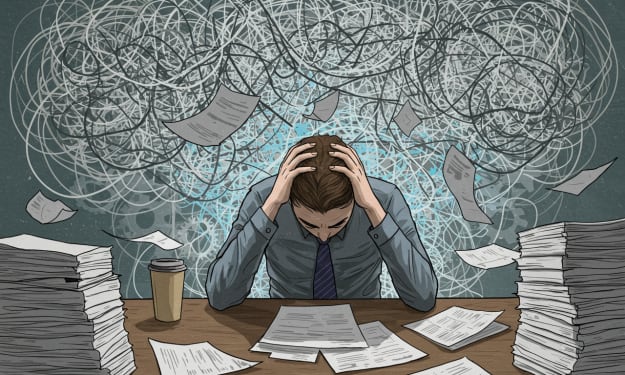
Why You're Burning Out: The Hidden Cognitive Factors That Are Draining You
When we hear the word "burnout," our first instinct often is that it's about working too hard or being overwhelmed with too many tasks. But burnout doesn’t always result from doing too much. In fact, sometimes burnout happens because the task you’re working on stops adapting to your cognitive needs. It’s not about adding more breaks to your schedule; it’s about addressing a mismatch between your mental system and the task you're facing.
By Nikesh Lagun6 months ago in Psyche
So, Whose Responsibility is Burnout Anyway?
In today’s fast-paced, hyper-connected world, burnout has become a global catastrophe, silently eroding the foundations of our workforce and society at large. As we navigate the complexities of modern work life, a pressing question emerges: who bears the responsibility for combating this depressingly ever-worsening threat?
By Bianca Best6 months ago in Psyche
Who Supports the Support System?
For as long as I can remember, I’ve been the one people turn to. The listener. The problem-solver. The “strong” one. At first, it felt good. There’s a kind of pride that comes with being dependable—the person who can carry other people’s pain without flinching. Friends called me their “rock.” Family relied on me to keep things together. At work, I was the one who could handle the pressure without breaking.
By Nadeem Shah 6 months ago in Psyche
I Was the Strong One Until It Broke Me
For as long as I can remember, people have seen me as “the strong one.” The dependable friend. The sibling who always listens. The co-worker who steps up when things fall apart. I carried that title like a badge of honor, proud that others trusted me, proud that I could be the one who held everyone together.
By Nadeem Shah 6 months ago in Psyche