stigma
People with mental illness represent one of the most deeply stigmatized groups in our culture. Learn more about it here.
You Want a HAPPY LIFE, there are 6 things you should never do.
Many times, I considered what it would take for me to be content. It’s so easy to be happy that you can’t believe it at first.. Many times, I tried so hard to be happy that I couldn’t be, and it was frustrating. And it wasn’t until much later that I came to the realization that in order to be truly content, you must sometimes make sacrifices. I wish I could make you happier than you already are, but I can’t.
By lupu alexandra4 years ago in Psyche
I Was Homeless, and She Gaslighted Me
For a while during my 20s, I was homeless. It was not a fun time for yours truly. I went through two horrible divorces and five years’ worth of abuse at the hands of the second wife. I was working — barely — and in perhaps the worst mental state I’d endured since my mid-teenaged years. I really could not tell if I was coming or going, constantly under the fear my second wife would track me down and fulfil her promise of breaking my back if I ever left her.
By Ira Robinson4 years ago in Psyche
Why Do Neurodivergent People Have Quirky Special Interests?. Top Story - June 2022.
Most people have one or two special interests that they focus on intensely. Maybe it’s stamp collecting, bird watching, or spending hours tinkering with cars. For neurodivergent people such as those having autism or ADHD, special interests often take centre stage in their lives. Special interests can provide a sense of focus and calm for us, neurodivergent individuals. They can also be a source of enjoyment, pride, and accomplishment. When nurtured, special interests can blossom into rewarding hobbies or even prospering careers.
By Neurodivergent_ai4 years ago in Psyche
Postnatal Anxiety: A Raw, Honest Account of How it Happened to Me
"It is known that anxiety disorders are more common in postpartum women than in the general population, with estimates of its incidence during the first 6 months of postpartum ranging from 6.1% to 27.9%. Unfortunately, treatment rates for postpartum anxiety are low, suggesting that more work is required to identify women who may benefit from treatment." -https://www.ncbi.nlm.nih.gov/pmc/articles/PMC5983016/
By Rebekah Crawley4 years ago in Psyche
The Great Spring
To live through suffering is humanity. To want a way out, perhaps more so. It is not the blooming of the flower buds that provokes my haunted heart, no more than the falling of the leaves brings me any deep joy. I can look out and see the orange and red of autumn trees and feel my heart spring upward in excitement, just the same as when the petals of the first daisies spread to meet the sunlight. The world spins the same as it always has and I've come to know of myself with each passing that I am sad in the springtime. It is a part of me, and has always been this way.
By A.T. Baines4 years ago in Psyche
Being Roger
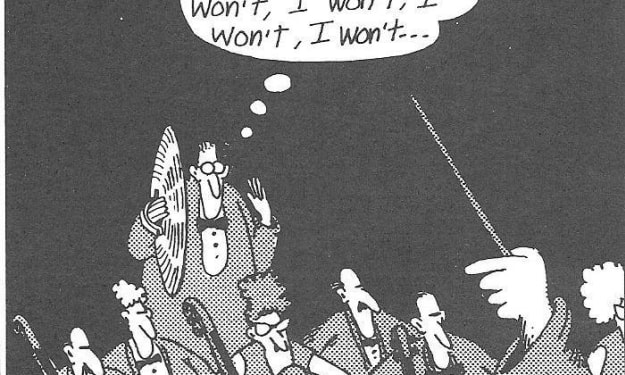
We all know Roger; this cartoon has been around since the '80s and has circled the planet more times than the ISS. At one point or another, in all of our lives, we have been Roger. No matter how much we prep ourselves for the big moment, no matter how much we psych ourselves up, no matter how ready we are... *dull thud*
By Erika Savage4 years ago in Psyche
Symptoms Of Depression And Anxiety And Ways To Get Rid Of It
• What is Depression? Depression is a mental health condition that causes a person to feel persistent sadness and low mood. It can also cause physical symptoms such as fatigue, headaches, and difficulty sleeping. Depression can make it difficult for a person to function in their everyday life. There are many different ways to treat depression. Some people may need medication to help manage their symptoms. Others may benefit from therapy or counseling. Some people may find that making lifestyle changes, such as exercising more or eating a healthy diet, helps to improve their symptoms. If you are feeling depressed, there are many resources available to help you. You can talk to your doctor or a mental health professional.
By Ayesha Amjad4 years ago in Psyche
“The Individual Disorder” of Descartes, Truth, and Mental Health in Politics
Insane. Crazy. Mad. Deranged. Defective. Lunatic. Violent. Dangerous. At times, society attributed all these descriptions to those many now the mentally ill. Even that phrase has its discontents; it implies disorder, deviance, incorrectness to the mind of the person who is considered “mad” or “insane.” If my use of those words bother anyone, it is advisable not to read the rest of this article. I must apologize for my crassness regardless, for I used those words quite brashly, and in many ways, ironically. I am, of course, discussing this social concept of madness that has been, not taboo, but extensively spoken about; if we wish to discuss it, we have to come to terms with the fact that it is not suppressed. Ironically, we find that philosophers have constantly and commonly addressed the insane in a variety of ways, and that the public constantly engages in speculation on it. The silence was never put in place; madness (to use the explicitly outdated term), rather than being silenced, has been spoken of throughout human history.
By Thomas Sebacher4 years ago in Psyche
April Is Autism Acceptance Month
April 1st begins Autism Awareness Month/World Autism Month/Autism Acceptance Month, a month that is supposed to be devoted to dispelling myths about autism and raising autistic voices. Even today, the knowledge about autism and autistic individuals is often limited or very stereotyped. The entire month has been commandeered in the past by groups like Autism Speaks, which hinder more than help.
By Josey Pickering4 years ago in Psyche