vintage
From Freud to phrenology to old-school outlooks, a look back at vintage psychiatry and mental health treatments as documented throughout history.
The story of a disabled man and seven children
There is a disabled man named Wang Huiwang in Wanger Town, Yanshan County. He makes a living by singing about happy events in the countryside and working as a tour guide. Despite the hard life, he adopted five abandoned babies and two children from poor families and sent them to school to read and write. His good deed was a story in the land.
By Jessica M Thornton4 years ago in Psyche
CONTRIBUTIONS OF GESTALT PSYCHOLOGY
CONTRIBUTIONS OF GESTALT PSYCHOLOGY Gestalt psychology thinks as our minds as a whole and not as elements. Gestalt psychology had started by Max Wertheimer. He came up with the concept of Phi phenomenon where flashing lights if they are continuous look like a straight line of light or an apparent motion. Motion pictures picked this up where movement can happen with light where there is no movement at all. Gestalt Laws of Perceptual Organization…..when the flashing lights keep moving. The gestalt law says that a person’s behavior is not based on a person’s elements but their mind/body as a whole. The great thinkers that loved gestalt law were Max Wertheheimer, Kurt Koffka, and Wofgang Kohler. They believed our minds filled in the missing gaps of information. This is how perception came about. Gestalt psychologist believed that the whole of something is better than parts of something. Gestalt psychologists came up with different laws to help understand perception. These are called the Laws of Perceptual Organization.
By Regina Mauldin4 years ago in Psyche
Sexual Assault in the Early Modern Period
While rape is a growing topic in present society, it is not a new problem. Rape has been a serious crime for centuries, though the punishment, definition, and general attitude surrounding it has changed over the years. The definition of rape changed multiple times from the 17th to the 19th centuries alone. Until 1650, rape was seen as the theft or assault on a man’s property. It was also an ambiguous term that could have meant either sexual assault or kidnapping, keeping in line with the previous definition. As society and the legal system evolved, so did the definition, with it being seen as a crime against a man’s possession(s) and instead as a crime against the woman who had been assaulted. While this was an improvement, that did not mean there were not any difficulties relating to rape accusations and trials. This paper will be discussing the topic of rape and sexual assault in the early modern period, focusing on the impact of attitudes surrounding both male and female sexuality, children and rape during this period, as well as examining trial reports from rape cases involving both children and adults.
By Alexandra Parrow4 years ago in Psyche
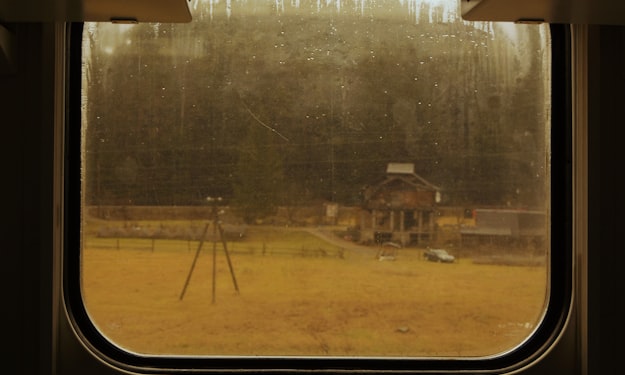
The Film in the Window
Sitting inside the train, I lean against the cloudy window that reminds me of an old photograph with blurred edges. Through it I watch men and women bustle purposefully along the platform, looking as though each one of them has been treated abominably and are marching indignantly to the local police station to make a complaint. If the world were black-and-white, I might be able to imagine I were watching a comedy sketch at the cinema, in which everyone needs the policeman but no one knows where to find him. Somewhere deep inside my brain, I laugh. My inner child still invents stories to amuse my outer adult. But today, the adult cannot laugh. The world is colorful, and its color reflects its reality. I can’t fool myself that the solemn, troubled, nervous faces on the other side of the glass will be smiling by lunchtime. I wonder if anyone in the world will ever smile again.
By Hope Grajcar5 years ago in Psyche