
Theater Work Heals Trauma
The arts are fundamental to teen development


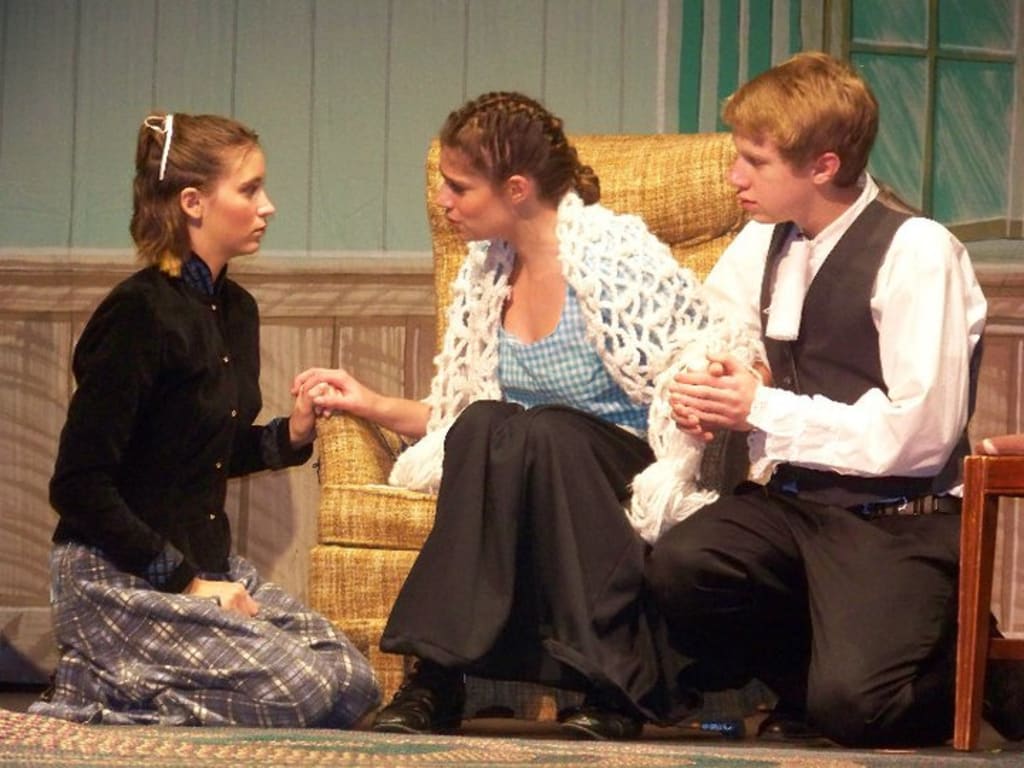
If we are not in tune with our bodies, if trauma or dissociation distorts our natural rhythms, we are unable to feel a sense of agency over our lives.
This feeling of hopelessness leaves traumatized people in a cycle of despair that can make them believe they are incapable of bettering their circumstances.
Teenagers who experience abuse or bullying can easily fall into deep pits of depression and self-loathing that can be nearly impossible to climb out of without clinical assistance.
In Bessel Van Der Kolk’s novel, The Body Keeps The Score, he argues that theater classes can help pull teens and adults out of their bodies and help them get more in tune with their emotions. He argues that the more in tune we are with our physical and emotional reactions, the better chances we have at healing.
To heal from trauma, one must have a strong sense of self and voice. You need to be able to communicate what is happening to your body in order for a therapist to help. When you’re living in a state of dissociation, this communication is nearly impossible.
And teens, because of their youth, often struggle to find the language to express what is happening to them. Therefore, therapy alone is often insufficient. Teens who have adverse experiences often struggle with volatile outbursts and tantrums.
“In order to find our voice, we have to be in our bodies-able to breathe fully and able to access our inner sensations. Acting is an experience of using your body to take your place in life.” (Van Der Kolk pg. 333)
There needs to be more resources available to teens to help teach them how to express their emotions. Theater could very well be a solution.
When I was a teen, I felt as if I were living in a fog. I was depressed, socially anxious, and I didn’t know how to connect with other people, let alone myself. This fog led to agitation; I would lash out and explode over small things because at the core, I was deeply embarrassed by how other kids just seemed to ‘get it'. Everyone seemed on time and knowledgeable about the world around them, while I remained trapped.
I now know this ‘fog’ is a form of disassociation brought about by long periods of depression. I was being abused at home by my mother and teased at school for my awkwardness. I felt isolated and confused even when I was with friends. In my fog, I didn’t know where to turn for help. I had a psychologist available, but in my memory, this therapist took my mother’s side and was adamant in telling me my ‘bad attitude’ was the cause of my suffering. Mediocre therapist aside, therapy didn’t work for me.
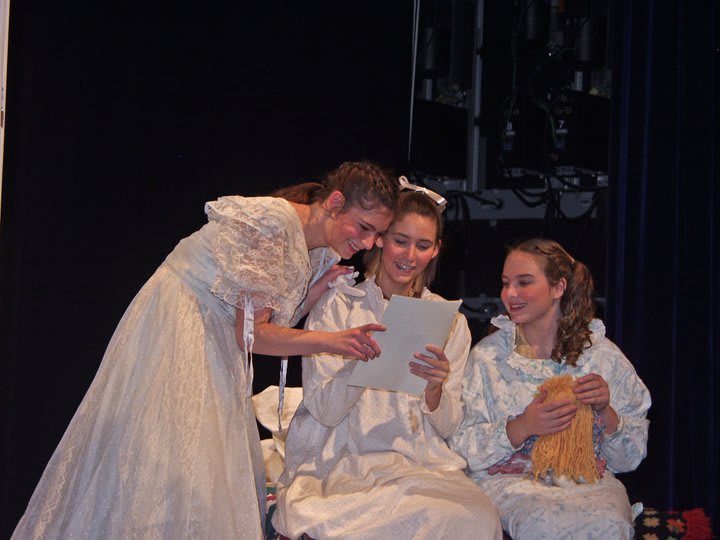
During my freshman year of high school, I developed a crush on a boy who I learned was in Drama Club. To be closer to him, I joined as soon as I figured out how to do so. I didn’t know it at the time, but Drama Club fundamentally changed my outlook on life.
Traumatized individuals feel disconnected with the world around them. Other people are a threat or a burden. It’s easier to be alone when you feel scared, but as social creatures, most people aren’t cut out for living in complete isolation.
“The essence of trauma is feeling godforsaken, cut off from the human race. Theater involves a collective confrontation with the realities of the human condition. Theater gives trauma survivors a chance to connect by deeply experiencing their common humanity” (pg.337)
I joined weeks after the initial auditions, and as a freshman with no acting experience, I wouldn’t be given a significant role anyway. This didn’t matter much to me. All I wanted was to spend time with a boy who barely knew I existed.
My first show was Agatha Christie and the Quiche of Death. What a title. I was cast as a fortune teller who cracks jokes and leads Agatha and her companion (played by my crush) on a wild goose chase. In total, I had a page of lines, which felt impossible to memorize.
As I was experiencing dissociation, I had a feeble memory and struggled to stay grounded in the current moment. I didn’t believe I could memorize those lines, and I felt more self-conscious than ever.
But as I read and reread the script, as I practiced with the other members of our club, as we played vocal and team bonding games (ZIP-ZAP-ZOP!) something started to change within me.
During rehearsals, I opened up and enjoyed making our director laugh. They weren’t my jokes, I was simply reading from the script, but just having others smile at me when I talked made a world of difference in my self-confidence. I felt like I was a part of something important. I felt, for the first time in my life, that I mattered.
When playing a character, you must find that character’s motivation. Why does the villain commit atrocities? Why does the prince want to find this woman? Why does the baker want a child? It forces us into a state of mind outside of our own opinions.
Conflict is central to a story. Man vs. Man, family dramas, and other inner conflicts drive the narrative forward — Trauma, on the other hand, forces the traumatized to avoid confrontation. Mostly, they are avoiding the conflicts within themselves that keep them trapped in hopelessness.
For me, I deeply believed the false narrative that I was unlovable. My mother didn’t love me, so why would anyone else? But when I went on stage, and the audience laughed along with my jokes and smiled and clapped as I took my turn to bow, a kindling sparked in my chest. A new, more positive truth about myself was planted alongside my false beliefs.
“Traumatized teens are noticeably out of sync. (They) are embarrassed to be seen, afraid to be in touch with what they are feeling, and they keep one another at arm’s length.” (pg.339)
Having a character to live inside of for a while helped me get out of the fog I was stuck in. A troublemaking, comical witch became a shield I could step inside and try out.
Learning stage direction trained me to focus on small details so that I wouldn’t mess up the scene. Having the pressure of a team relying on my delivery and memorization helped give me the push I needed to step outside the fog.
I fell in love with theater and continued throughout high school. My Junior Year, I got my first lead role, Beth in Little Woman. I was so intimidated to see my character’s name appear throughout the entire script.
But I had amazing cast members to rely on. They became the community I so desperately craved. When I struggled to memorize lines, they encouraged me to keep practicing. When I felt anxious, they held my hand and gave me space for those feelings. When I got things right, they were my biggest cheerleaders. Feeling supported with that much stability was an important key to healing some of the pain I was going through at home.
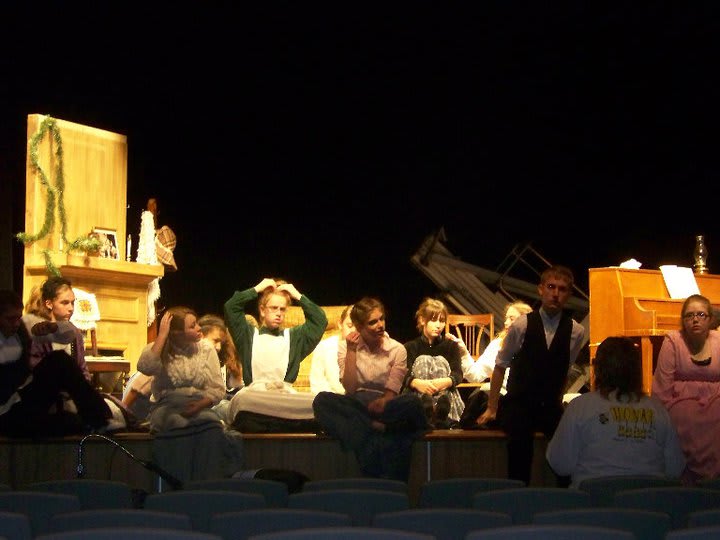
If I hadn't joined Drama Club, I don’t know how long I would have lived inside my obsessive daydreams and feelings of despair. Acting pulled me in the right direction for the future.
The boy I had a crush on never did notice me much, but I did gain a strong friend group within the Drama Club. Social groups are a support system. They are fundamental to healing.
It’s called collective bonding, when a group of people comes together with a singular goal. It wasn’t just the audience or my director that helped foster my new sense of confidence; it was my supportive peers who rehearsed lines and played vocal practice games with me, regardless of my social awkwardness. I never felt judged when I was on stage with my friends. This was a gigantic leap from the vulnerable state I felt in my classes at school.
My senior year, I was cast as Margo Frank, Anne Frank’s sister in the Junior-level play adaptation of Anne Frank’s Diary. I wanted the lead role of Anne, but at the same time, I still lacked the confidence needed to play such a positive character.
I was still proud of my role, and I think back on this play as one of my fondest childhood memories. After our final curtain call, our cast went on a trip to the Holocaust Memorial Museum in DC. We cried together and felt the weight of grief all around us. For the first time, I understood suffering on a grand scale outside of my own despair. Dread and human suffering were things I only knew from my young, isolated mind. But the Museum and my cast mates crying on my shoulder gave me a greater understanding of trauma.
We must fight for funding for the arts. Children who are exposed to abuse and violence deserve a safe space to learn to build their confidence and create lifelong friendships.
Last year, I was a part of a short story project called Becoming Real that donates 50% of its proceeds to Girls Write Now, an organization that helps create art programs for young girls in high-need areas of support.
In many urban areas, young people are not given equal access to the arts due to a lack of federal and state-level funding. Without access to art programs, these youths are denied the opportunity to develop support systems and learn new skills that could help them heal from trauma and flourish.
The Drama program at my school helped me reclaim a sense of purpose and self. I believe that for others, it can do the same.
About the Creator
Keep reading
More stories from Kera Hollow and writers in Psyche and other communities.
Scrapbooking as a Tool for Mental Health
In my early twenties, I started keeping a daily journal. I enjoyed doodling, gluing in receipts, and writing down my thoughts. I started journaling with the intention of capturing memories, since my mental illness greatly affects my long-term memory.
By Kera Hollow22 days ago in Psyche
I was in a Toxic Relationship, with my Workplace
“You got that?” My ex yelled. His hands were balled into fists at his side. At six foot three, he towered over me. A normal person would have been afraid, but I looked up a video of George Lopez repeatedly saying, “I got this,” and showed it to him. I had grown used to this treatment, so much so that I didn’t blink when he ripped the phone from my hand and threw it across the room.
By Jade M.5 days ago in Confessions



Comments (2)
Love this beautifully written ♥️🙏
This is fantastic, and it makes me recall auditioning at university for what we called 'Lunch-Hour Theatre' (you could watch students perform during the lunch break). I never got a role, but I did do improve when I was a grad student later, and it felt great to have people who could help me get through things, and whom I could also help. Thank you for this!