
Debate Over a “Nobel Prize for Fiction” and Polarized Reactions to Trump’s State of the Union
Online rhetoric and political divisions shape public response to the president’s national address

Introduction
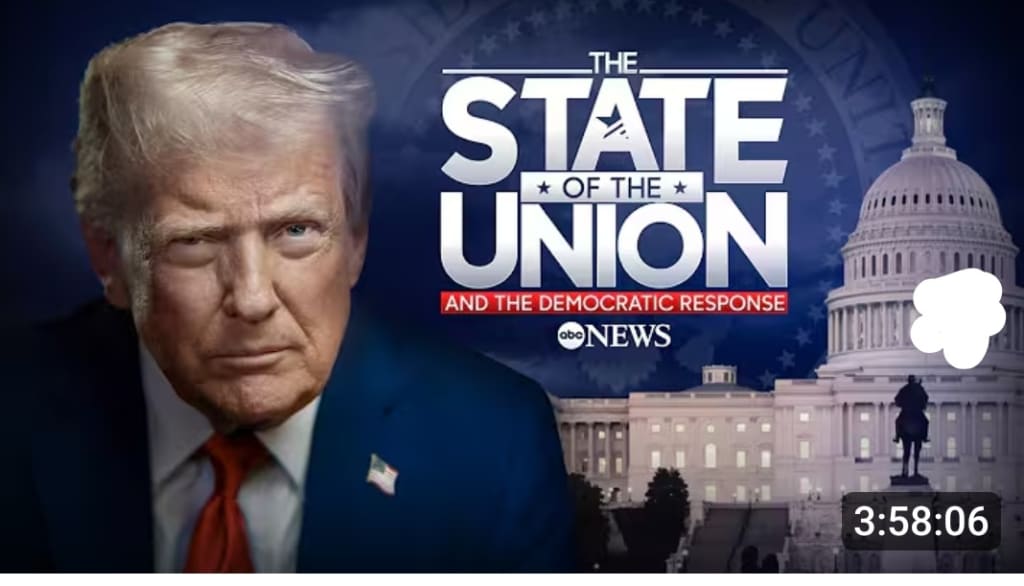
Recent public debate in the United States has blended satire, criticism, and political messaging following President Donald Trump’s State of the Union address. Some critics used the phrase “Nobel Prize for fiction” to question the accuracy of statements made during the speech. Supporters, however, defended the address as a strong presentation of policy goals and national priorities.
The phrase quickly gained attention online, reflecting deep political divisions that often surround major presidential speeches. While no actual Nobel Prize nomination was involved, the rhetorical use of the term underscores how symbolic language has become central to political discourse.
Understanding the “Nobel Prize for Fiction” Remark
The Nobel Prize is an internationally recognized award given in categories such as literature, peace, economics, and the sciences. There is no category specifically called “fiction” outside of literature, and the phrase circulating online was not a formal proposal.
Instead, critics used the expression as a satirical comment on statements they considered misleading or exaggerated. Social media platforms amplified the phrase, turning it into a trending topic in the hours following the address.
Political satire has long been part of American discourse. However, when satire merges with partisan criticism, it can blur the line between humor and serious allegation.
The State of the Union as a Political Stage
The State of the Union address is a constitutionally required speech delivered annually by the president to Congress. It outlines legislative priorities, economic conditions, and national security issues.
Historically, these speeches serve both policy and political purposes. Presidents often use them to highlight achievements, frame challenges, and shape public perception ahead of elections or legislative negotiations.
Trump’s address followed a period of intense political debate over economic policy, immigration, foreign relations, and healthcare. The speech reflected those priorities, emphasizing job growth, border security, and national defense.
Supporters’ Perspective
Supporters of the president described the address as focused and forward-looking. They argued that the speech outlined clear goals for economic growth and national security.
Many Republican lawmakers applauded proposals aimed at tax reform, regulatory changes, and border enforcement. Supporters also pointed to data cited in the speech, saying it reflected measurable economic performance indicators.
For those aligned with the administration, criticism framed as a “Nobel Prize for fiction” was viewed as partisan rhetoric rather than substantive policy analysis.
Critics’ Response
Critics, including Democratic lawmakers and policy analysts, challenged several claims made during the address. They questioned interpretations of economic statistics and disputed policy outcomes cited by the president.
The “Nobel Prize for fiction” phrase became shorthand for skepticism regarding factual accuracy. Commentators emphasized the importance of verifying statements against independent data sources.
Fact-checking organizations quickly published analyses evaluating claims made during the speech. Such reviews are common after major political addresses and reflect the heightened scrutiny surrounding presidential communications.
Political Polarization and Public Reaction
Public reaction to the State of the Union illustrated the degree of political polation in the United States. Polling conducted after similar speeches in previous years has often shown stark differences in approval ratings along party lines.
Supporters and critics tend to interpret identical statements through different lenses. This dynamic contributes to rapid online amplification of both praise and satire.
The “Nobel Prize for fiction” remark is an example of how political language can become symbolic, representing broader frustration or support rather than literal interpretation.
Role of Social Media
Social media platforms played a central role in spreading commentary about the speech. Within minutes of the address, hashtags and clips circulated widely.
Short phrases, including satirical labels, are particularly suited to online sharing. Their simplicity allows users to express complex political opinions quickly.
However, the speed of online debate can also reduce space for detailed analysis. Nuanced policy discussions may be overshadowed by viral slogans or emotional responses.
Fact-Checking and Accountability
Following the address, independent fact-checking groups examined claims related to economic growth, unemployment, immigration statistics, and foreign policy outcomes.
Fact-checking is now a routine feature of modern political communication. It serves as a mechanism for accountability, although audiences often interpret findings through partisan perspectives.
Supporters may question the neutrality of fact-checkers, while critics may emphasize discrepancies. This dynamic reinforces polarization, even when shared data is available.
The Nobel Prize and Political Symbolism
The Nobel Prize carries significant symbolic weight. Invoking it rhetorically signals an appeal to global standards of recognition and credibility.
By using the phrase “Nobel Prize for fiction,” critics aimed to frame the speech as detached from factual accuracy. The exaggeration reflects the broader use of satire in political messaging.
Political symbolism is not new. Past presidents have faced similar rhetorical critiques. However, the digital era allows such phrases to spread more rapidly and widely.
Congressional Reactions
Within Congress, reactions were similarly divided. Republican lawmakers largely stood in support during key moments of the speech. Democratic members responded with visible skepticism at times.
The televised nature of the address means that gestures, applause, and silence all become part of the political narrative. These visual cues often reinforce public perception of division.
The State of the Union remains one of the few moments when all branches of government gather in a single setting. Yet the unity of presence does not necessarily translate into policy consensus.
Broader Implications for Political Discourse
The controversy surrounding Trump’s address reflects broader challenges in American political discourse. Increasing polarization shapes how citizens interpret facts, rhetoric, and symbolism.
Satirical language can energize political bases but may also deepen divisions. When phrases like “Nobel Prize for fiction” dominate conversation, policy substance can become secondary to narrative framing.
At the same time, public debate and scrutiny are essential components of democratic governance. Robust disagreement is part of political life, provided it remains grounded in evidence and respectful exchange.
Media’s Role in Framing Reactions
News organizations played a role in contextualizing both the speech and the reaction. Coverage included summaries of policy proposals, expert commentary, and fact-checking analyses.
Some outlets focused on economic claims, while others emphasized rhetorical style or audience reactions. Media framing can influence which aspects of a speech receive the most attention.
Balanced reporting aims to separate satire from verified information, helping audiences distinguish between rhetorical criticism and factual evaluation.
Looking Ahead
The polarized response to the State of the Union may shape upcoming legislative negotiations and electoral campaigns. Political leaders often use such speeches to set agendas for the months ahead.
Whether debates center on economic indicators, immigration policy, or rhetorical accuracy, the event underscores the ongoing challenge of fostering constructive dialogue in a divided political environment.
Future addresses will likely face similar scrutiny, reflecting a political culture in which major speeches become catalysts for immediate and intense reaction.
Conclusion
President Donald Trump’s State of the Union address generated strong and divided reactions across the political spectrum. The phrase “Nobel Prize for fiction,” used satirically by critics, became a symbol of broader skepticism regarding factual accuracy.
Supporters defended the speech as a clear articulation of policy priorities, while critics emphasized the importance of independent verification. The exchange highlights the central role of rhetoric, symbolism, and digital amplification in contemporary politics.
In a polarized environment, national addresses often serve not only as policy statements but also as reflections of public division. As political discourse continues to evolve, maintaining focus on evidence-based analysis and constructive debate remains essential to democratic engagement.
About the Creator
Saad
I’m Saad. I’m a passionate writer who loves exploring trending news topics, sharing insights, and keeping readers updated on what’s happening around the world.
A Gathering of Evil Bosses
“I’m the queen of chin jutting while I smooth my hair, attacking, insulting, and deflecting to protect my appointer.” “Oh, please, Blondi, my hair is curled, highlighted, and longer than yours. I feature television commercials telling immigrants that we will give them a free plane ride home, and if they voluntarily turn themselves in, they will be allowed to legally apply for re-entry. It runs everywhere, and I look good in it! You can’t compete because of your blond hair. Mine is nicer, and my lips are prettier than yours.”
By Andrea Corwin 8 days ago in The Swamp
New Maritime Security Plan Could See Irish Naval Officers Deployed as Liaisons on Foreign Ships
A new maritime security strategy under consideration by the Irish government could result in Irish naval officers being deployed as liaison personnel aboard foreign naval vessels, marking a significant shift in how the country contributes to international maritime operations while maintaining its long-standing policy of military neutrality. The proposal, outlined in a draft review of Ireland’s overseas defence commitments, would allow officers from the Irish Naval Service to serve temporarily on allied ships taking part in multinational patrols and security missions. These officers would not command combat operations but would act as coordinators, intelligence links, and operational observers between Ireland and partner nations. Strengthening Maritime Security Cooperation Ireland’s extensive coastline and strategic position along major transatlantic shipping routes have made maritime security a growing priority. Officials say the plan is designed to enhance cooperation against threats such as illegal trafficking, human smuggling, piracy, and the sabotage of undersea infrastructure like communication cables and energy pipelines. Under the new framework, Irish naval officers could be seconded to vessels operated by European Union partners or United Nations-mandated missions. Their role would focus on information sharing, situational awareness, and ensuring that Ireland remains fully informed about regional maritime developments without deploying full combat units. Defence sources say the move reflects the reality that maritime security threats increasingly cross borders and require collective responses. “This is about presence and partnership, not participation in warfare,” one senior official familiar with the plan said. “Ireland would maintain its neutral stance while contributing expertise to international stability.” Neutrality and Political Sensitivity Ireland’s policy of military neutrality has long shaped its defence strategy. Any step that brings Irish personnel closer to foreign military operations can provoke political debate. Opposition parties and civil society groups have already raised concerns that the proposal could blur the line between neutral engagement and alliance-style cooperation. Supporters argue that the liaison model is consistent with Ireland’s history of peacekeeping and international cooperation. Irish personnel already serve abroad in UN missions in non-combat roles, and this plan would extend that principle to maritime security. The Department of Defence has stressed that any deployment would require government approval and would operate under strict legal and operational guidelines. Officers would not be embedded in offensive missions and would not take part in direct combat activities. Operational Benefits for the Naval Service For the Irish Naval Service, the initiative could offer practical advantages. Years of staffing shortages and budget constraints have limited Ireland’s ability to patrol its own waters continuously. By embedding officers on allied ships, Ireland gains access to wider surveillance networks and operational experience without the cost of deploying full vessels abroad. Naval analysts note that this could improve training standards and professional development for Irish officers. Exposure to advanced maritime technologies and multinational command structures would enhance Ireland’s long-term naval capabilities. “This is a knowledge-transfer opportunity,” said one former naval commander. “Irish officers would return with insights into modern maritime operations that could strengthen domestic security and readiness.” European and Global Context The plan comes amid growing international concern over maritime threats, particularly in the North Atlantic and Mediterranean regions. Recent incidents involving damage to undersea cables and increased migrant smuggling have highlighted vulnerabilities in Europe’s maritime domain. Several EU states already use liaison officers as part of joint patrols and naval task forces. Ireland’s participation would align it more closely with European security initiatives while stopping short of formal military alliances. Officials also emphasize that the deployments would be selective and mission-specific, focusing on humanitarian protection, law enforcement coordination, and early warning rather than combat deterrence. Public and Parliamentary Scrutiny Ahead Before the proposal can be implemented, it must pass through parliamentary review and public consultation. Lawmakers are expected to debate the legal limits of such deployments and how they fit within Ireland’s constitutional principles of neutrality. Public opinion remains divided. Some view the plan as a pragmatic response to modern security threats, while others fear it could draw Ireland into geopolitical conflicts indirectly. Defence officials insist transparency will be central to the policy. Each deployment would be announced publicly, with clear explanations of purpose and duration. A Careful Step Forward If approved, the maritime liaison initiative would represent a cautious evolution of Ireland’s security posture rather than a radical shift. By placing officers on foreign ships in advisory and coordination roles, Ireland seeks to protect its maritime interests while remaining true to its neutral tradition. As global seas become more contested and complex, the government believes that cooperation — even in limited form — is essential. Whether this approach gains full political and public support will determine how far Ireland is willing to go in redefining its role in international maritime security.
By Fiaz Ahmed a day ago in The Swamp




Comments
There are no comments for this story
Be the first to respond and start the conversation.