
Here’s What Happened in the Conflict on Sunday
Missile strikes, regional escalation, and humanitarian fallout mark another tense day in the widening Middle East war

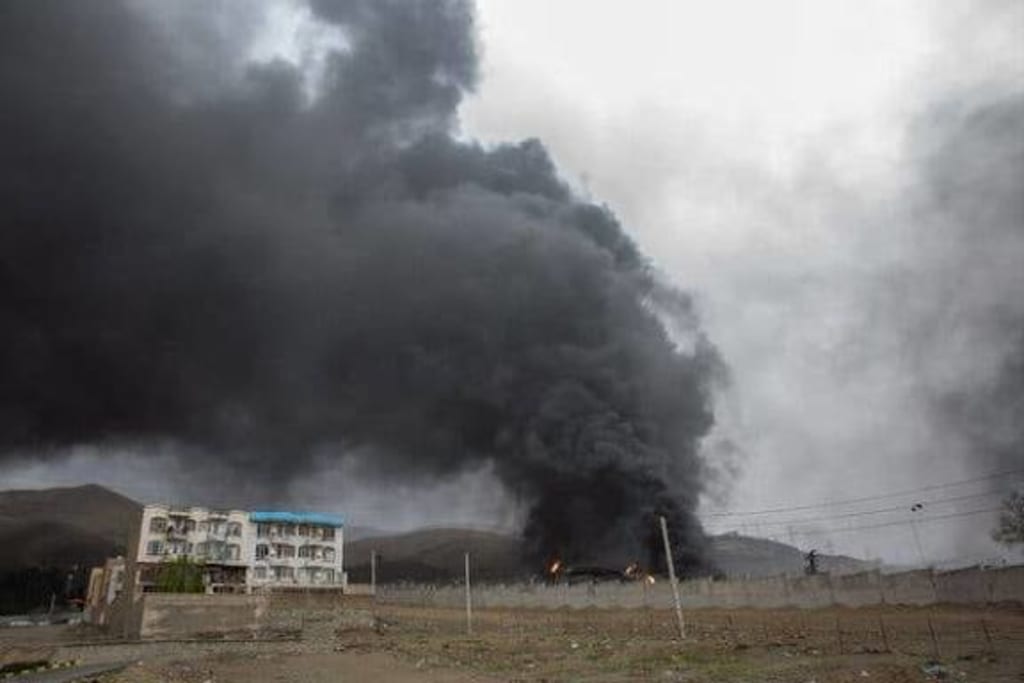
Sunday brought another intense round of violence in the rapidly expanding Middle East conflict, with missile strikes, cross-border attacks, and growing humanitarian concerns across several countries. The fighting now stretches from Iran and Israel to Lebanon, Iraq, and the Gulf, highlighting how the war has transformed into a broader regional crisis.
One of the most significant developments on Sunday was a new wave of missile and drone attacks launched by Iran and its allies. Air-defense systems in several Gulf countries—including Saudi Arabia, Kuwait, and the United Arab Emirates—were activated after missiles and drones were detected entering their airspace. Explosions reported in multiple locations were largely the result of air-defense systems intercepting the incoming projectiles. The attacks illustrated how the conflict is no longer limited to Israel and Iran but is increasingly affecting neighboring states as well.
Israel responded with fresh airstrikes across Iranian territory on Sunday. According to military statements, the strikes targeted military infrastructure and strategic facilities believed to be connected to Iran’s missile and drone programs. In recent days, Israeli forces have also targeted oil depots and energy facilities, signaling an effort to weaken Iran’s economic and logistical capabilities during the war.
Iran, meanwhile, continued to retaliate with missile attacks directed at Israel. One of the strikes killed at least one person in Israel and raised the overall death toll in the conflict there. The repeated missile barrages have forced millions of Israelis to seek shelter as air-raid sirens sound across major cities.
The conflict also intensified along Israel’s northern border with Lebanon. Fighters from Hezbollah launched attacks into northern Israel, prompting heavy Israeli airstrikes on Hezbollah-linked targets in Lebanon. The fighting has triggered a major humanitarian crisis, with hundreds of thousands of people displaced from their homes. Reports indicate that nearly 700,000 people in Lebanon have fled areas affected by the violence as Israeli strikes continue to hit locations linked to Hezbollah operations.
Meanwhile, tensions are rising in Iraq as well. Iran-aligned militias have launched drone and rocket attacks on American military bases and diplomatic sites, prompting retaliatory airstrikes by U.S. forces. The renewed fighting has turned Iraq into another potential battleground in the wider conflict, raising concerns about the country’s fragile political stability and security situation.
The international dimension of the war also became clearer on Sunday after Iranian officials acknowledged support from Russia in their confrontation with the United States and Israel. Iranian leaders said cooperation between Moscow and Tehran includes assistance “in many different directions,” though details of the support remain unclear. Western officials have downplayed the impact of this assistance but acknowledge that the growing alignment between Iran and Russia adds a new layer of geopolitical complexity to the conflict.
Beyond the battlefield, the economic consequences of the war are becoming increasingly visible. Oil prices have surged as fears grow that the conflict could disrupt energy supplies moving through the Strait of Hormuz—one of the world’s most important oil shipping routes. Economists warn that prolonged disruption could trigger global inflation and even push some economies toward recession.
Travel and aviation have also been heavily affected. Airlines have canceled thousands of flights across the Middle East as security risks and closed airspace disrupt global air travel. Major airports in the region have experienced significant delays and cancellations as airlines attempt to reroute flights away from conflict zones.
The war itself began with large-scale airstrikes by the United States and Israel against Iran on February 28, targeting key military and leadership sites. Iran responded with missile and drone attacks against Israel, U.S. bases, and allied countries throughout the region, rapidly escalating the confrontation into a multi-front war.
As Sunday came to a close, there were few signs that the violence would slow. Diplomatic efforts to secure a ceasefire remain limited, and both sides appear determined to continue their military campaigns. With more countries drawn into the conflict and humanitarian conditions deteriorating, the Middle East now faces one of its most dangerous and unpredictable crises in decades.
About the Creator
Fiaz Ahmed
I am Fiaz Ahmed. I am a passionate writer. I love covering trending topics and breaking news. With a sharp eye for what’s happening around the world, and crafts timely and engaging stories that keep readers informed and updated.
Keep reading
More stories from Fiaz Ahmed and writers in The Swamp and other communities.
Canada Ties $20 Billion Submarine Deal to a Korean Auto Plant Demand
Canada has reportedly made the approval of its $20 billion submarine procurement contingent on a significant industrial commitment from South Korea, including the establishment or expansion of an automobile manufacturing plant. The move underscores the growing intersection between defense spending and economic diplomacy as Ottawa seeks to secure both military capabilities and industrial benefits abroad. The deal, which involves the acquisition of advanced diesel-electric submarines for the Royal Canadian Navy, is among the largest defense contracts in the country’s history. Sources familiar with the negotiations said the Canadian government has emphasized that South Korea’s defense contractors must contribute to domestic or regional economic development, with a particular focus on the automotive sector. Officials in Ottawa view the dual-purpose strategy as a way to strengthen Canada’s economic footprint while modernizing its naval fleet. By linking the submarine contract to a Korean auto plant, the government hopes to secure jobs, investment, and technology transfer that could benefit Canadian workers and industries. The specifics of the plant’s size, location, and projected production capacity have not been publicly disclosed, reflecting the confidential nature of the negotiations. Strategic Defense and Industrial Goals The submarines under discussion are expected to replace aging vessels in Canada’s maritime defense fleet. Military analysts say the new submarines will enhance Canada’s ability to patrol its extensive coastline, monitor Arctic waters, and respond to emerging security challenges. The inclusion of an industrial clause linking the purchase to an auto plant represents an unusual but increasingly common approach where defense procurement is used to achieve broader economic and political objectives. The Canadian government has faced criticism in the past for long delays and budget overruns in military procurement projects. By tying the submarine deal to a Korean industrial investment, Ottawa appears to be attempting to balance strategic needs with domestic and international economic benefits. South Korea’s Role South Korea is already a recognized leader in both shipbuilding and automotive industries. Its defense firms have experience producing advanced naval vessels, while its automotive companies are global players with extensive manufacturing capabilities. Analysts suggest that linking the submarine contract to an auto plant ensures that Canada can leverage South Korea’s industrial expertise while promoting cross-sector collaboration. The deal is expected to generate significant economic activity in South Korea and potentially in Canada if joint production or technology-sharing arrangements are implemented. Such arrangements could include parts manufacturing, research collaborations, or workforce training programs, providing long-term benefits beyond the initial defense contract. International and Domestic Reactions Observers have noted that combining defense procurement with industrial investment can complicate international trade relations. Critics argue that linking a military contract to unrelated industrial projects may create tensions with other potential suppliers or trading partners. Others see the strategy as a pragmatic move to ensure that large government expenditures also generate economic returns. In Canada, the announcement has sparked debate among policymakers and industry leaders. Some advocate for more aggressive use of defense contracts to promote domestic industry, while others caution against making defense deals contingent on unrelated industrial commitments. South Korean officials have remained largely diplomatic, acknowledging the potential for collaboration while signaling a need for detailed discussions to finalize commitments. Negotiations are ongoing, and the final terms of the submarine contract—including delivery schedules, financing arrangements, and the specifics of the auto plant—are expected to be revealed once agreements are formally signed. Looking Ahead As Canada moves forward with its ambitious submarine procurement program, the inclusion of industrial conditions demonstrates a broader trend in government contracting: blending national security objectives with economic diplomacy. Whether this approach will deliver the desired benefits for both countries remains to be seen, but it reflects an evolving strategy in which defense and industry are increasingly interconnected. For Canada, the $20 billion submarine deal represents not only an opportunity to modernize its naval fleet but also a chance to foster industrial collaboration on the global stage. By tying the contract to a Korean auto plant, Ottawa is signaling that defense spending can serve multiple objectives—enhancing national security while promoting economic growth.
By Fiaz Ahmed 2 days ago in The Swamp
A Gathering of Evil Bosses
“I’m the queen of chin jutting while I smooth my hair, attacking, insulting, and deflecting to protect my appointer.” “Oh, please, Blondi, my hair is curled, highlighted, and longer than yours. I feature television commercials telling immigrants that we will give them a free plane ride home, and if they voluntarily turn themselves in, they will be allowed to legally apply for re-entry. It runs everywhere, and I look good in it! You can’t compete because of your blond hair. Mine is nicer, and my lips are prettier than yours.”
By Andrea Corwin 21 days ago in The Swamp
📢 Raise Your Voice Thread: 03/05/2026
Our “Raise Your Voice Threads” are hosted most alternating Thursdays at 12PM ET to offer creators more avenues to uncover exceptional stories on Vocal. As we are continuously searching for fresh creators and inspiring stories, this thread provides an opportunity to exchange and discuss the stories that have moved and motivated us on Vocal.
By Raise Your Voice by Vocal5 days ago in Resources



Comments
There are no comments for this story
Be the first to respond and start the conversation.