
How the Royal Navy went from being the envy of the world to a shadow of its former self
Shrinking fleets, rising costs, and shifting global power have transformed Britain’s once-dominant naval force.

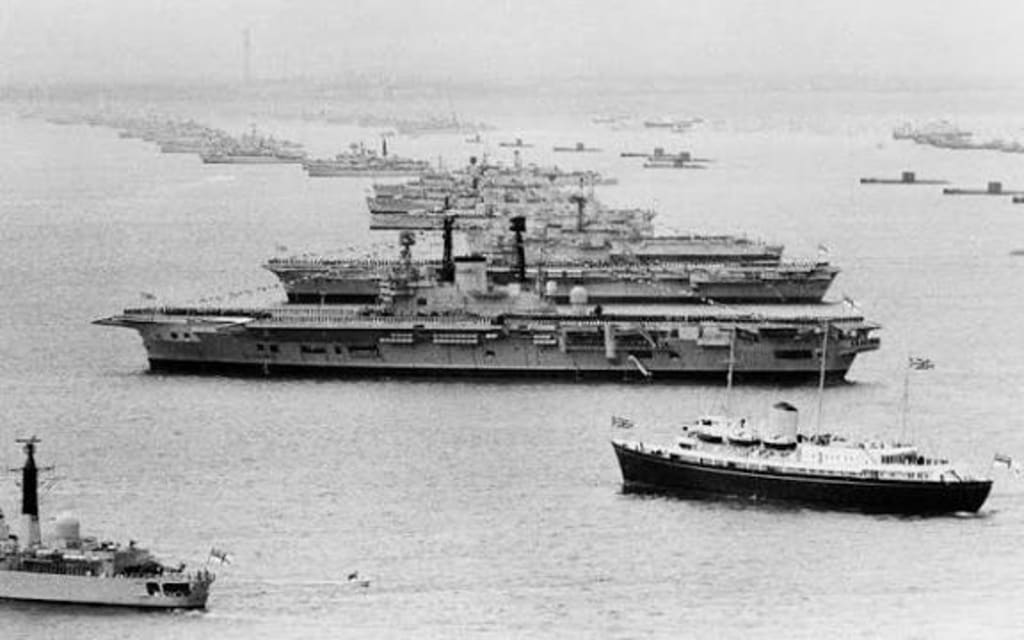
For centuries, the Royal Navy stood as one of the most powerful and respected military forces on the planet. At its height, Britain’s naval fleet dominated global seas, protected vast trade routes, and played a central role in maintaining the British Empire. Today, however, many defense analysts argue that the Royal Navy is only a shadow of its former self, facing shrinking fleets, budget constraints, and growing strategic challenges.
The Royal Navy’s dominance began in the 18th and 19th centuries, when Britain relied heavily on maritime power to protect trade and colonial territories. Victories in historic battles such as Trafalgar cemented Britain’s reputation as the world’s leading naval power. At the height of the British Empire, the Royal Navy maintained hundreds of warships stationed across the globe, ensuring that Britain could project power wherever its interests were threatened.
Following the Second World War, however, the geopolitical landscape began to change dramatically. The decline of the British Empire, combined with the rise of new superpowers such as the United States and the Soviet Union, gradually reduced Britain’s role as the world’s dominant naval force. Maintaining a massive global fleet became increasingly difficult as economic priorities shifted toward rebuilding the post-war economy.
Over the following decades, successive British governments reduced defense spending and focused on modernizing rather than expanding the fleet. While new technologies improved the capabilities of individual ships, the total number of vessels steadily declined. This shift marked the beginning of a long-term contraction in Britain’s naval strength.
Today, the Royal Navy operates far fewer ships than it did during its peak years. While the fleet includes advanced aircraft carriers, nuclear submarines, and modern destroyers, critics argue that its size is no longer sufficient to meet the wide range of commitments expected from a global maritime power.
One major challenge facing the Royal Navy is maintaining a balance between technological sophistication and fleet size. Modern warships are far more complex and expensive than their historical counterparts. As a result, governments often choose to invest in fewer but more capable vessels. While this strategy enhances technological superiority, it also reduces the number of ships available for simultaneous missions.
Personnel shortages have also become a concern. Recruiting and retaining skilled sailors and engineers has grown more difficult in recent years, partly because modern naval systems require highly specialized training. Some reports suggest that staffing shortages have occasionally limited the ability to deploy certain ships or maintain continuous operations.
Another issue is the growing range of responsibilities assigned to the Royal Navy. In addition to traditional combat roles, the navy is now involved in humanitarian missions, anti-piracy operations, maritime security patrols, and disaster relief efforts. These diverse tasks stretch resources and place additional pressure on a relatively small fleet.
At the same time, global maritime competition is intensifying. Countries such as China are rapidly expanding their naval forces, building dozens of new warships each year. Russia, while smaller in scale, continues to modernize its submarine fleet and invest in advanced missile technologies. These developments are forcing Western navies to reconsider how they allocate resources and plan future strategies.
Despite these challenges, supporters of the Royal Navy emphasize that it remains one of the most technologically advanced naval forces in the world. Britain’s aircraft carriers, nuclear-powered submarines, and advanced radar systems provide capabilities that many other nations cannot match.
Moreover, the Royal Navy continues to play a vital role within NATO and in international maritime security. Through alliances and joint operations with partners such as the United States and European nations, Britain maintains a significant presence in global waters even with a smaller fleet.
Ultimately, the transformation of the Royal Navy reflects broader changes in global power dynamics. The era of a single nation dominating the seas has largely passed, replaced by a more complex and competitive international environment.
While the Royal Navy may no longer command the overwhelming dominance it once enjoyed, its legacy and strategic importance remain deeply embedded in Britain’s national identity and global role.
About the Creator
Fiaz Ahmed
I am Fiaz Ahmed. I am a passionate writer. I love covering trending topics and breaking news. With a sharp eye for what’s happening around the world, and crafts timely and engaging stories that keep readers informed and updated.
Keep reading
More stories from Fiaz Ahmed and writers in The Swamp and other communities.
Turkey’s First Airborne Stand-Off Jammer Aircraft Breaks Cover
Turkey has taken another major step in strengthening its domestic defense industry with the unveiling of its first airborne stand-off jammer aircraft, a platform designed to disrupt enemy radar and communication systems during military operations. The new aircraft, developed as part of Turkey’s expanding electronic warfare capabilities, signals Ankara’s determination to reduce reliance on foreign defense technologies while increasing its influence in modern aerial combat systems. The aircraft, known as the HAVA SOJ (Airborne Stand-Off Jammer), is designed to conduct electronic warfare missions by interfering with enemy air-defense networks from a safe distance. By operating outside the range of hostile missile systems, the aircraft can jam radar signals, disrupt communications, and degrade the ability of adversaries to track or target friendly aircraft. Military analysts say the capability represents a significant milestone for Turkey’s defense sector. Electronic warfare platforms are considered essential components of modern air operations because they help create safer conditions for combat aircraft and unmanned systems by confusing or blinding enemy sensors. Turkey has long relied on imported electronic warfare technologies, particularly from NATO allies. However, geopolitical tensions and export restrictions in recent years have pushed Ankara to accelerate its indigenous defense development programs. The HAVA SOJ project is part of a broader effort to build a self-sufficient military technology ecosystem. The aircraft itself is based on a modified business jet platform that has been equipped with specialized electronic warfare systems. These systems include advanced antennas, signal processors, and software designed to detect and interfere with a wide range of radar frequencies used by modern air defense systems. Engineers working on the project say the aircraft is capable of identifying threats across large areas and responding with targeted electronic jamming techniques. By transmitting powerful electronic signals, the aircraft can distort radar images, block communications, or create false signals that mislead enemy defenses. Stand-off jamming platforms are particularly valuable during the early stages of military operations. They are often used to suppress enemy air defenses, allowing fighter jets, bombers, and drones to operate more freely in contested airspace. This capability is especially important in conflicts where advanced surface-to-air missile systems pose a significant threat. Turkey’s development of the HAVA SOJ aircraft also reflects the country’s growing emphasis on electronic warfare as a central component of modern military strategy. Recent conflicts around the world have demonstrated that controlling the electromagnetic spectrum can be just as important as traditional firepower. In addition to protecting friendly aircraft, electronic warfare systems can also support intelligence gathering. By monitoring radar signals and communication networks, these platforms provide valuable information about enemy capabilities and operational patterns. The project has been carried out through cooperation between several Turkish defense companies and research institutions. Officials involved in the program say the aircraft has successfully completed initial ground tests and integration work, marking an important step toward full operational capability. Turkey’s defense industry has expanded rapidly over the past decade, producing a wide range of military technologies including armed drones, naval vessels, armored vehicles, and missile systems. The success of these programs has allowed Ankara to increase defense exports while strengthening its strategic autonomy. However, experts note that electronic warfare remains one of the most technologically complex areas of military development. Designing systems capable of countering modern radar networks requires sophisticated software, high-power transmitters, and advanced signal analysis technologies. Despite these challenges, Turkey appears determined to establish itself as a leader in this field. The introduction of the HAVA SOJ aircraft suggests that the country is moving closer to achieving a comprehensive electronic warfare capability that can support both national defense and international operations. As global military competition increasingly focuses on technology and information dominance, platforms like stand-off jammers are expected to play a growing role in future conflicts. For Turkey, the unveiling of its first airborne jammer aircraft represents not only a technological milestone but also a statement of strategic ambition.
By Fiaz Ahmed about 9 hours ago in The Swamp
The Saddest Thing - The Billionaires Who Rule America Aren't Even Enjoying Themselves
This single post says more about our ruling class than a thousand policy papers. The saddest thing about today's system is that the men robbing the rest of us - sabotaging our economic prospects, our pensions, our access to affordable healthcare - are not even happy.
By Scott Christenson🌴28 days ago in The Swamp
Oil Prices Forecast to Jump Despite OPEC+ Pledge to Raise Output
The global oil market is once again facing turbulence. Despite a pledge by OPEC+ to increase crude oil output, analysts and traders are forecasting a rise in oil prices in the coming months. At first glance, this seems contradictory—more supply should mean lower prices. But in today’s volatile energy landscape, geopolitics and market psychology are proving far more influential than production figures alone.
By Sajida Sikandar5 days ago in The Swamp
The BAFTA Awards
By now, in a stunning departure from recent years, most of the world is aware of what happened at the BAFTA film awards. Social Media Headlines will tell you the bare bones: that John Davidson, a Tourette's Syndrome advocate, shouted a racial slur at two Actors of Colour, Michael B Jordan and Delroy Lindo.
By Natasja Rose2 days ago in Psyche


Comments
There are no comments for this story
Be the first to respond and start the conversation.