
Iceland to Hold Referendum on EU Accession Talks in the Coming Months, PM Says
A Nordic Nation Reopens the Debate Over Its European Future
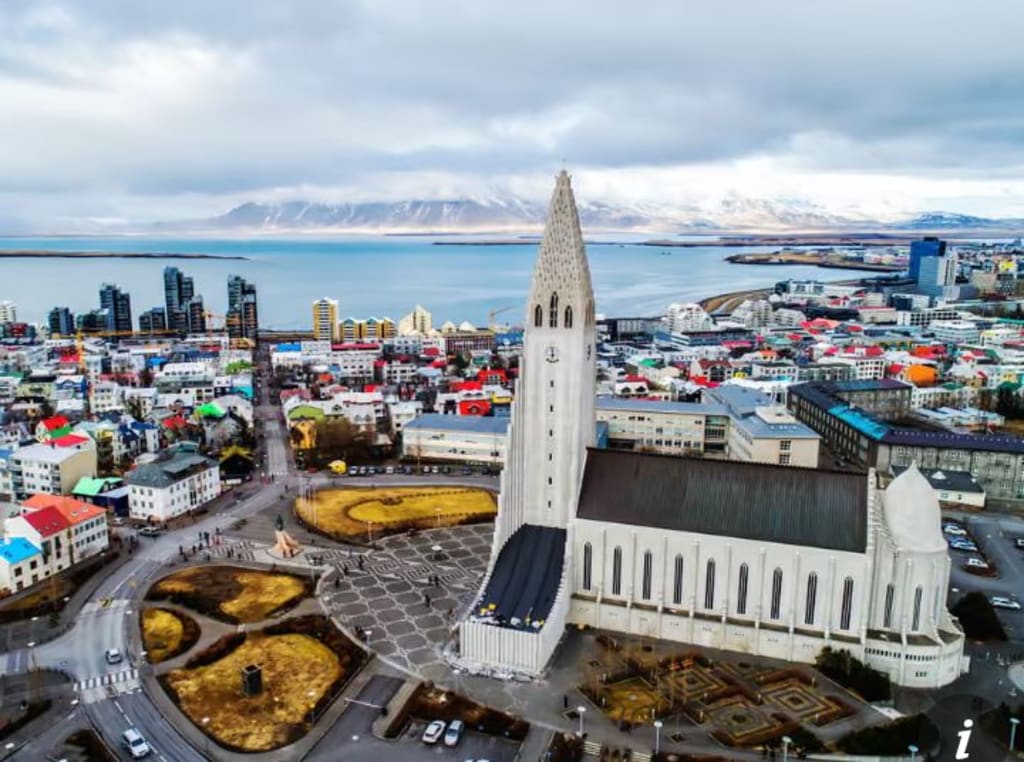
In a move that could redefine the country’s political and economic direction, Kristrún Frostadóttir has announced that Iceland will hold a referendum in the coming months on whether to reopen accession talks with the European Union.
While the vote will not automatically make Iceland an EU member, it will ask citizens a powerful question: Should the government restart negotiations to join the bloc? For a country that suspended EU talks more than a decade ago, the announcement signals a dramatic shift in tone — and possibly in destiny.
Let’s break down what this means, why it’s happening now, and what’s at stake for Icelanders.
🌍 Why Now? What’s Changed?
Iceland first applied to join the EU in 2009 following the devastating financial crisis that rocked its banking system. At the time, EU membership was viewed as a pathway to economic stability. Negotiations advanced but were halted in 2013 after a change in government and cooling public support.
Fast forward to 2026, and the global landscape looks very different.
Rising living costs, supply chain pressures, and continued geopolitical tensions — especially following Russia’s invasion of Ukraine — have reshaped European politics. Small nations are reconsidering how tightly they align themselves within regional blocs.
Prime Minister Frostadóttir has framed the referendum as a democratic opportunity to revisit the issue in light of new realities, particularly economic security and geopolitical stability.
🗳️ What Exactly Will Icelanders Vote On?
It’s important to clarify: the referendum will not directly decide EU membership.
Instead, voters will determine whether Iceland should reopen accession negotiations. If approved, discussions with Brussels would resume — a process that could take years and would require another final agreement before full membership.
In short, this is a vote about starting the conversation again, not signing on the dotted line.
🐟 The Fisheries Question: The Heart of the Debate
If there’s one issue that consistently dominates Iceland’s EU discussions, it’s fisheries.
Fishing is not just an industry in Iceland — it’s a backbone of the economy and a pillar of national identity. Critics of EU membership worry that joining would mean surrendering control over fishing quotas under the EU’s Common Fisheries Policy.
Supporters argue that Iceland already complies with many EU market rules through its participation in the European Economic Area (EEA). They say that full membership would grant Iceland greater influence over decisions it already helps implement.
This tension — sovereignty versus influence — remains central to the debate.
🔐 Security and the Arctic Dimension
Iceland has no standing military and relies heavily on NATO partnerships for defense. As Arctic geopolitics intensify and global powers focus more on northern routes and resources, Iceland’s strategic importance has grown.
Deeper integration with the EU could offer stronger political backing and economic resilience. Some policymakers believe that in an unpredictable world, small states benefit from being inside large alliances rather than navigating alone.
At the same time, others argue that Iceland’s flexibility and independence have served it well.
💶 Economic Considerations
Iceland already enjoys access to the EU single market through the EEA agreement and participates in the Schengen area. This means goods, services, capital, and people largely move freely between Iceland and EU countries.
So what would full membership add?
Potential benefits could include:
A direct voice in EU decision-making
Increased investor confidence
Long-term currency stability (possibly through euro adoption)
Greater policy coordination on climate and energy
However, EU membership also means accepting shared regulations across agriculture, trade, competition policy, and more.
For some Icelanders, that trade-off is worth it. For others, it’s a step too far.
🏛️ Political Landscape at Home
The referendum pledge was part of the governing coalition’s platform. Iceland’s political environment remains divided on the issue, reflecting a closely split electorate.
Recent opinion polls suggest that support for reopening negotiations is modest but growing. Still, the margin is narrow — meaning the campaign leading up to the vote will likely be intense.
Business groups tend to favor EU talks, citing economic certainty. Meanwhile, segments of rural communities and fishing interests remain cautious or openly skeptical.
The coming months will test how effectively the government can build consensus.
🇪🇺 How Europe Is Responding
From Brussels’ perspective, Iceland is an attractive potential member: politically stable, economically advanced, and environmentally progressive.
EU officials have long maintained that the door remains open if Iceland wishes to return to the negotiating table.
For the EU, Iceland’s reconsideration could signal renewed appeal at a time when enlargement discussions also include Ukraine and Western Balkan states.
⏳ What Happens Next?
Before the referendum takes place, Iceland’s parliament must finalize the voting framework and confirm the timeline. Once scheduled, campaigning will begin in earnest.
If voters approve reopening negotiations, accession talks would resume chapter by chapter — covering everything from environmental standards to fisheries policy.
Even under optimistic scenarios, full membership would likely be years away.
But symbolically, the referendum marks something significant: Iceland is once again debating its place in Europe.
🌊 A Nation at a Crossroads
Iceland’s choice is not simply about trade agreements or bureaucratic structures. It’s about identity, sovereignty, and strategy in a rapidly evolving world.
Does Iceland see its future as deeply integrated within Europe’s political system? Or does it prefer maintaining distance while cooperating through existing agreements?
Prime Minister Kristrún Frostadóttir has made clear that the decision belongs to the people.
In the coming months, Icelanders will weigh the benefits of influence against the value of independence — a classic dilemma for small nations navigating big global currents.
Whatever the outcome, one thing is certain: this referendum will shape Iceland’s European story for decades to come.
About the Creator
A Gathering of Evil Bosses
“I’m the queen of chin jutting while I smooth my hair, attacking, insulting, and deflecting to protect my appointer.” “Oh, please, Blondi, my hair is curled, highlighted, and longer than yours. I feature television commercials telling immigrants that we will give them a free plane ride home, and if they voluntarily turn themselves in, they will be allowed to legally apply for re-entry. It runs everywhere, and I look good in it! You can’t compete because of your blond hair. Mine is nicer, and my lips are prettier than yours.”
By Andrea Corwin 7 days ago in The Swamp



Comments
There are no comments for this story
Be the first to respond and start the conversation.