
Israel–Iran Attack: Rising Tensions Shake the Middle East
Escalating missile strikes and air raids push the Middle East toward a wider regional conflict.

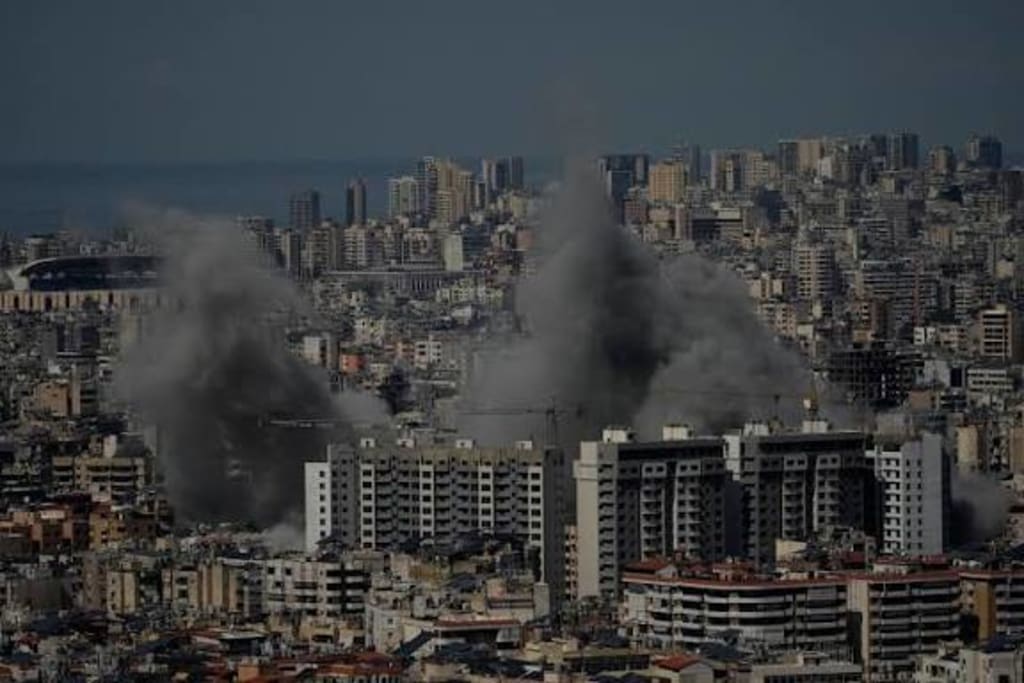
The long-standing rivalry between Israel and Iran has erupted into a major military confrontation, raising fears of a wider war across the Middle East. Over the past week, the region has witnessed intense airstrikes, missile launches, and retaliatory attacks that have drawn global attention and concern.
The latest escalation began when Israel launched a large-scale military operation targeting Iranian military and strategic facilities. The strikes were part of a coordinated campaign known as Operation Lion’s Roar, which involved precision airstrikes against key locations in Tehran and other cities. The operation reportedly targeted missile bases, command centers, and facilities connected to Iran’s military infrastructure.
Israeli officials said the attacks were aimed at preventing what they described as an imminent threat from Iran’s missile and nuclear programs. Israel has long accused Tehran of attempting to expand its military influence in the region and of supporting armed groups hostile to Israel. Iranian leaders have repeatedly denied seeking nuclear weapons, but tensions over the issue have remained high for years.
In response to the strikes, Iran launched a wave of retaliatory missile and drone attacks targeting Israeli territory and regional military sites. Sirens sounded across several Israeli cities as air defense systems were activated to intercept incoming projectiles. Although many missiles were reportedly intercepted, some managed to strike near urban areas, causing damage and injuries.
The conflict intensified further after reports emerged that Iran’s Supreme Leader, Ali Khamenei, was killed in a targeted airstrike during the early phase of the operation. The strike was part of a broader attempt to weaken Iran’s command structure during the escalating conflict.
Following the attack, Iran declared that it would continue to retaliate against Israel and its allies. Iranian officials warned that any further attacks would trigger a broader regional response. As a result, military forces in several neighboring countries have been placed on high alert.
The situation has also drawn in the United States, which has supported Israeli operations and carried out additional strikes against Iranian targets. According to reports, U.S. forces have attacked hundreds of sites believed to be connected to Iran’s military and security infrastructure.
At the same time, political tensions inside the United States have grown. Lawmakers in Washington debated whether the president should have sought congressional approval before launching military operations. A resolution aimed at limiting the president’s war powers was narrowly rejected in the House of Representatives, reflecting deep divisions over the conflict.
The conflict has also triggered reactions from groups allied with Iran. In Lebanon, the militant group Hezbollah began launching attacks toward northern Israel, opening another front in the conflict. These developments have raised fears that the fighting could spread across several countries in the region.
Meanwhile, Israel has declared a nationwide state of emergency as authorities prepare for possible further missile strikes. Schools have been closed, public gatherings restricted, and thousands of military reservists mobilized to strengthen defenses.
The humanitarian impact of the conflict is already severe. Reports indicate that hundreds of people have been killed and thousands injured as airstrikes continue across Iran and missile attacks hit Israeli cities. Civilian infrastructure has also been damaged, and international organizations are warning that the situation could deteriorate further if hostilities continue.
Global leaders are now urging both sides to exercise restraint and return to diplomatic negotiations. Many fear that continued escalation could destabilize the entire Middle East, disrupt global energy supplies, and increase the risk of a much larger international conflict.
For now, the Israel-Iran confrontation remains one of the most dangerous geopolitical crises in recent years. As missiles continue to fly and diplomatic efforts struggle to gain traction, the world is watching closely to see whether the situation will move toward peace—or spiral into a prolonged regional war.
About the Creator
Fiaz Ahmed
I am Fiaz Ahmed. I am a passionate writer. I love covering trending topics and breaking news. With a sharp eye for what’s happening around the world, and crafts timely and engaging stories that keep readers informed and updated.
Keep reading
More stories from Fiaz Ahmed and writers in The Swamp and other communities.
Jesse Jackson Funeral: A Nation Mourns a Civil Rights Icon
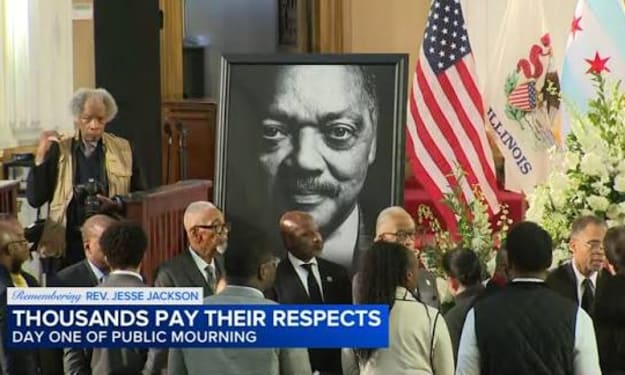
The United States and the world are bidding farewell to Rev. Jesse Jackson Sr., a towering figure in the civil rights movement whose decades of advocacy reshaped American politics and social justice. The funeral services, held this week in Chicago, Illinois, have drawn a remarkable outpouring of respect, drawing former U.S. presidents, dignitaries, artists, activists, and thousands of ordinary citizens who came to pay their final respects. Jackson, who died on February 17, 2026, at age 84, had been receiving tributes nationwide for his lifelong commitment to equality, voting rights, economic justice, and human rights. Before the Chicago services, his body lay in state in South Carolina, his birthplace, where he became only the second Black person to receive that honor at the state capitol. A Week of Remembrance The events began weeks ago with memorials in several U.S. cities. Thousands lined up at the South Carolina Statehouse in Columbia to pay tribute, recalling Jackson’s early activism in desegregation protests and his pivotal role alongside leaders like Dr. Martin Luther King Jr. On March 6, 2026, the main public “Homegoing” service — dubbed “The People’s Celebration” — took place at the House of Hope church on Chicago’s South Side. The service was open to the public, with doors opening early in the morning to accommodate crowds. The ceremony was also livestreamed for viewers across the country. Notable figures who attended included former U.S. Presidents Bill Clinton, Barack Obama, and Joe Biden, as well as former First Lady Dr. Jill Biden and former Secretary of State Hillary Clinton. In addition to political leaders, the service featured performances by Chicago‑born singer Jennifer Hudson, gospel stars Bebe Winans and Pastor Marvin Winans, and remarks from local officials including Chicago Mayor Brandon Johnson and Illinois Governor J.B. Pritzker. Honoring a Legacy Jackson’s life was deeply rooted in the civil rights movement. Born in Greenville, South Carolina, in 1941, he first gained national attention as a young activist demanding access for Black citizens to public libraries in the segregated South. He went on to march in Selma, Alabama, with King and other leaders and became an influential voice for justice and equality for decades. Beyond his early civil rights work, Jackson made history as a two‑time Democratic presidential candidate in 1984 and 1988, energizing voters and championing issues such as economic opportunity, voter registration, and social reforms. His campaigns helped expand the influence of progressive politics and build broader coalitions in American elections. He also founded the Rainbow PUSH Coalition, a Chicago‑based organization dedicated to civil rights, educational equity, economic justice, and social change. Under his leadership, the coalition pressured corporations to diversify hiring and supported initiatives that improved opportunities for marginalized communities across the United States. Global Recognition and Tributes Jackson’s impact extended beyond the United States. Leaders from other countries acknowledged his contributions, including a delegation sent by Nigerian President Bola Ahmed Tinubu to deliver condolences and honor Jackson’s legacy of fighting apartheid and advocating for global human rights. Flags were lowered to half‑staff in cities such as Montgomery, Alabama, as communities across the nation paused to remember his contributions, while local transit services adjusted operations to help mourners attend the funeral services in Chicago. Final Resting Place and Reflection After the public Homegoing service, a private homegoing event was planned for March 7 at the Rainbow PUSH Coalition headquarters, followed by burial at Oak Woods Cemetery—one of Chicago’s historic resting places that already houses prominent figures such as journalist Ida B. Wells‑Barnett and Olympian Jesse Owens. Observers noted that Jackson’s burial among these icons of courage and achievement was fitting, celebrating a life dedicated to opening doors and breaking barriers. Many mourners spoke of Jackson’s powerful message of hope and human dignity, citing his enduring belief that progress is possible even in the face of systemic injustice. A Legacy Beyond the Ceremony As the nation reflects on the life of Rev. Jesse Jackson, many commentators emphasize that his legacy will live on in movements for equality, justice, and civic engagement. His influence on American political life, civil rights advocacy, and community empowerment has shaped the course of history — and his words and deeds continue to inspire activists and ordinary citizens alike. KPBS Public Media For many, Jackson’s life was more than a chapter in history; it was a call to action — one that still resonates as leaders and communities seek to build a more just and equitable society.
By Fiaz Ahmed about 12 hours ago in The Swamp
The Saddest Thing - The Billionaires Who Rule America Aren't Even Enjoying Themselves
This single post says more about our ruling class than a thousand policy papers. The saddest thing about today's system is that the men robbing the rest of us - sabotaging our economic prospects, our pensions, our access to affordable healthcare - are not even happy.
By Scott Christenson🌴28 days ago in The Swamp
Indian Fighter Jet Goes Missing in Assam: What We Know So Far
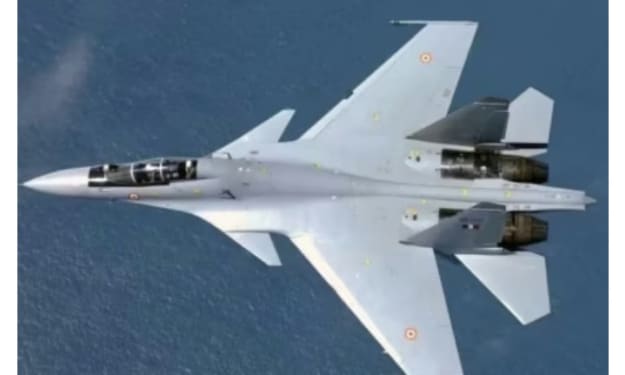
A sudden aviation incident in northeastern India has drawn national and international attention after reports emerged that an Indian fighter jet went missing during a routine mission over the state of Assam. The news, widely reported by Indian media outlets, has raised concerns about the safety of military operations, the well-being of the pilot involved, and the broader implications for India’s defense readiness.
By Jameel Jamalia day ago in The Swamp
The Piggy Project
I’ve had so many names in this life I lose track of which ones were ever really mine and which ones I wore because someone needed me to. Some were handed to me before I had words to refuse them, before I knew what they meant, before I knew I could say no. Most weren’t meant to hurt. That doesn’t mean they didn’t leave marks. Marks that told me who I belong to, who I am by way of who claims me, recognizes me in the good and bad, who walks beside me.
By Fatal Serendipity2 days ago in Confessions


Comments
There are no comments for this story
Be the first to respond and start the conversation.