
Members of Iran’s Elite Accused of Hypocrisy Over Children’s Lives in the West
Critics say Iran’s ruling elite preach anti-Western values at home while their own children thrive abroad, fueling public anger and demands for accountability.

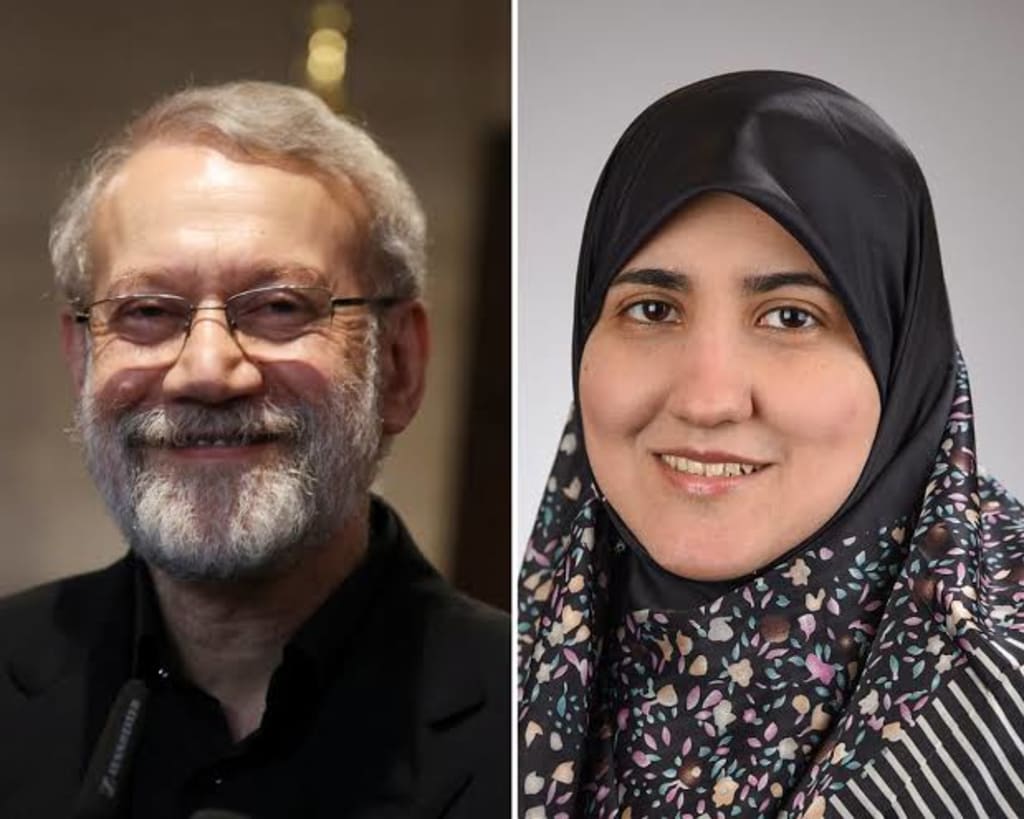
Top members of Iran’s political and clerical elite are facing sharp criticism from opposition activists and ordinary citizens for what critics describe as “brazen hypocrisy”: while preaching strict Islamic values, economic self-sacrifice, and resistance to Western influence, many senior officials’ children reportedly live comfortable, Western-based lives funded in part by state wealth.
At the heart of the debate are allegations that families of high-ranking regime figures have used their political influence and access to state resources to secure education, careers, and residences in countries such as the United States, United Kingdom, Canada, and Australia, fueling public anger among Iranians facing economic hardship and political repression at home.
Elite Education and Wealth Abroad
Among the most cited cases is that of Ali Larijani, Iran’s top national security adviser and a veteran cleric and former parliamentary speaker. His daughter, Fatemeh Ardeshir Larijani, has been living and working in the United States, where she served as an assistant professor at a major medical school until recently — a position she lost after an online petition called for her deportation.
Opposition websites also highlight relatives of other senior officials. These include the son of former foreign minister Mohammad Javad Zarif, who has been reported to have lived in a multi-million-dollar Manhattan home, and the daughter of a former energy minister who remains based in the U.S.
In the United Kingdom, nephews of Larijani are said to reside and work in Scotland and England, while other elite families — including relatives of former presidents and revolutionary commanders — reportedly hold roles in international finance and academia.
Critics have dubbed these children and grandchildren of the regime’s elite “aghazadeh,” a Persian term meaning “offspring of the powerful,” and argue that their lifestyles in Western cities sharply contradict the harsh narratives their parents advance back home.
Public Anger and Accusations of Hypocrisy
Many Iranians see this phenomenon as emblematic of wider double standards among the ruling class. While the state enforces strict dress codes, curbs on personal freedoms, and harsh punishments for perceived moral violations, elite families appear to enjoy personal liberties and economic opportunities that are denied to the general population.
“This is not just privilege,” said one Iranian writer based in Europe. “It’s hypocrisy — a ruling order that for decades preached austerity, resistance to the West, and moral discipline now sees its children prospering in the very societies they criticized.”
Social media campaigns and petitions calling for the deportation of elite children from Western countries have gained traction in recent weeks, though practical avenues for enforcement remain limited. Western governments have shown reluctance to target individuals solely because of family ties, with some officials suggesting that such figures might possess valuable intelligence connections.
Domestic Context: Hardship and Repression
The controversy over elite privileges unfolds against a backdrop of broad public frustration in Iran. Economic difficulties — including inflation, unemployment, and fuel price hikes — have strained families across the country. Meanwhile, government crackdowns on dissent, which have sometimes involved lethal force against protestors, have deepened public anger.
Human rights groups have documented numerous cases of youths and protesters killed during demonstrations in recent years, adding to the sense among many Iranians that ordinary citizens suffer while the powerful remain insulated.
Critics argue that when senior figures criticize Western society or advocate for strict social norms while their children enjoy freedom abroad, it erodes the legitimacy of the Islamic Republic’s moral and political message. For many Iranians, these contrasting realities underscore a broader disconnect between rhetoric and lived experience.
International and Diplomatic Dimensions
Western governments have generally refrained from punitive action against individual children of foreign officials on ideological grounds, emphasizing legal protections for residency and education. Some analysts argue that their presence abroad allows Western intelligence and academic communities access to insights about the Iranian elite — access that authoritarian regimes sometimes seek to exploit.
To opponents of the regime, however, this only adds another layer to what they view as entrenched privilege: children benefit from Western institutions while ordinary citizens face economic pressure and political reprisals at home.
A Flashpoint in Broader Discontent
The spotlight on elite hypocrisy may not by itself shake the foundations of Iran’s political system, but it encapsulates deepening fissures in Iranian society. As economic grievances grow and public disillusionment with governance rises, critics say these stark contrasts between the lifestyles of the powerful and the plight of ordinary people could well become a sustained rallying point for reformers and dissidents alike.
About the Creator
Fiaz Ahmed
I am Fiaz Ahmed. I am a passionate writer. I love covering trending topics and breaking news. With a sharp eye for what’s happening around the world, and crafts timely and engaging stories that keep readers informed and updated.
Keep reading
More stories from Fiaz Ahmed and writers in The Swamp and other communities.
Russia ‘Has Not Won’ as Ukraine War Enters Fifth Year, Zelenskyy Says
Ukrainian President Volodymyr Zelenskyy has declared that **Russia “has not won” as the war in Ukraine enters its fifth year, emphasizing Kyiv’s determination to continue fighting despite immense human cost and a grinding stalemate on the battlefield. In a nationally broadcast address on Tuesday, Zelenskyy reiterated that Russia’s invasion has failed to break Ukrainian resolve or achieve its strategic objectives, even as thousands more lives have been lost and substantial swathes of Ukrainian territory remain contaminated by ongoing combat and occupation. “The enemy has not won and will never gain a victory on our land,” Zelenskyy said, reflecting a theme of resilience that has characterized Ukrainian leadership since Russia’s February 24, 2022 invasion. “This is not only a military struggle but a battle for our statehood, our identity, and the future of Europe.” Fifth Year of War The conflict entered its fifth year amid what military analysts describe as a protracted war of attrition. Front lines in the eastern and southern regions have largely stabilized, though occasional localized offensives and artillery duels continue. Ukrainian forces have sought limited counterattacks to disrupt supply lines and regain territory, but strategic breakthroughs have been rare. Russia, for its part, continues to reinforce positions and conduct missile and drone strikes across Ukraine, frequently targeting energy infrastructure and civilian areas, particularly during winter months. Moscow’s official narrative frames the campaign as a defense against Western influence and a struggle to protect Russian-speaking populations in Ukraine’s east. Zelenskyy’s address acknowledged the toll of nearly five years of conflict: disrupted communities, destroyed infrastructure, and a generation of children who have grown up amid air-raid sirens. Even so, he emphasized that Ukraine’s international alliances and domestic resistance have countered Russia’s broader ambitions. International Support and Political Divisions Ukraine’s survival has depended heavily on ongoing support from Western partners, particularly the United States and European Union members, which have supplied weapons, funds, and diplomatic backing. However, this support has periodically encountered political headwinds, particularly as debates over budget priorities and election cycles influence policy in capitals such as Washington and Berlin. “We are grateful for the support of our partners,” Zelenskyy said, thanking nations that have provided artillery systems, anti-aircraft missiles, and training for Ukrainian troops. “But we also understand that this war will not end until we regain every inch of our sovereign territory.” Political divisions abroad have occasionally slowed Western aid and complicated unified responses. Hungarian and Slovak leaders, for example, have at times expressed reservations about certain aid packages, arguing for greater oversight or alternative diplomatic approaches. Despite these challenges, Zelenskyy stressed that Ukraine remains committed to pursuing every possible avenue of international coordination — from military alliances to economic diplomacy — while maintaining its own agency on the battlefield. Human Cost and Civilian Hardship As the war enters its fifth year, the human cost continues to mount. United Nations agencies and humanitarian organizations report tens of thousands of civilian casualties, while millions have been displaced either internally or as refugees abroad. Rebuilding homes, schools, and hospitals in frontline regions remains a daunting task under conditions of active danger. “We remember every name, and we fight for every future,” Zelenskyy said, addressing the families of fallen soldiers and victims of attacks. His message was one of shared grief and collective purpose, a reminder that the war’s impact extends far beyond strategic lines on a map. Future Prospects Military analysts believe that the coming year will be critical in determining whether the conflict remains frozen, escalates further, or transitions into a new phase. Ukraine’s ability to secure advanced air-defense weapons, sustained ammunition supplies, and cohesive diplomatic backing may influence both the length and outcome of the war. Russia’s long-term goals remain opaque, with some analysts arguing that Moscow is seeking to consolidate territorial control rather than achieve complete military victory. Others suggest that internal pressures within Russia, including economic sanctions and political dissent, could shape Moscow’s willingness to negotiate. Yet for Ukrainians in both government and society, the message remains resolute: Russia has not won, and the struggle for sovereignty, security, and dignity continues unabated.
By Fiaz Ahmed a day ago in The Swamp
Why Black History Matters in America?
The United States of America is celebrating their 250th anniversary in 2026. I'm proud to be an American and as someone who was born here, I wouldn't imagine myself living anywhere else. This is a country where opportunities are possible. Where anyone can be successful in anything they desire to do. Equality, community, and togetherness are the backbones of what America is and should be about. However, we have an administration who wants to erase and disregard those who have made positive, meaningful impacts in our country, specifically Black figures, such as Martin Luther King, Jr., Rosa Parks, and Maya Angelou. President Trump and his administration have been constantly complaining and fighting against what they call the "Woke agenda". They use this excuse as a distraction from other issues they refuse to address, such as the high cost of living, climate change, and inflation. That equality is dividing America, when in reality, it's bringing us together. Being woke is not tied to a specific political party. No matter where you stand on the political spectrum, you can still care about other people and their plights. Compassion and empathy for others isn't tied to a political party, either. We were taught as children to treat others the way we want to be treated and not judge others because they're different from us. Caring about others isn't a personal attack on your beliefs. It doesn't make you any less of a person. People who are easily offended over African American figures, past or present, or anything related to it, are grasping at straws. Current and future generations need to know who people like Harriet Tubman and Shirley Chisholm were, especially in the classroom. Black History is part of American History. It should be recognized, not hidden or forgotten. Besides, you can't shield children from everything, just because your feelings are easily hurt.
By Mark Wesley Pritchard 24 days ago in The Swamp
It's 2026. Songs Turning 10 This Year
In 2016, we saw the rise of short form videos and what would lead to the birth of TikTok. We cannot forget the Snapchat filters no matter how cringe worthy some of them might have been. It was also the year in which the hit series Stranger Things debuted.
By Jasmine Aguilar4 days ago in Beat


Comments
There are no comments for this story
Be the first to respond and start the conversation.