
Representative Tony Gonzales Will Not Seek Re-election
Texas congressman announces decision to step away from Congress, creating uncertainty in a key border district.
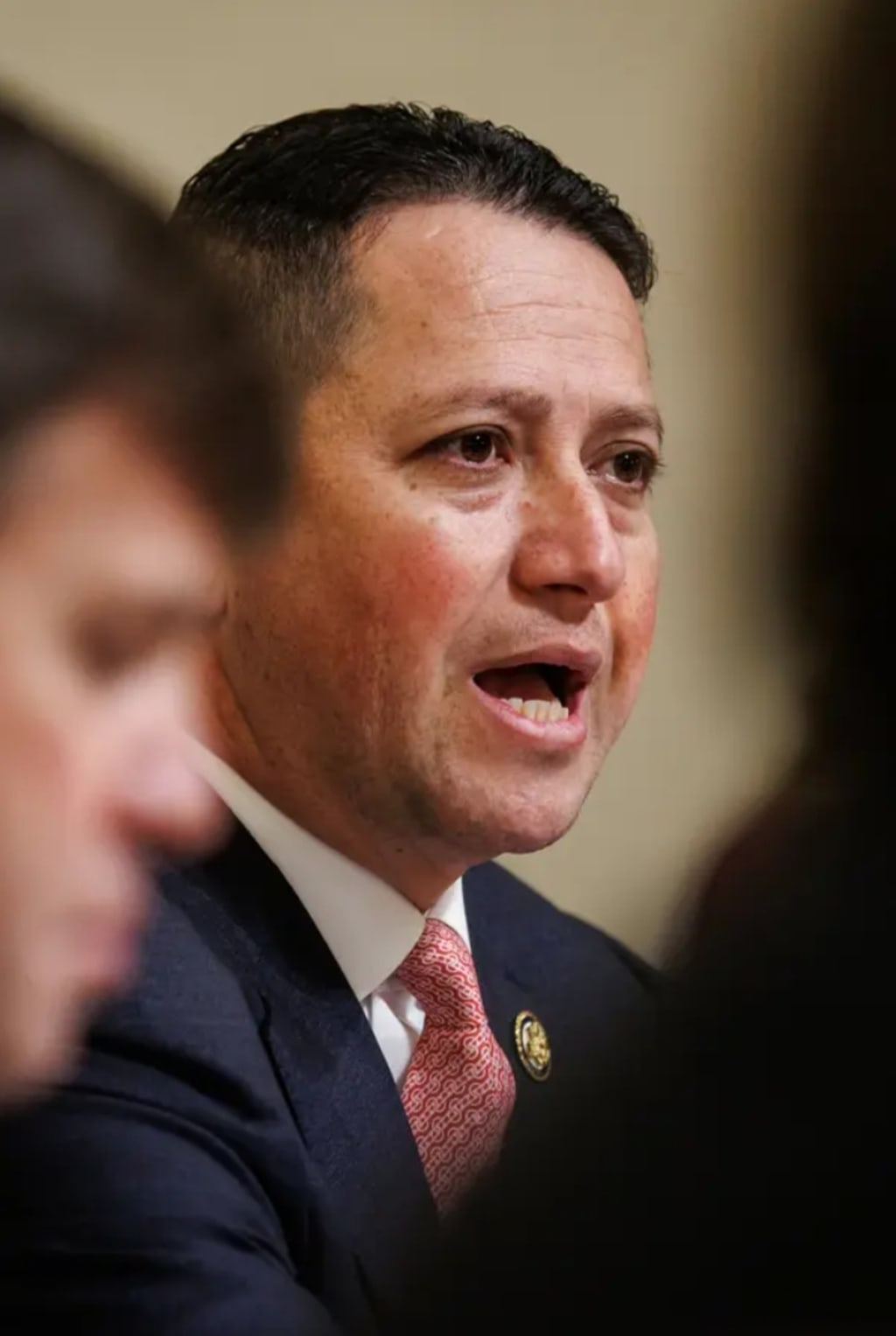
In a move that surprised many political observers, Representative Tony Gonzales has announced that he will not seek re-election, bringing an end to his time in Congress after several years representing one of the most geographically expansive and politically significant districts in the United States.
Gonzales, who represents Texas's 23rd congressional district, made the announcement amid growing political pressures and an increasingly challenging national political environment. His decision opens the door to a competitive race for the seat and raises questions about the future leadership of a district that stretches across much of the Texas-Mexico border.
The announcement marks a pivotal moment not only for Gonzales personally but also for the broader political landscape in Texas, where the district has long been considered a crucial battleground.
A Career Built on Border Issues
Since taking office in 2021, Gonzales has built his political identity around issues related to border security, immigration policy, and national defense. A former U.S. Navy cryptologist, he often emphasized his military background as shaping his views on security and international affairs.
Representing a district that spans more than 800 miles along the southern border, Gonzales frequently spoke about the unique challenges faced by communities dealing with cross-border trade, migration flows, and security concerns.
In Congress, he served on key committees that dealt with homeland security and defense matters. His work often involved advocating for increased resources for border enforcement, as well as supporting programs aimed at improving infrastructure and economic development in border communities.
However, representing such a diverse and politically complex district also meant navigating a delicate balance between different constituencies, including rural voters, urban communities, law enforcement officials, and immigrant families.
Political Challenges Along the Way
Despite his legislative efforts, Gonzales faced several political challenges during his time in office. His district, while historically competitive, has experienced shifting political dynamics in recent years.
At times, Gonzales found himself caught between competing pressures from both sides of the political spectrum. Some critics argued that his positions were not conservative enough, while others felt his stance on immigration policy was too hardline.
These tensions occasionally led to high-profile disagreements within his own party. In certain votes, Gonzales took positions that diverged from party leadership, which drew criticism from more ideological factions of the Republican base.
Still, supporters praised him for attempting to represent the practical realities of his district rather than strictly adhering to national party politics.
The Announcement That Changed the Race
When Gonzales publicly confirmed he would not seek another term, political analysts quickly began speculating about the reasons behind the decision.
While the congressman did not cite a single defining factor, he suggested that the decision was personal and rooted in a desire to focus on family and life outside Washington.
Public service at the national level often involves intense travel schedules, long legislative sessions, and constant public scrutiny. For representatives of large districts like Texas’s 23rd, the demands can be particularly challenging, requiring frequent trips across vast geographic areas to stay connected with constituents.
In his statement, Gonzales emphasized his gratitude for the opportunity to serve and highlighted the accomplishments achieved during his time in office.
A Key District Up for Grabs
The decision not to run again immediately turned attention to the upcoming race to replace Gonzales.
Texas's 23rd congressional district is widely viewed as one of the most politically competitive districts in the country. Stretching from San Antonio westward to El Paso and covering dozens of counties along the border, the district reflects a complex mix of urban, suburban, and rural communities.
Because of its demographic diversity and shifting voter preferences, the district has changed hands multiple times between Democrats and Republicans over the past two decades.
Political strategists from both major parties are now expected to devote significant resources to the race, seeing it as an opportunity to gain or maintain influence in the House of Representatives.
Potential candidates are already being discussed, including state legislators, local officials, and community leaders who may seek to step into the national spotlight.
Broader Political Implications
Gonzales’s decision comes at a time when national politics in the United States are already experiencing significant volatility.
With major policy debates surrounding immigration, economic policy, and foreign affairs dominating the national agenda, control of competitive districts could play a decisive role in determining the balance of power in Congress.
If the seat becomes highly contested, it may attract increased attention from national political organizations, advocacy groups, and fundraising networks.
Political campaigns in competitive districts often become testing grounds for broader messaging strategies, particularly on issues like border security, economic development, and public safety.
Given the district’s proximity to the international border, immigration policy will almost certainly remain a central topic in the upcoming campaign.
Reactions From Across the Political Spectrum
News of Gonzales’s decision prompted a wide range of reactions from colleagues and political observers.
Some lawmakers praised his willingness to work across party lines on certain issues and highlighted his efforts to advocate for border communities.
Others acknowledged the difficulty of representing a district with such unique geographic and political characteristics.
Political analysts noted that the announcement underscores a broader trend in which members of Congress—facing increasing polarization and demanding campaign cycles—choose to step away from national office.
Serving in Congress today involves navigating intense media attention, constant fundraising requirements, and an increasingly divided political environment.
Looking Ahead
As Gonzales prepares to leave Congress, the focus will gradually shift to the candidates hoping to succeed him.
The race to represent Texas's 23rd congressional district is likely to attract a crowded field and intense competition, reflecting the district’s strategic importance.
For voters across the region, the upcoming election will offer an opportunity to choose a new representative who will shape policy decisions affecting border security, economic development, healthcare, and education.
Meanwhile, Gonzales’s departure will mark the end of a chapter in the district’s political history—one defined by the challenges and complexities of representing a vast border region in an increasingly polarized national landscape.
As the political campaign season begins to take shape, one thing is certain: the race to replace Tony Gonzales will be closely watched not only in Texas but across the country.
About the Creator
A Gathering of Evil Bosses
“I’m the queen of chin jutting while I smooth my hair, attacking, insulting, and deflecting to protect my appointer.” “Oh, please, Blondi, my hair is curled, highlighted, and longer than yours. I feature television commercials telling immigrants that we will give them a free plane ride home, and if they voluntarily turn themselves in, they will be allowed to legally apply for re-entry. It runs everywhere, and I look good in it! You can’t compete because of your blond hair. Mine is nicer, and my lips are prettier than yours.”
By Andrea Corwin 17 days ago in The Swamp
Kuwait stock exchange halts trading until further notice amid US, Israel strikes in Iran
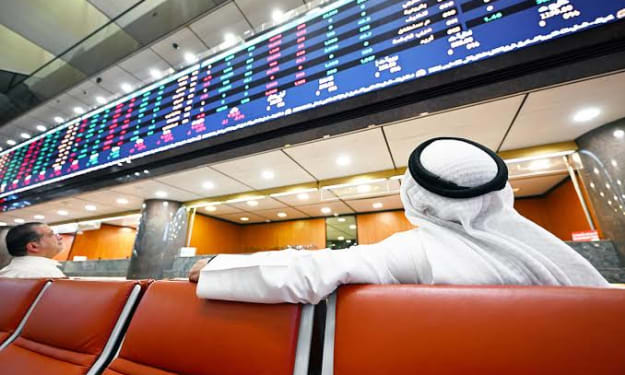
The Boursa Kuwait announced on March 1, 2026 that it has suspended all trading activities until further notice as Kuwait grapples with escalating geopolitical tensions triggered by coordinated strikes on Iran involving United States and Israel. The rare move underscores the growing economic fallout from a conflict that has roiled financial markets and raised fears of broader regional instability. In an official statement, Boursa Kuwait said the decision to halt trading was made by its Board of Commissioners in coordination with the Capital Markets Authority. Citing “exceptional circumstances,” the exchange said the suspension aims to protect investors’ interests, preserve market integrity, and uphold orderly functioning amidst uncertainty surrounding security conditions and regional economic disruption. Officials emphasized that all technical systems remain fully operational and that investors’ funds and financial positions are secure in accordance with regulatory frameworks. The suspension comes as financial hubs across the Gulf experience heightened volatility. Regional stock markets tumbled in early trading on Sunday, with indices in Saudi Arabia, Oman, and Egypt all posting significant declines in response to the escalating crisis. Analysts believe markets are pricing in the elevated geopolitical risk premium as investors seek safer assets amid fears of prolonged disruption to trade, shipping routes and economic activity. The immediate catalyst for heightened tension was a series of strikes attributed to the United States and Israel targeting Iranian positions, which Iranian authorities said resulted in the death of Supreme Leader Ayatollah Ali Khamenei. Tehran responded with retaliatory attacks on U.S. targets in Gulf cities, according to international news agencies, triggering airspace closures, regional alerts, and even disruptions to major airports and civilian infrastructure. Witnesses also reported explosions in cities such as Dubai and Doha, further underscoring the volatility of the situation. The suspension of trading in Kuwait marks a departure from normal market operations and reflects the acute uncertainty faced by financial regulators. Large-scale trading halts are unusual except in circumstances such as war, natural disasters or extreme economic distress. In this case, authorities have clearly prioritized financial stability and investor protection over normal market activity, signaling that developments in the geopolitical arena have the potential to directly affect economic infrastructure. Investors have reacted swiftly to the news. With markets closed in Kuwait, traders and portfolio managers are left awaiting guidance on when normal operations might resume. The suspension also raises concerns about liquidity, price discovery and the broader impact on regional capital flows. While global markets are monitored continuously, localized trading halts can lead to delays in investment decisions and heightened anxiety among market participants. Economists argue that while temporary closures may mitigate panic selling, prolonged disruptions could erode investor confidence, particularly among foreign portfolios. The Gulf region plays a crucial role in global energy exports, and any risk that affects shipping lanes, such as the Strait of Hormuz, could have significant repercussions on global oil markets and inflationary pressures worldwide. Higher oil prices often translate into increased costs for consumers and can influence exchange rates, bond yields, and commodities pricing in international markets. Meanwhile, governments and financial authorities in the region continue to monitor the situation closely. Boursa Kuwait officials have pledged to provide updates to stakeholders through official channels and confirmed that emergency and continuity plans are in place to manage market infrastructure during the suspension. Market participants have been urged to stay informed through the exchange’s verified communications to avoid misinformation and misinformation-driven panic. For now, the suspension of trading in Kuwait stands as a stark reminder of how geopolitical conflict can spill over into economic and financial systems. While Kuwait works to ensure the safety and stability of its markets, investors, regulators and governments across the region watch closely, hoping for de-escalation that could allow markets to reopen and normal trading to resume. The situation remains fluid, with market reopening tied closely to broader developments on the geopolitical front.
By Fiaz Ahmed 6 days ago in The Swamp
Review of 'Man on the Run'
My wife and I saw Man on the Run, a nearly 2-hour documentary on Amazon Prime, about Wings, Paul McCartney's group that flew around the world from shortly after The Beatles broke up in early 1970 to shortly after John Lennon was murdered at the end of 1980, making a Beatles reunion forever impossible.
By Paul Levinson7 days ago in Beat


Comments
There are no comments for this story
Be the first to respond and start the conversation.