
Russia Blames Ukraine for First Attack on LNG Shadow Fleet
Moscow accuses Ukraine of launching the first strike on its covert LNG shipping network, raising fears of a new phase in the war that could threaten global energy supply and maritime security.

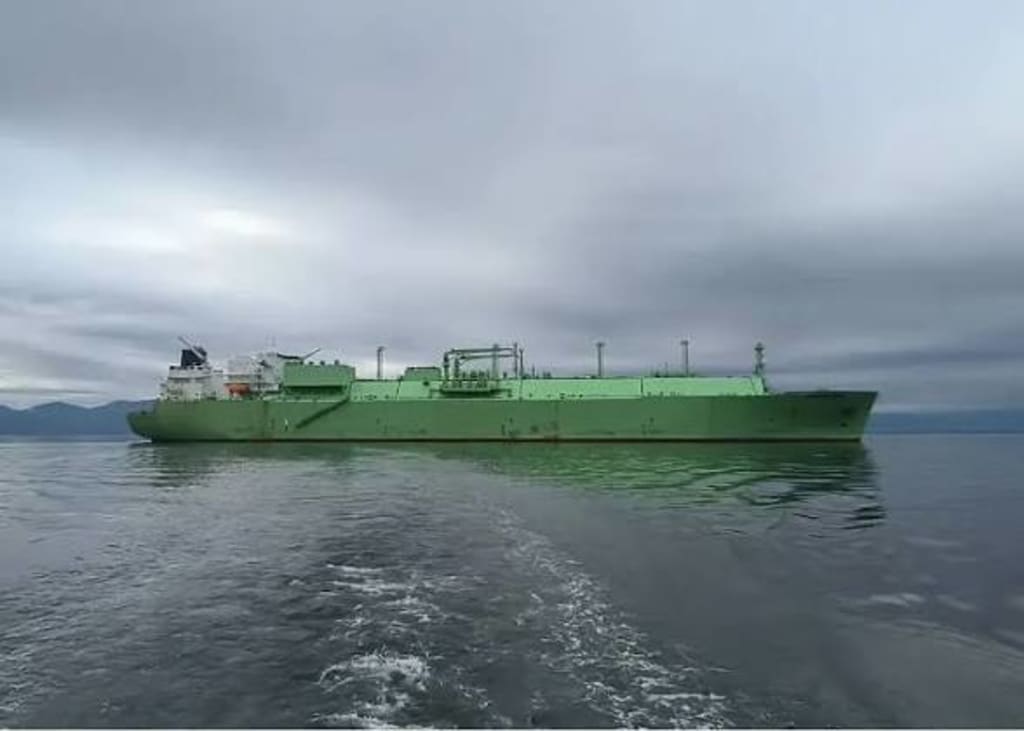
Russia has accused Ukraine of carrying out the first-ever attack on what it describes as its “LNG shadow fleet,” a network of vessels used to transport liquefied natural gas under opaque ownership and insurance arrangements designed to bypass Western sanctions. The alleged strike marks a new phase in the maritime dimension of the war, extending hostilities into the sensitive and highly strategic global energy supply chain.
According to officials in Russia, one LNG tanker operating in international waters suffered damage after what Moscow claims was a Ukrainian drone or missile attack. The vessel was reportedly traveling from a Russian export terminal toward Asian markets when it was targeted. While no casualties were officially confirmed, Russian authorities said the ship sustained structural damage and was forced to divert to a nearby port for emergency inspection and repairs.
Ukraine has not formally claimed responsibility, but security analysts note that Kyiv has increasingly focused on disrupting Russian energy exports, which provide a crucial source of revenue for Moscow’s war effort. Over the past year, Ukraine has conducted a series of long-range drone strikes on Russian oil refineries, fuel depots, and port infrastructure. Targeting LNG shipping represents a significant escalation in both scope and economic impact.
What Is the “LNG Shadow Fleet”?
The term “shadow fleet” refers to vessels operating with limited transparency, often under flags of convenience and with unclear ownership structures. These ships frequently rely on non-Western insurers and avoid major ports to reduce exposure to sanctions enforcement. Russia has increasingly depended on such fleets to maintain exports of both crude oil and liquefied natural gas despite international restrictions imposed after the invasion of Ukraine.
Energy experts say that while oil shipments have faced repeated disruptions, LNG exports had largely remained outside direct military targeting. This alleged incident could change that calculation. “LNG tankers are high-value assets,” said one European energy analyst. “Any perception that they are vulnerable to attack will immediately affect shipping insurance costs and long-term contracts.”
Strategic and Economic Implications
The attack comes at a time when global energy markets are already under pressure from geopolitical instability in multiple regions. LNG plays a vital role in supplying Europe and Asia, particularly as many countries seek alternatives to pipeline gas. If Russia’s LNG exports are disrupted, prices could rise sharply, affecting consumers far beyond the battlefield.
Moscow accused Ukraine of attempting to “internationalize” the conflict by striking commercial vessels rather than purely military targets. Russian officials warned that such actions could provoke retaliation and increase the risk of broader confrontation in maritime corridors used by civilian shipping.
In a statement, Russia’s defense ministry said the attack represented “a dangerous precedent” and accused Ukraine of acting with indirect support from Western intelligence services. While no evidence was publicly presented, the claim reflects growing Russian concerns that Western-supplied technology is enabling Ukraine to project force deep into Russian-controlled maritime zones.
A Shift in Naval Warfare
If confirmed, the strike would highlight Ukraine’s evolving naval strategy. Despite having a much smaller navy than Russia, Ukraine has relied on unmanned systems and long-range weapons to target ships and ports in the Black Sea. This approach has already forced Russia to relocate parts of its fleet and increase defensive measures around key terminals.
Attacking LNG tankers would signal a move toward targeting not just military assets but also economic lifelines. Such a shift carries risks, including the possibility of accidental damage to neutral vessels or environmental disasters if LNG cargoes are compromised.
International Reaction
Western governments have so far urged caution, calling for restraint and protection of civilian shipping routes. Several shipping insurers are reportedly reassessing coverage for vessels linked to Russian energy exports. Industry sources say premiums could rise significantly if further attacks occur, adding costs to an already strained energy market.
Diplomatic observers warn that any confirmed strike on commercial LNG shipping could complicate peace efforts and increase pressure on global trade. “Once commercial energy infrastructure becomes a battlefield, the consequences are no longer regional,” said one former diplomat. “They are global.”
Looking Ahead
Whether this incident proves to be an isolated event or the beginning of a new campaign remains unclear. What is certain is that Russia’s accusation underscores how deeply intertwined the war has become with international energy security. The targeting of an LNG tanker—symbol of global trade and economic interdependence—signals a dangerous expansion of the conflict into domains once considered off-limits.
As investigations continue and responsibility remains disputed, the alleged attack on Russia’s LNG shadow fleet stands as a stark reminder that the war’s impact is no longer confined to land and air. It is now reaching into the arteries of global energy supply, raising the stakes for all parties involved.
About the Creator
Fiaz Ahmed
I am Fiaz Ahmed. I am a passionate writer. I love covering trending topics and breaking news. With a sharp eye for what’s happening around the world, and crafts timely and engaging stories that keep readers informed and updated.
Keep reading
More stories from Fiaz Ahmed and writers in The Swamp and other communities.
US submarine sinks Iranian warship by torpedo in a first since World War II
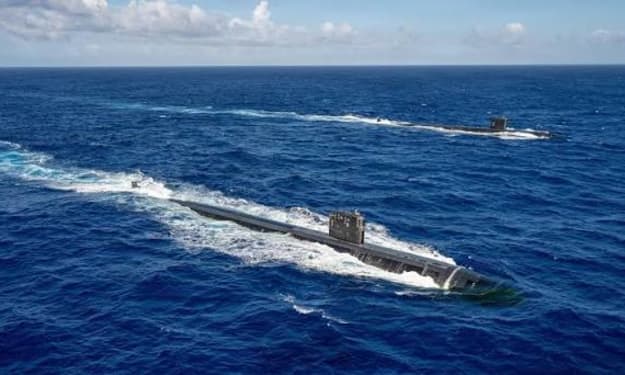
In a dramatic escalation of hostilities in the Persian Gulf, a United States Navy submarine has sunk an Iranian warship using a torpedo — marking the first confirmed instance of a submarine-to-surface ship kill by torpedo in active combat since World War II. The incident underscores how rapidly the current regional crisis has intensified and highlights the growing role of undersea warfare in modern conflict. According to U.S. defense officials, the engagement occurred after Iranian naval forces attempted to challenge coalition operations near key shipping lanes in the Gulf. Intelligence reports indicated that the Iranian vessel was maneuvering aggressively and preparing to target allied ships operating in the area. A U.S. attack submarine, already deployed as part of heightened maritime security operations, was authorized to engage under established rules of self-defense. The submarine launched a single heavyweight torpedo that struck the Iranian warship below the waterline. The impact caused catastrophic damage, and the vessel sank within minutes. Search and rescue operations were reportedly limited due to the ongoing security situation, and the fate of the Iranian crew remains unclear. Iranian authorities later acknowledged the loss of a naval ship but did not immediately provide casualty figures. The U.S. Navy confirmed the strike, calling it a “defensive action taken to neutralize an imminent threat.” A Pentagon spokesperson said the submarine crew acted professionally and in accordance with international maritime law. “This operation demonstrates the effectiveness and readiness of U.S. undersea forces in protecting freedom of navigation and allied interests,” the statement said. A Historic First in Modern Warfare While submarines have played key roles in surveillance and deterrence in recent decades, the use of a torpedo to sink an enemy warship in live combat has not been seen since the global naval battles of the Second World War. Since then, most naval engagements have relied on missiles, aircraft, or drones. This latest incident marks a return to classic submarine warfare tactics, albeit with vastly more advanced technology. Modern U.S. submarines operate with near-silent propulsion systems, sophisticated sonar, and precision-guided torpedoes capable of striking targets at long range. Defense analysts say the engagement illustrates how submarines remain one of the most lethal and survivable platforms in naval warfare. “Surface ships can be tracked and targeted by drones and missiles, but submarines operate in a hidden domain,” one naval expert explained. “That makes them uniquely powerful in a high-tension environment like the Gulf.” Regional and Global Implications The sinking has already had ripple effects across the Middle East. Iran condemned the action as an act of aggression and vowed retaliation, while U.S. allies described it as a necessary step to prevent attacks on commercial and military vessels. Shipping companies raised concerns about safety in the region, and insurance premiums for vessels transiting the Gulf rose sharply following the news. Bahrain, which hosts the headquarters of the U.S. Fifth Fleet, announced enhanced port security and increased patrols. Meanwhile, several regional states urged restraint, warning that further escalation could destabilize vital energy routes that supply oil and gas to global markets. The confrontation also carries symbolic weight. Iran’s navy has long relied on asymmetric tactics such as fast attack boats, mines, and drones to counter the superior firepower of the U.S. Navy. The loss of a warship to a submarine strike exposes vulnerabilities in Tehran’s maritime defenses and may force a reassessment of its naval posture. Political and Strategic Calculations In Washington, officials stressed that the United States does not seek wider war but will respond decisively to threats against its forces. The White House confirmed that President Joe Biden had been briefed on the incident shortly after it occurred. Lawmakers from both major parties praised the professionalism of the submarine crew while calling for diplomatic efforts to prevent further clashes. For Iran, the incident represents a serious blow to prestige as well as military capability. State media framed the sinking as evidence of foreign hostility, but independent analysts note that losing a surface combatant to a torpedo strike is a rare and costly setback. A New Phase of Naval Conflict The torpedoing of an Iranian warship marks a turning point in the current crisis. It shows that conflict at sea has entered a more dangerous phase, where direct engagements between major military platforms are no longer theoretical. As tensions remain high, naval forces on both sides are now operating in closer proximity, increasing the risk of miscalculation. Whether this incident becomes a single, contained episode or the opening of a wider maritime confrontation will depend on decisions made in the coming days. What is clear is that submarine warfare — once thought to belong to history books — has returned to the center of global security concerns.
By Fiaz Ahmed about 8 hours ago in The Swamp
A Gathering of Evil Bosses
“I’m the queen of chin jutting while I smooth my hair, attacking, insulting, and deflecting to protect my appointer.” “Oh, please, Blondi, my hair is curled, highlighted, and longer than yours. I feature television commercials telling immigrants that we will give them a free plane ride home, and if they voluntarily turn themselves in, they will be allowed to legally apply for re-entry. It runs everywhere, and I look good in it! You can’t compete because of your blond hair. Mine is nicer, and my lips are prettier than yours.”
By Andrea Corwin 14 days ago in The Swamp



Comments
There are no comments for this story
Be the first to respond and start the conversation.