education
A place to hash out all opinions on education policy, charter schools, statewide testing, and what the political world is and isn't doing about it.
MSF Statement on Sharing Staff Information and Humanitarian Operations in Palestine. AI-Generated.
In a conflict zone where survival depends heavily on humanitarian aid, the safety and independence of aid workers remain critical. Médecins Sans Frontières (MSF), widely known as Doctors Without Borders, recently released a strong statement explaining its refusal to share personal information about its staff working in Gaza and the occupied West Bank. This decision comes amid growing pressure from Israeli authorities to provide detailed employee data as part of new registration requirements.
By Sajida Sikandarabout a month ago in The Swamp
The 2026 LAUSD Election Is Shockingly Uncontested — and That Should Worry Parents
“The foundation of every state is the education of its youth.” — Diogenes The 2026 Los Angeles Unified School District (LAUSD) board elections are shaping up to be one of the most consequential — and least competitive — school board races in recent memory. With labor unrest rising, enrollment falling, and school closures looming, voters might expect a crowded field of challengers. Instead, they are getting the opposite: quiet races, thin opposition, and decisions that could reshape public education in Los Angeles for years to come.
By Carl J. Petersenabout a month ago in The Swamp
Becoming The Villain
As I said before the hero’s journey either leads to being the hero or becoming the villain. And remember some peoples hero are other peoples villain and vice versa. Yet we understand when a character has become the villain, is the villain or might be the villain.
By WrittenWritRalfabout a month ago in The Swamp
PLE Results: Girls Outsmart Boys in English Subject. AI-Generated.
A Surprising Trend in PLE Results The recent Primary Leaving Examination (PLE) results have revealed an interesting trend: girls have outperformed boys in the English subject. While both genders showed commendable performance overall, the data indicates that girls not only scored higher on average but also dominated the top achievers list. This trend raises questions about the factors contributing to girls’ success in English, the implications for teaching strategies, and what it means for future academic and career trajectories. Understanding the PLE and Its Importance The Primary Leaving Examination is a national assessment taken by students at the end of primary school. It is crucial because: Determines eligibility for secondary school Assesses students’ mastery of core subjects such as English, Mathematics, Science, and Social Studies Provides insights into educational performance trends across the country English, in particular, is a key subject because proficiency in it often correlates with future academic success and access to higher education. Girls Lead in English: What the Numbers Say According to official statistics: A larger proportion of girls scored in the Distinction and Credit categories compared to boys Girls accounted for the majority of top-scoring students in English across most districts The average score for girls in English was noticeably higher than that of boys This demonstrates a consistent pattern of female academic excellence in language skills. Why Are Girls Excelling in English? Several factors may explain this trend: 1. Reading and Comprehension Habits Studies suggest that girls are more likely to read extensively, which strengthens vocabulary, comprehension, and writing skills. In contrast, boys often engage less in reading outside the classroom. 2. Classroom Behavior and Focus Teachers report that girls tend to be more attentive, disciplined, and consistent in completing assignments, which positively impacts their English proficiency. 3. Motivation and Communication Skills English requires clear communication, both written and spoken. Girls often show higher motivation to communicate effectively, which translates into better performance in exams. 4. Support from Home and Community In many regions, parents encourage girls to excel academically, especially in language-related subjects, recognizing the long-term benefits for education and career opportunities. Implications for Boys’ Learning While girls are leading in English, this trend also highlights a need to support boys in language learning. Educators suggest: Encouraging boys to read more widely Using interactive and practical teaching methods to engage male students Mentoring programs to boost confidence in writing and communication Addressing these gaps ensures that boys can perform at their potential without being left behind. Teacher Perspectives Teachers nationwide have shared insights: “Girls tend to take their homework seriously and practice more at home,” said one English teacher. “Boys often excel in Mathematics and Science but struggle with reading and writing tasks,” noted another. Many educators suggest introducing innovative classroom strategies to make English more appealing to boys. Student Perspectives Students themselves have reflected on the trend: Female students credit regular reading, essay practice, and speaking exercises. Male students acknowledge the need to improve vocabulary and writing skills, with some stating they plan to read more books and newspapers. These perspectives provide a window into how study habits affect performance in English. Impact on Secondary Education Choices Excelling in English opens doors for students to: Join elite secondary schools with competitive entry requirements Pursue subjects that rely heavily on English proficiency, such as literature, journalism, law, and international studies Build a foundation for career advancement, as English remains a critical language in professional settings Therefore, girls’ success in English could have long-term benefits for their academic and career prospects. Regional Patterns and Variations The trend of girls outperforming boys is not uniform across all districts. Some regions showed smaller gaps, while others had significant differences. Factors contributing to these variations include: Quality of schools and teachers Access to learning resources such as libraries and English materials Community and parental support Understanding these patterns can help policymakers target interventions to improve English proficiency for all students. Government and Policy Response The Ministry of Education has noted this trend and plans to: Develop programs to support boys in language learning Promote reading culture among primary school students Provide training for teachers on innovative English teaching techniques These steps aim to ensure that all children, regardless of gender, have equal opportunities to excel in English. Conclusion: A Positive Shift in Education The PLE results underscore a positive development in girls’ education, highlighting their dedication and capability in mastering English. At the same time, the trend provides an opportunity to address gaps in boys’ learning, ensuring balanced educational outcomes. As schools, teachers, and communities respond to these findings, the future of English education looks promising, with potential for higher literacy, improved communication skills, and more equitable academic success.
By Zahid Hussainabout a month ago in The Swamp
Learning Abuse is Okay. Content Warning.
My coparent and I agreed on when our children would call me. A schedule because he said that I was interfering with his parenting time. Our children have long called me twice a day if I wasn't physically available to them. I understand how much my ex hates it, but hey, I hate things too - it is called putting our children first.
By The Schizophrenic Mom2 months ago in The Swamp
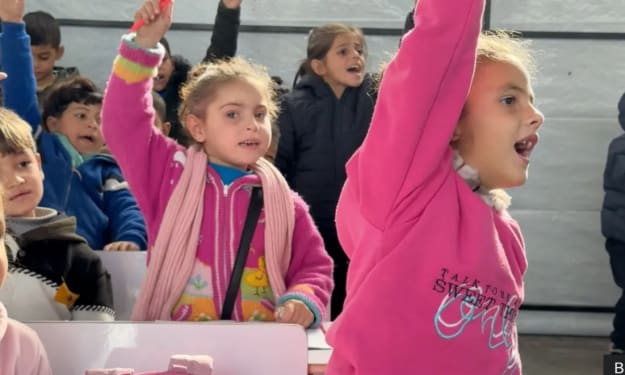
Children in Gaza Return to School After Years Without Formal Education. AI-Generated.
For countless children in Gaza, the concept of going to school has long been an uncertain dream rather than a daily reality. Years of political unrest, economic hardship, and intermittent conflict have disrupted formal education, leaving a generation of young learners struggling to access the classrooms they deserve. Yet, amid the challenges, there is a renewed sense of hope: children in Gaza are returning to school, eager to learn, connect, and rebuild a sense of normalcy in their lives. The situation in Gaza has been dire for decades. Recurrent clashes, restricted movement, and limited access to essential services have left schools either damaged or overcrowded. According to reports from humanitarian organizations, thousands of children were forced to miss months, sometimes years, of formal education, often relying on informal or makeshift learning arrangements. For many, education became a luxury rather than a right. “The absence of school in the lives of these children is not just a gap in learning; it’s a gap in their development, their social growth, and their sense of security,” explains Laila Ahmed, an education coordinator with a local non-governmental organization in Gaza. “Returning to school is not simply about academics. It’s about restoring hope.” For children who have spent formative years in conflict zones, returning to classrooms carries both excitement and challenges. Many students face emotional trauma from years of instability, and some struggle to catch up with curriculum requirements after prolonged absences. Teachers, too, face the daunting task of addressing significant educational gaps while managing crowded classrooms with limited resources. Despite these obstacles, the determination of students and educators is evident. Schools in Gaza have reopened with new safety protocols and programs designed to support children who missed years of learning. Psychosocial support is being integrated into classrooms to help students cope with past traumas, while accelerated learning programs aim to bring students up to speed academically. Fatima, a 12-year-old student from Gaza City, shares her experience: “I haven’t been to school in almost three years because of the fighting. Coming back now, I feel nervous, but also happy. I want to learn, to be like other kids who can study every day.” Stories like hers underscore the resilience of Gaza’s children and the critical role of education in their recovery. International organizations and local authorities have been collaborating to make this return to school possible. The United Nations Relief and Works Agency (UNRWA), in partnership with local education ministries, has provided funding for school repairs, learning materials, and teacher training programs. These efforts are designed not only to restore physical access to schools but also to ensure that children receive quality education despite the challenges. “The world often hears about the conflict in Gaza in terms of politics and humanitarian crises, but it’s important to focus on the children,” says Ahmed. “Education is the pathway to a future where they can dream, create, and contribute to their community.” However, the road ahead remains fragile. Schools continue to face interruptions due to sporadic violence, electricity shortages, and limited infrastructure. The ongoing blockade and economic hardships exacerbate these difficulties, making it essential for international support and local commitment to remain strong. Without sustained investment, the progress achieved could easily be reversed, leaving children once again deprived of their right to education. Parents, too, play a vital role in encouraging their children to return to classrooms. Many families who have been hesitant due to safety concerns are now finding reassurance in community support networks and improved school conditions. “Sending my children back to school was a difficult decision,” admits Hani, a father of three. “But I see how much they need it, not just for learning, but for their happiness and sense of normal life.” The return to school is also symbolic for Gaza as a society. It represents resilience in the face of adversity and a commitment to rebuilding a generation that has endured the brunt of conflict. Educators hope that every day in the classroom will be an opportunity to cultivate curiosity, critical thinking, and creativity—tools that can empower children to imagine a future beyond the immediate struggles of their environment. Community involvement remains crucial. Volunteer programs, parent-teacher associations, and local youth initiatives are working hand-in-hand to support schools and students. Initiatives such as community tutoring sessions, extracurricular activities, and psychosocial workshops are helping children reintegrate into a structured learning environment, fostering a sense of belonging and security. Ultimately, the story of Gaza’s children returning to school is a story of hope, resilience, and determination. It is a reminder that education is not merely a service; it is a lifeline that nurtures growth, restores dignity, and builds the foundation for peace and stability. While challenges persist, the commitment of students, families, educators, and international partners signals that despite years of disruption, learning in Gaza can continue—and thrive. As Fatima reflects on her first days back in the classroom, her optimism shines through: “I missed school so much. Now, I want to learn everything I can, so one day I can help my community and make life better for everyone here.” In her words, the broader significance of education in Gaza becomes clear—it is more than a path to knowledge; it is a path to hope, resilience, and a brighter future. The journey ahead will be challenging, but each classroom reopened, every book distributed, and every child returning to school represents a small but powerful victory for Gaza. Education, in this context, becomes both a shield and a bridge—a shield against the ongoing turmoil and a bridge to a future filled with possibilities. In the face of adversity, the children of Gaza are proving that learning cannot be stopped. And as they take their seats once again, pencils in hand and curiosity in their eyes, they are not just reclaiming classrooms—they are reclaiming their right to dream, to grow, and to hope.
By Muhammad Hassan2 months ago in The Swamp