energy
How politicians and governments around the world are dealing with climate change, solar energy and harnessing renewable resources.
Without Democracy, Donald Trump’s Venezuelan Oil Quest Will Fail. AI-Generated.
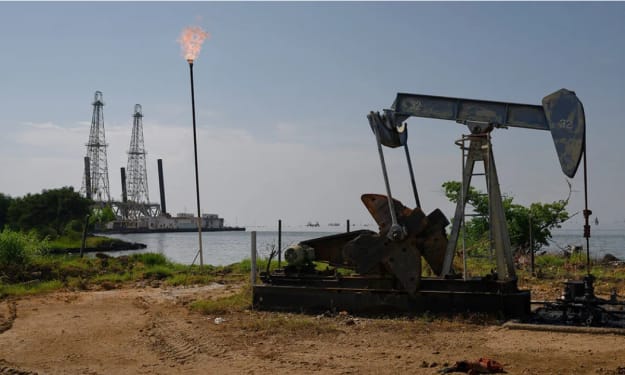
The lure of Venezuelan oil has long been irresistible to global powers. With some of the largest proven oil reserves in the world, the South American nation represents both enormous wealth and complex geopolitical challenges. For Donald Trump, whose approach to foreign policy often blends economic opportunism with bold rhetoric, Venezuela’s oil has been a tantalizing target. Yet, despite his aggressive strategies and public declarations, the reality is clear: without democracy, Trump’s Venezuelan oil ambitions are likely to fail. Oil, Power, and Politics: The Venezuelan Context Venezuela’s oil sector is inextricably linked with its political landscape. Once a booming oil exporter, the country has faced decades of mismanagement, corruption, and authoritarian rule. Under leaders like Hugo Chávez and Nicolás Maduro, the state-controlled oil industry, managed by Petróleos de Venezuela (PDVSA), became a central instrument of political control. Trump’s administration repeatedly emphasized using sanctions, diplomatic pressure, and even the prospect of regime change to gain leverage over Venezuela. The underlying assumption is straightforward: by destabilizing the government or promoting a more U.S.-friendly leadership, access to oil reserves would follow. However, this strategy encounters a fundamental problem: without a functioning democratic system, there is no reliable mechanism to guarantee stability, transparency, or fair contracts in the oil sector. Authoritarian regimes often operate on loyalty rather than merit, and economic opportunities are frequently distributed through patronage networks. In such an environment, Trump’s promises or incentives could quickly be undermined by internal power struggles or corruption. The Limits of Sanctions Sanctions have been a cornerstone of U.S. policy toward Venezuela. The idea is simple: pressure the regime economically to force political concessions or create openings for change. While sanctions can cripple state finances and limit access to international markets, they rarely produce immediate regime collapse. Instead, they often strengthen authoritarian leaders’ grip, as governments rally nationalistic sentiment against perceived foreign interference. For Trump, this meant that even aggressive sanctions could not guarantee access to Venezuela’s oil. Without democratic institutions—free elections, independent judiciary, accountable governance—any oil deals risk becoming transactional rather than sustainable. In other words, a U.S.-backed leader could secure an oil contract today but face domestic resistance tomorrow, rendering the arrangement fragile and unreliable. Democracy as a Stabilizing Force Democracy provides mechanisms that authoritarian regimes lack. Transparent governance, checks and balances, and legal accountability create predictability in business dealings. For multinational companies and foreign governments, this stability is critical. In Venezuela, decades of democratic erosion have led to erratic policy decisions, frequent expropriations, and unpredictable regulatory environments. Trump’s oil ambitions, rooted in traditional business logic, clash with this reality. No amount of negotiation can fully mitigate the risks posed by a system where political survival often trumps economic rationality. History provides stark lessons. In countries where democracy is weak, oil wealth has often led to corruption, conflict, and economic collapse—a phenomenon known as the “resource curse.” Conversely, nations with strong institutions can leverage oil reserves to build sustainable wealth, attract foreign investment, and maintain political stability. Trump’s approach, which prioritizes short-term gains over institutional development, underestimates the necessity of democratic foundations. The Geopolitical Dimension U.S. ambitions in Venezuela do not operate in a vacuum. Russia, China, and other international actors have substantial influence in Caracas, providing both economic and military support to Maduro’s government. These alliances complicate U.S. efforts to access oil resources. Without democratic legitimacy, any intervention is likely to provoke geopolitical resistance, further limiting Trump’s options. Moreover, Venezuelan citizens themselves play a critical role. Over 7 million people have fled the country in recent years, driven by economic collapse and political repression. Any U.S. strategy that ignores public sentiment risks backlash, both locally and internationally. Democracy, by its very nature, requires engagement with citizens’ interests and demands, something authoritarian governments—and by extension, Trump’s transactional approach—often overlook. The Pitfalls of Personalistic Leadership Trump’s style of leadership, characterized by bold statements and personal negotiation, clashes with the structural realities of Venezuela. In authoritarian systems, deals depend on the whims of a few individuals rather than institutional norms. One change in leadership or a shift in loyalty can invalidate months of negotiation. In a democratic context, agreements are more resilient. Laws, regulatory frameworks, and independent institutions provide continuity, ensuring that commitments outlast a single leader. Trump’s reliance on personalistic leverage rather than systemic stability reduces the likelihood of successful, long-term oil access in Venezuela. Lessons for U.S. Policy The central lesson is clear: energy ambitions cannot succeed in isolation from political reality. Accessing Venezuelan oil requires more than coercive measures or diplomatic theatrics; it requires an environment where contracts can be enforced, policies are predictable, and political transitions are peaceful. Democracy—or at least steps toward accountable governance—is a prerequisite for these conditions. Trump’s Venezuela strategy demonstrates the limits of relying solely on authoritarian pressure or personal influence. Without addressing the structural issues of governance, economic mismanagement, and citizen engagement, oil wealth remains a distant prize. In essence, the pursuit of Venezuelan oil is inseparable from the pursuit of democratic legitimacy. Conclusion Donald Trump’s Venezuelan oil quest embodies the intersection of ambition, power, and geopolitics. While the allure of Venezuela’s vast reserves is undeniable, the absence of democratic structures makes this pursuit inherently fragile. Authoritarianism, corruption, and political instability create risks that personalistic leadership and aggressive policies cannot fully overcome. For the U.S., the lesson is not merely about oil—it is about the necessity of supporting institutions that promote transparency, accountability, and citizen engagement. Without these foundations, the pursuit of Venezuelan oil is likely to remain an unfulfilled dream, no matter how forcefully it is pursued. In the end, democracy is not just a political ideal; it is a practical requirement for sustainable international energy strategy.
By Muhammad Hassan2 months ago in The Swamp
Starmer Talks to Trump.
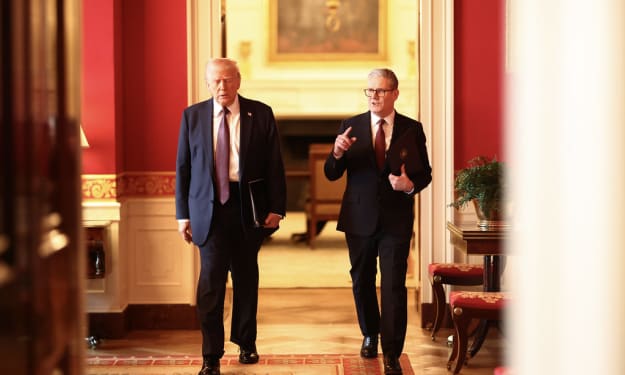
Sir Keir Starmer spoke to President Trump on the telephone last night. They spoke at length, according to a Downing Street Spokesman, about Greenland and the tanker Bella 1 or Marinera. Sir Keir Starmer's view on Greenland is in line with other European leaders. That is, they stand with the Danish Prime Minister Mette Frederiksen. Ms. Frederiksen has said that if the US were to invade Greenland, it would be the end of NATO. And rightly so, Denmark and America are NATO Allies. It would be a literal stab in Denmark's back if America went ahead and invaded Denmark. How can a friendship stand when your close friend has done something to offend you? That would be the case between the US and Denmark over Greenland. It would only embolden people like Putin.
By Nicholas Bishop2 months ago in The Swamp
Australia Superconducting Magnetic Energy Storage Market: Renewable Energy, Rising Demand, Share, and Advanced Energy Storage. AI-Generated.
According to insights from IMARC Group, Australia’s superconducting magnetic energy storage (SMES) market is emerging as a strategic component of next-generation energy infrastructure, driven by the country’s accelerating renewable-energy transition and increasing demand for grid stability. Unlike conventional energy storage technologies, SMES systems store energy in a magnetic field created by a superconducting coil, allowing near-instantaneous energy discharge with exceptionally high efficiency. As Australia integrates larger volumes of intermittent renewable energy from solar and wind, interest in advanced storage solutions capable of maintaining power quality, frequency regulation, and grid resilience is steadily increasing. While still at a developmental and pilot-deployment stage, SMES is gaining attention from utilities, grid operators, research institutions, and industrial users seeking ultra-fast, high-reliability energy storage solutions.Why Should Smart Investors and Businessmen Know About the Australia Superconducting Magnetic Energy Storage Market?
By Shrestha Roy2 months ago in The Swamp
The Night a Song Brought Me Back to Myself
I didn’t watch the special for the spectacle. I watched because I needed to hear the song again. Not the version from the movie trailer or the TikTok clip. The one that lived in my bones—the one I’d hummed under my breath during chemo, during layoffs, during the long winter after my divorce. The song that said: It’s okay to be different. It’s okay to fall. It’s okay to rise anyway.
By KAMRAN AHMAD2 months ago in The Swamp
The Day the Stadium Felt Like Church
I wasn’t born into fandom. I was adopted into it. At ten years old, I didn’t understand offside rules or midfield rotations. I only knew that every Sunday, my grandfather would take my hand, walk me three blocks to the edge of the stadium, and sit with me on a cracked concrete step—just outside the gates, where the roar of the crowd bled into the street like a hymn.
By KAMRAN AHMAD2 months ago in The Swamp
Teyana Taylor and Aaron Pierre
Introduction In an era where celebrity relationships often unfold in the glare of social media, Teyana Taylor and Aaron Pierre have crafted something refreshingly authentic: a partnership rooted in artistic respect, shared ambition, and quiet devotion. Since their romance became public in 2024, fans have searched “Teyana Taylor Aaron Pierre” not just out of curiosity—but admiration.
By KAMRAN AHMAD2 months ago in The Swamp
Stranger Things Finale Release Date
Introduction After nearly a decade of Demogorgons, mind flayers, and Eggo-fueled nostalgia, Stranger Things is preparing to say goodbye. With fans worldwide searching “Stranger Things finale release date,” “when does the last episode of Stranger Things come out?” and “what time is Stranger Things finale coming out?,” anticipation has reached fever pitch.
By KAMRAN AHMAD2 months ago in The Swamp
Tesco’s Free Fruit for Kids: A Small Gesture With a Big Impact. AI-Generated.
In the busy aisles of a Tesco supermarket, between stacked shelves and humming refrigerators, something quietly revolutionary is happening. Near the entrance, baskets of bananas, apples, and oranges sit freely available—not for purchase, but for children. Tesco’s Free Fruit for Kids initiative is simple in concept, yet powerful in effect, proving that meaningful change does not always require grand gestures.
By Sajida Sikandar2 months ago in The Swamp